
Showing posts with label 1999. Show all posts

6.05.2008

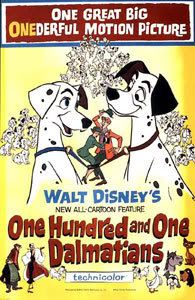
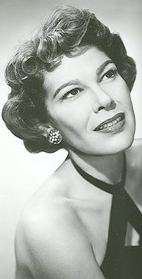
Betty Lou Gerson in One Hundred and One Dalmations (1961) - Supporting Actress Sundays - Died in 1999

I offer this Supporting Actress profile for two main reasons. First, it's part of my newish series ("Born In..."/"Died In...") in which I contemplate supporting actressness as a circle of life by profiling on a performance by a Supporting Actress who entered or left this mortal coil in the year featured in that month's Supporting Actress Sundays. (Last month, we looked at 1999.) And second, this profile seems a fitting connection to the "Magic Kingdom" theme happening over at Nathaniel's Film Experience, where I'm pitching in as a guest blogger during his well-deserved vaction. (And, yeah yeah, the guest-blogging theme also happens to provide me a handy alibi for my tardiness on finishing up the 1999ness.) That said, from a fairly exceptional roster of actresses at the edges who passed in 1999, y'all chose...

approximately 8 minutes and 55 seconds
13 scenes

roughly 11% of film's total running time
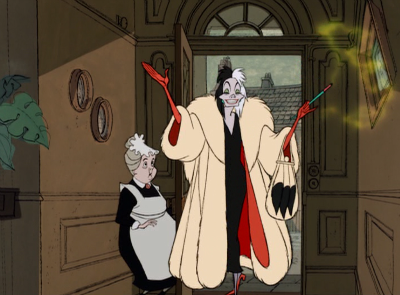
Betty Lou Gerson voices Cruella De Vil, the vicious, fur-obsessed villainess of this simple canine caper.
In an animated feature where the dogs look like dogs, the people look like people, and they all sound like proper citizens of England, Cruella De Vil looks and sounds the freak. Which she is but, due to Betty Lou Gerson's witty vocal performance, Cruella emerges as an iconic -- and surprisingly delightful -- villain.
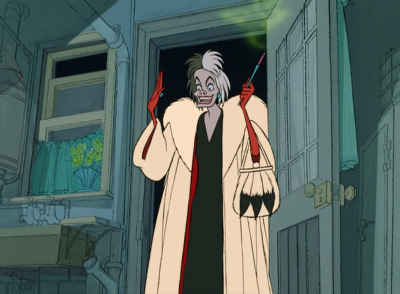
Cruella De Vil's construction as a Disney villain is brilliant in its economy.
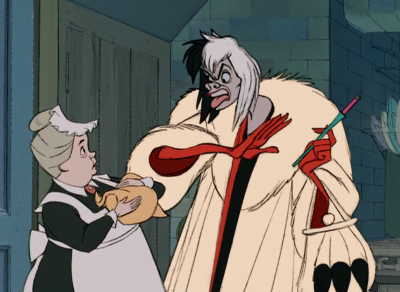
First, Cruella's got a catchy theme song and an indelible character design. Both sear themselves into the audience's imaginary on first encounter, making Cruella's first impression nearly impossible to shake.
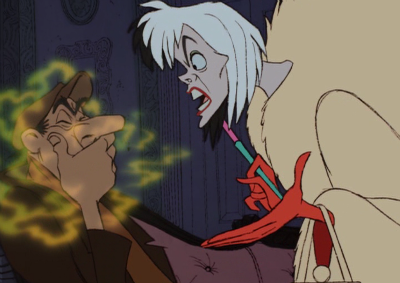
Second, as a character, Cruella's efficiently crafted as a particular sort of monstrous female. A proto-fashionista, Cruella's stick-thin and ghostly white, her green cigarette smoke wafting from her as a cloud of sickness. Such imputations of perverse illness are fortified by the fact that Cruella's a wealthy single woman with no "natural" desires (ie. home, husband, children). Instead, Cruella nurses a particular devotion to her comely school chum while professing her singular desire for FUR (specifically, fur coats that she procures for herself in a dark criminal underworld). In short, Cruella De Vil is a wealthy, man-hating fashionista with crypto-lesbian tendencies and a fur fetish. Plus, as if that weren't enough to make Cruella an especially terrifying villain in the patriarchal Disney universe, Cruella also likes to murder puppies.
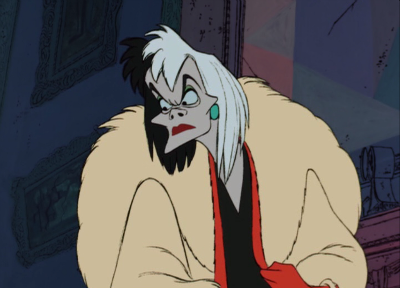
Yet, in a final touch of creative artistry, Cruella is also thrilling, even delightful, largely because of the expert voice performance offered by Betty Lou Gerson. Gerson's vocal performance brings Cruella's disparate design elements -- the character's song, visual look, backstory -- to vividly and plausibly human life.
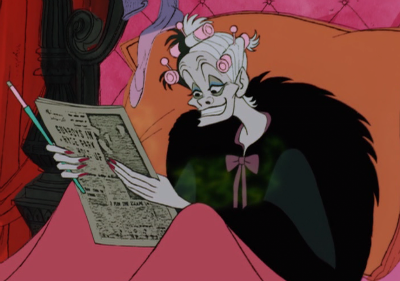
Gerson voices Cruella with a voice that is itself unforgettable and perverse: a high-throated rasp inclined to bellowed commands and maniacal laughter. Gerson voices Cruella as a forceful shriek which amplifies what's most necessary about the character: she's fearsome; she's formidable; she's female. Yet, because of Gerson's humanizing wit, Cruella's also got flair.
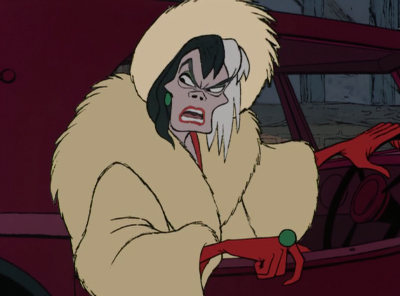
Cruella seems to embody everything that is terrifying about female power in Disney's unrepentantly patriarchal "Magic Kingdom" which is why Cruella's "cop out" vanquishment remains so dissatisfying.
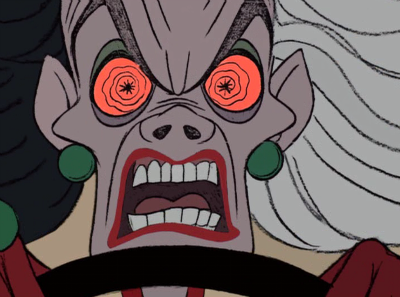
(The character's cheap ending is compounded by the fact that the narrative doesn't really stage a confrontation between Cruella and the piece's ostensible hero -- puppy papa Pongo. Pongo's valor is demonstrated by how adeptly he avoids the gender monstrosity Cruella, itself a fascinatingly oblique moral to this gender story.)
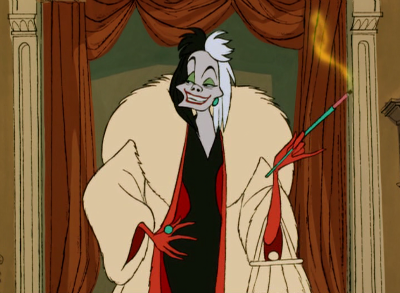
I suspect that Cruella De Vil remains an iconic Disney villain largely because of the complexity and clarity with which the character was brought to vocal life by Betty Lou Gerson. The character design and narrative make her monstrous but it's Gerson's funny, terrifying yet somehow human vocal performance that makes Cruella enduringly fabulous.

5.29.2008

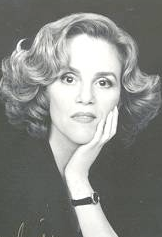
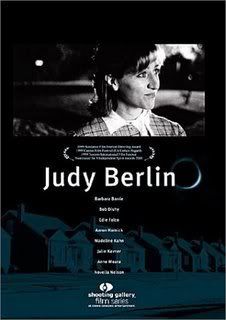
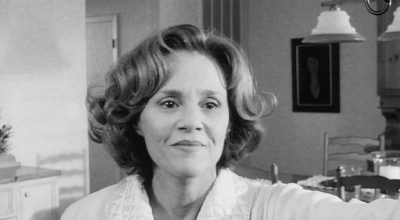
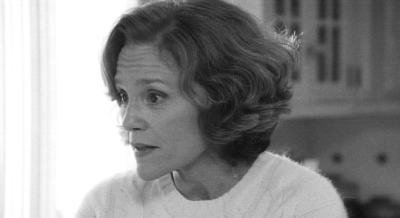
Madeline Kahn in Judy Berlin (1999) - Supporting Actress Sundays - Died in 1999

I offer the following post as my own contribution to the Madeline Kahn Appreciation hosted by, well, me. I do so as a roundabout way of acknowledging the fact that Madeline Kahn played no small part in making me the actressexual that I am today. (Blame it on Kahn's long creative collaboration with The Muppets.) So, when Criticlasm mentioned his appreciation of Kahn's final screen performance, I knew I need to take the time to see...

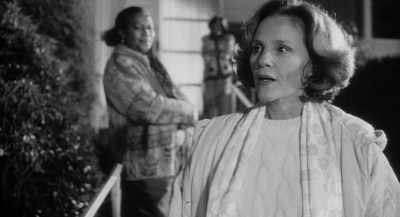
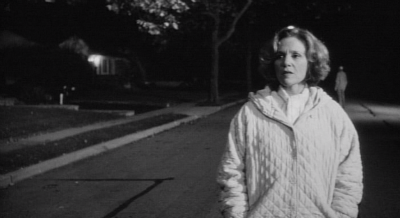
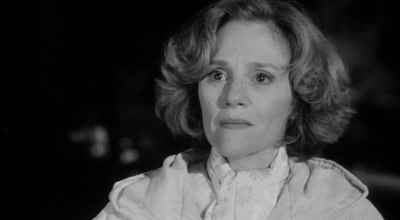
...Madeline Kahn in Judy Berlin (1999)
approximately 20 minutes and 41 seconds
15 scenes
roughly 22% of film's total running time
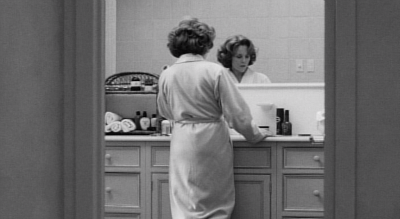
Madeline Kahn plays Alice Gold, a Long Island housewife discovering the insecurities within the very secure life she's led as wife (to an elementary school administrator) and mother (to a struggling filmmaker son).
At first blush, Kahn's Alice seems to be the sort of woman who never knew a silence she couldn't fill.
Her fanciful riffs and sentimental musings -- all delivered in Kahn's distinctive staccato soprano -- are dense with private jokes, whimsical memories, and melancholic vulnerabilities.
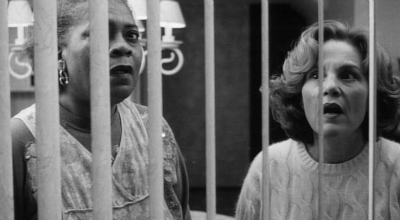
Yet as Alice uses her words to reach out to her beloved men, her chattery monologues serve only to deepen the very chasm they aim to bridge, with both her husband and son recoiling from the touch of Alice's voice. (Even the Golds' housekeeper Carol has learned to leave the vacuum cleaner turned on when Alice enters the room.)
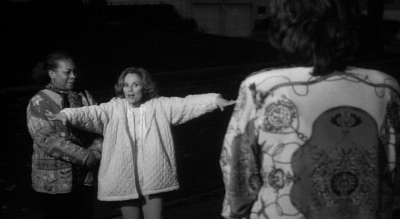
The central event of Eric Mendelsohn's pensive film is a midday solar eclipse. This cosmic disruption to the daily order of things (aided by Jeffrey Seckendorf's luminous cinematography) also transforms the ordinary landscape of this ordinary suburb into something suddenly extraordinary. And for Mendelsohn, whose style of storytelling seems steeped in the style of Woody Allen's comic tragedies of domesticity, this eclipse operates as a narrative device for his characters to encounter previously unseen corners of their own hearts. During the eclipse Alice's husband and son undertake parallel, vaguely romantic encounters with, respectively, a prickly schoolteacher and her exuberant daughter. In contrast, Alice's eclipse odyssey is largely a solitary one. As she explores the newly unfamiliar streets of her neighborhood, Alice amuses herself with a running, unfunny joke about being a space man walking the moon.
As Alice experiences the eclipse, first with her housekeeper and then a neighbor and finally alone, Kahn's performance quietly reveals that Alice's melancholy estrangement from her husband and son might be more complicated than anyone yet knows. Mendelsohn's screenplay charts Alice's character arc through her struggle to remember the final lines of a nursery rhyme (a poem which, not insignificantly, rhapsodizes about unknowability and age). Recitation after recitation stalls at the same line and no on seems to have any idea what poem she's talking about. Only when Alice is walking alone in the silence of the eclipse do the poem's final lines arrive to her and, with them, a quiet clarity. Here, Kahn's particular gifts as a performer suit the subtle challenges presented by the role of Alice. In particular, Kahn's verbal agility -- a tippling voice capable of astounding precision and dexterity -- coupled with the comedienne's veiled vulnerability make Alice a haunting and moving figure.
Kahn's Alice knows that her husband is becoming lost to her or -- perhaps more frighteningly -- vice versa. And though the film never answers the question of whether or not this intimate estrangement is due to middle-class-middle-age malaise or something more ominous (like Alzheimer's or mental illness), Kahn's performance itself provides the simple cues that Alice knows that she's on the verge of disappearing -- of forgetting or losing touch with the reality she has shared with her family and community. As I read Madeline Kahn's performance, I see her Alice as a woman who knows that she's losing touch (think of the way she privately fumes when her neighbor penetrates her reverie with a reminder of something she's forgotten) whether through Alzheimer's or some other mental change. Further, Kahn's Alice seems to understand that the one person who might help maintain her connection to this world is her husband, Arthur, a man as terrified of the changes in his wife and son as he is of those in himself. It seems to me that Kahn's Alice alone appreciates the gravity of this estrangement, especially as the eclipse heightens Alice's lucidity about her stark circumstances.
When I think of Kahn's performance Alice, I think of a balloon slowly descending to the ground: she begins all silly and exciting, bouncing at the corners of the ceiling, but as the movie unfolds her buoyancy diminishes and she comes close to touching the ground. Yet her lightness remains.
Madeline Kahn's work in Judy Berlin is gorgeous in its simplicity and humanity. Alice has little of the galvanic potency of Barbara Barrie's brittle schoolteacher; nor does Alice burst with the exuberant faith of Edie Falco's Judy. Yet Kahn's Alice moors the emotional arc of the whole film with a wit, a poignancy and a stability that is transcendent. It's a sublimely discreet performance, ripe with mystery and teeming with humor: a moving exit for one of the greater actresses at the edges of the 2oth century.
Blessings, dear Madeline.

5.28.2008

Catherine Keener in Being John Malkovich (1999) - Supporting Actress Sundays

The 1999 Smackdown's behind us but I'm not quite done yet. Perhaps the most interesting things about 1999's particular field of supporting actress nominees is how, in retrospect, how auspicious it seems. It's not that these five women have all gone on to accumulate piles of nominations and awards (though one or two have) -- no, it's that each of these five first-time nominees, in the near decade since this contest, have gone on to establish really distinctive and solid careers for themselves, their names subtly amplifying the prestige of any project with which they are associate. And among these women, one seems to exemplify the enigmatic potency of this year's roster, a quality that also describes her 1999 nominated performance. Of course, I'm talking about...

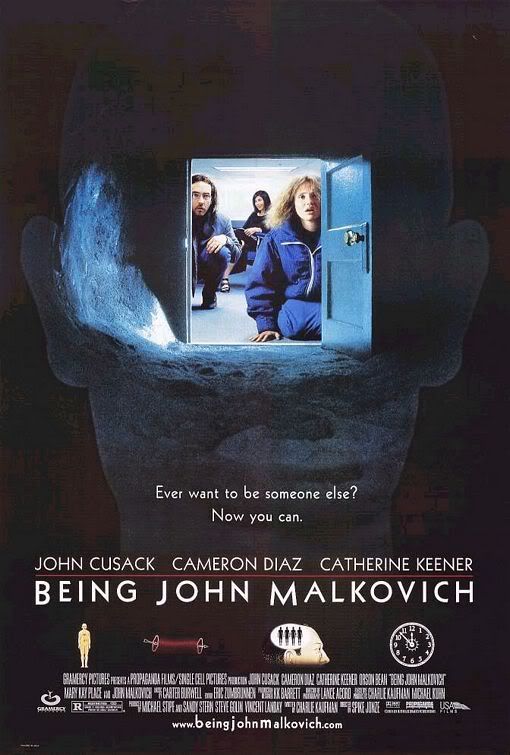
...Catherine Keener in Being John Malkovich (1999)
approximately 45 minutes and 5 seconds
41 scenes
roughly 38% of film's total running time
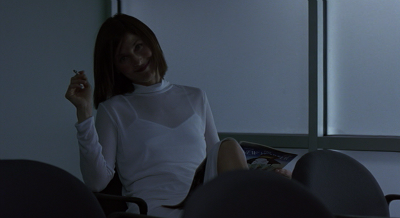
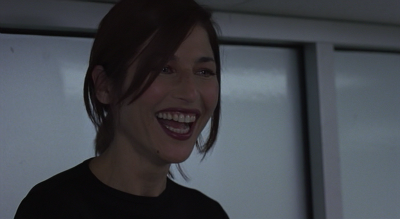
Catherine Keener plays Maxine, the mercenary mystery woman who drives the action of Charlie Kaufman's and Spike Jonze's absurdist comic puzzler about the intimate boundaries of selfhood.
Keener's Maxine is introduced as the cool girl sitting in the back of the classroom during employee orientation on the 7 1/2 floor. Her casual reserve catches the eye of loser puppeteer Craig Schwartz (John Cusack, offering a frenzied and mannered performance in a role I really would have rather seen Paul Giamatti do).
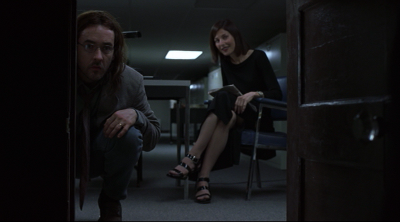
Cusack's Craig is immediately smitten with Keener's Maxine and endeavors to insinuate himself in her good graces.
For her part, Keener's Maxine seems to welcome the distraction of Craig's awkward adoration, toying with him when it suits her and easily dismissing him when his attention becomes tedious. Keener maintains a glib confidence in these scenes, establishing Maxine as the kind of woman whose sense of entitlement only amplifies her appeal to others.
It's not until Craig discovers the secret portal into John Malkovich's brain/identity (don't ask - watch the movie - the conceit works - often brilliantly) that Keener's Maxine develops any independent interest in this strange little man "who plays with dolls."
As Keener's Maxine seeks strategies to "monetize" Craig's discovery, she undertakes a number of forays to scope out the dimensions of her new enterprise -- selling the opportunity to inhabit John Malkovich's consciousness for 15 minutes at a time.
In the process of developing this business plan, Keener makes an unexpected connection, through Malkovich, with Craig's mousy wife Lotte (Cameron Diaz in a delightful off-type turn). The two women fall in a kind of love, albeit through the vehicle of Malkovich's body, and the narrative then starts getting complicated. (I know, right?) Craig starts getting jealous. Lotte starts getting obsessed. Malkovich starts to figure things out.
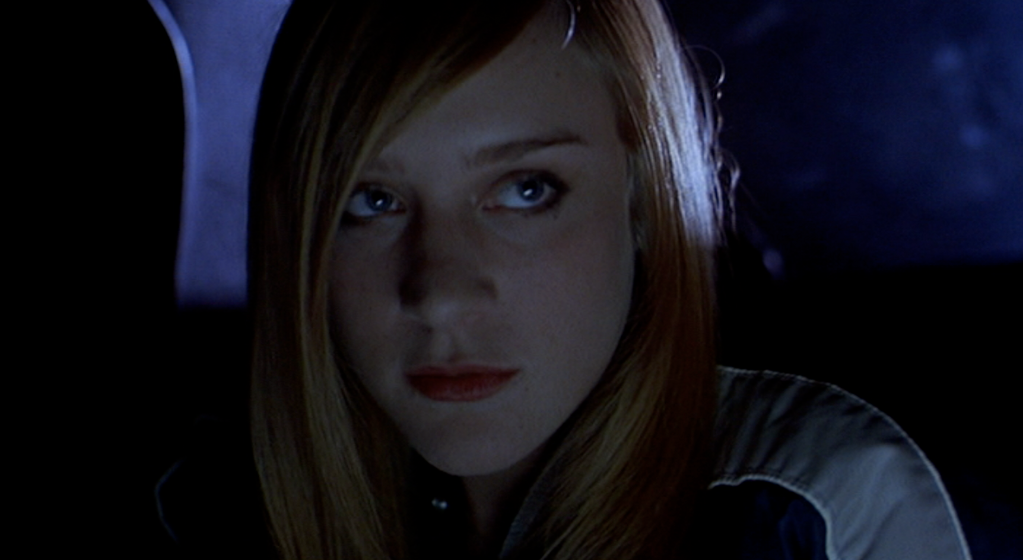
And there's Maxine -- right where she likes to be -- at the center of the action, at the intersection of all these different people's distinct paths.
As an actress, Keener's the rare performer whose preternatural sense of detachment actually enhances her charisma. She's most fascinating when she's withholding. And this quality suits postmodern femme fatale vividly. Keener's at her best when Maxine's playing...when Maxine's playing the game...when Maxine's thrilling at the possibility of having them all. Keener's accomplishment in the role derives from her ability to be a totally selfish user while also maintaining the character's enigmatic appeal.
Where Keener's performance is less effective is in the narrative's last act, when motherhood instigates a new vulnerability that's unfamiliar to the blithely mercenary Maxine. Keener plays this new swell of emotions through the lens of Maxine's glib detachment (instead of, say, Maxine's single-minded, maximizing drive) and the foggy result clouds the clarity of the film's climactic transformations.
Yet, in retrospect, and accounting for all its limitations, I can see how Keener's performance captured the imaginations of the nominators in 1999. Keener’s thin characterization, long on style and short on subtext, does little to illuminate Maxine's unsubtle transformation. Yet Catherine Keener's charismatic restraint maintains Maxine’s entrancing mystery through to the end, and the performance remains fascinating and often delightful.

5.25.2008

Supporting Actress Smackdown - 1999


The Year is...

And the Smackdowners for the 72nd Annual Academy Awards are...
BRAD of Criticlasm
BROOKE CLOUDBUSTER of Boy on Film
JOE R of Low Resolution
JS C of He Thinks He's A God
MIDDENTO of when i look deep in your eyes
with
yours truly, STINKYLULU.

1999's Supporting Actresses are...
(Each Smackdowner's comments are arranged according to ascending levels of love. Click on the nominee's name/film to see StinkyLulu's Supporting Actress Sunday review.)
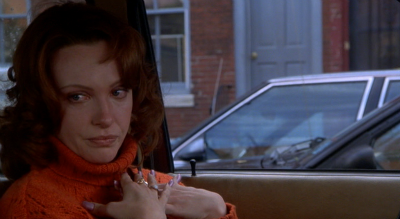
BROOKEA rather surprising nomination, but not a bad one. Collette, despite being in a rather neglected role, delivers a decent performance. If only the role was written a bit more, this offbeat talent could really have shone.
STINKYLULU
Stirring a heady mix of ferocity and vulnerability, Collette avoids cliché while layering complexity and compassion into Lynn's every gesture, providing a formidable and funny emotional anchor for the film.
MIDDENTO
I hate to say that I was sold on this flick, manipulative as it is, from Collette's performance alone. Touching and real, yet (despite the tears) unsentimental, the performance grounds the film in a subtle, nuanced way.
JS C
"Do... Do I make her proud?"
BRAD
Collette dropped doing too much and did just enough. Though the nomination is probably based on the car scene, watching the film again makes me realize it's the woman she's set up – the woman who cares for her son deeply – that makes Lynn as resonant as she is. My favorite performance in the film by far – even more than Mischa Barton as Linda Blair.
JOE R
Kills me dead every single time. Fierce strength and shattering vulnerability, at once. The way she acts with her fingernails. And that scene in the car -- the rare "Oscar clip" scene that lives up to the billing.
TOTAL: 25s
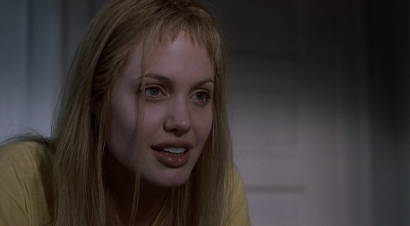
MIDDENTOAs we are supposed to venerate actressing at the edges, EDGES THAT CUT HAHAHA, I ask whether the uneven, JAGGED YAAAAAH rollercoaster ride Jolie takes us on supports the movie by foiling a subdued Winona WEEPING PAIN or her own clear ascent WHEEEEEEEEEE! to stardom
STINKYLULUJolie's palpable emotional clarity ably steers the film and the actress delivers a generally lucid performance. Not bad, but rarely subtle, and never deep.
JS C"Playing the villain, baby, just like you want. I try to give you everything you want. Because it makes you the good guy, sweet pea. Is that a dare or a double dare? I like that. How am I supposed to recover when I don't even understand my disease? That's everybody. So, what's your diag-nonsense?"
JOE RThe movie utterly fails her at the end, but I've long been a fan of an actor's ability to channel his or her charisma into a laser beam, and Jolie's Lisa has hers focused so tightly she could cut diamonds.
BRADJolie delivers what by now feels like a standard Jolie performance – fascinating, energy sucking, combative, more than present. She takes any light in the room, and is fascinating on screen. The perf feels almost bigger than the movie though, in the end, I was more emotionally interested in the scenes with Britanny Murphy – even to the point of feeling that hers is the most surprising performances of the film.
BROOKEA visceral and unflinching performance by this talented actress. Jolie manages to portray the crazy while still keeping the ever-changing moods of the character nailed perfectly.
TOTAL: 16s

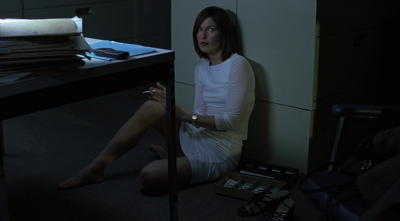
Catherine Keener in Being John Malkovich

STINKYLULUKeener’s charismatic restraint maintains Maxine’s entrancing mystery even as the character transforms unsubtly before our eyes. It’s a thin characterization, long on style and short on subtext, but a consistently delightful performance nonetheless.
BRADKeener does a fantasia of her own tough cookie, smart and sassy broad roles, seemingly speaking only in lines that most actors would have as subtext for something much more polite. I don't think there is much of a transformation in the character and it feels that she's having such a great time being arch that the other stuff gets short shrift. And without that, I don't quite believe the ending.
JS C"You're right, my darling, it's so much more. It's playing with people!" (Gestures toward a 7½ story high window.)
JOE RThere's a fierce competition, in Malkovich, for Maxine's attention, and in Keener's hands, she wields her gaze like a weapon. There's an emptiness to the character, by design, but Keener slowly doles out pieces of Maxine. You can't know her, but she gives you enough to keep chasing.
BROOKEA stunning, scathing and sexy performance by this still criminally underrated actress. She balances the surreal comedy with the underlying emotions perfectly, a true display of actorly talent.
MIDDENTOSmart, sassy and conniving without being sorry for it: Maxine could be the villainous femme fatale hated in every other movie. Here, however, Keener mesmerizes with just enough restraint to make her (and the role) delicious.
TOTAL: 24s
JS C"I had a wonderful evening. I don't need a genius to have a good time."
JOE RShe works her angelic, expressive face to its greatest advantage here, but it doesn't add up to much. Particularly when it's in service to Woody Allen's fucked up issues with women (better that they can't speak at all!).
STINKYLULUMorton inhabits Hattie's silent clarity and wordless integrity with endearing wit, yet even Morton's savvy performance can't ameliorate the creeping misogyny of the role. An adept, adorable but ultimately negligible performance.
BRADUnfortunately, she's constructed as something for Penn's great characterization to bounce against. As such she does her job, and some of her luminosity comes forward, but I was left confused by the character, wondering if she was slow, challenged, or just easily confused. A disappointing performance – sad, because I was really looking forward to it.
BROOKEIn her silence, Morton manages to steal scenes out from under Penn, on top form. She manages to elevate the character out of the pothole of dull writing, but traces do sometimes show.
MIDDENTOMorton electrifies here with the face and movements of a silent movie star – and I don't say that just because she's mute. She brings a lot to the role – which, oddly, I don't care for as much, tired as I am of Allen's simple girls.
TOTAL: 12s
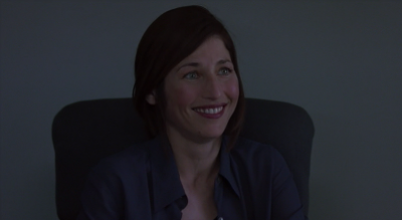
BRADSevigny’s native insouciance works for the bored teenager Lana, but she's unable to break through it later in the film. Though she's definitely present, she comes alive more in the intimacy of the relationship than when the sh** really starts to hit the fan. It's during the violence and the difficulties where she feels a little lost to me, losing the screen to what's happening around her.
JS C"I hate my life."
STINKYLULUWhile often excellent "in the moment," I remain unconvinced that Sevigny’s as excellent "in the character." Still – a most astonishing, breakthrough performance in a year loaded with them.
MIDDENTOI remember not rooting for this to win that year; seeing the movie again for the performance makes me appreciate the small moves Sevigny makes to make this more than a simple "lust object" characterization.
BROOKESevigny is essential to the success of the movie, perhaps even more so than Swank. She keeps the film grounded with her truly humane and naturalistic performance; she doesn't overplay any moment and keeps it uncomfortably real.
JOE RI was initially ready to dismiss Chloe's as a nomination based on the audience's projected infatuation, via Brandon. But as Lana begins to leap impulsively off a series of cliffs, Sevigny's ever-intense face belies her desperation, and later gives way to the ecstasy of a way out.
TOTAL: 23s
Oscar chose...
Angelina Jolie
in Girl, Interrupted
But the SMACKDOWN forcibly dissents and, in a single heart squeaker, appoints...
Toni Collette in
The Sixth Sense

as
Best Supporting Actress of 1999!

BUT, lovely reader, what do YOU think?
Please share your thoughts in comments.