 I offer this Supporting Actress profile for two main reasons. First, it's part of my newish series ("Born In..."/"Died In...") in which I contemplate supporting actressness as a circle of life by profiling on a performance by a Supporting Actress who entered or left this mortal coil in the year featured in that month's Supporting Actress Sundays. (Last month, we looked at 1999.) And second, this profile seems a fitting connection to the "Magic Kingdom" theme happening over at Nathaniel's Film Experience, where I'm pitching in as a guest blogger during his well-deserved vaction. (And, yeah yeah, the guest-blogging theme also happens to provide me a handy alibi for my tardiness on finishing up the 1999ness.) That said, from a fairly exceptional roster of actresses at the edges who passed in 1999, y'all chose...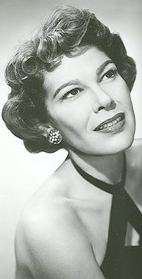
approximately 8 minutes and 55 seconds
13 scenes
roughly 11% of film's total running time
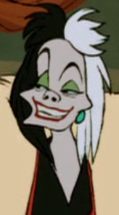
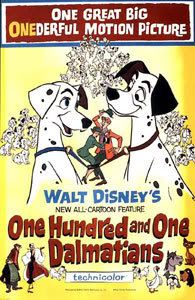
Betty Lou Gerson voices Cruella De Vil, the vicious, fur-obsessed villainess of this simple canine caper.13 scenes
roughly 11% of film's total running time
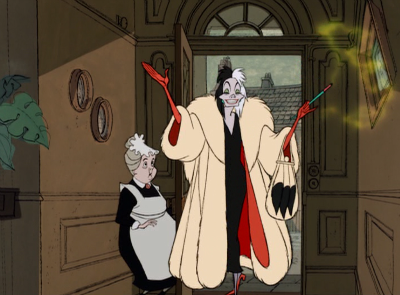 In an animated feature where the dogs look like dogs, the people look like people, and they all sound like proper citizens of England, Cruella De Vil looks and sounds the freak. Which she is but, due to Betty Lou Gerson's witty vocal performance, Cruella emerges as an iconic -- and surprisingly delightful -- villain.
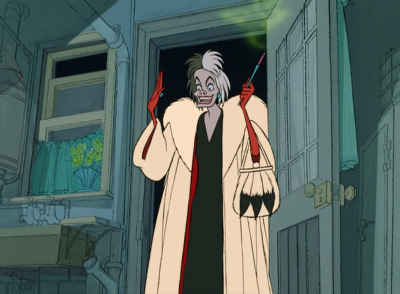 Cruella De Vil's construction as a Disney villain is brilliant in its economy.
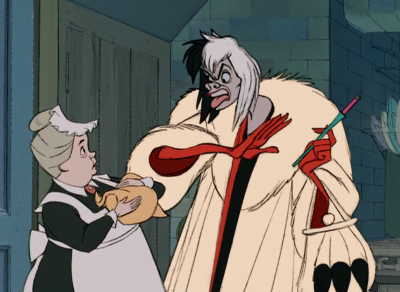 First, Cruella's got a catchy theme song and an indelible character design. Both sear themselves into the audience's imaginary on first encounter, making Cruella's first impression nearly impossible to shake.
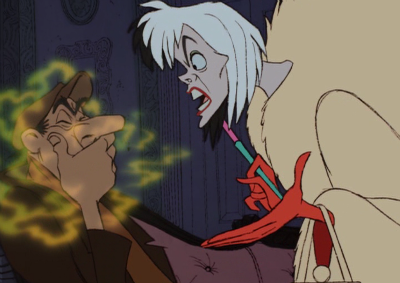 Second, as a character, Cruella's efficiently crafted as a particular sort of monstrous female. A proto-fashionista, Cruella's stick-thin and ghostly white, her green cigarette smoke wafting from her as a cloud of sickness. Such imputations of perverse illness are fortified by the fact that Cruella's a wealthy single woman with no "natural" desires (ie. home, husband, children). Instead, Cruella nurses a particular devotion to her comely school chum while professing her singular desire for FUR (specifically, fur coats that she procures for herself in a dark criminal underworld). In short, Cruella De Vil is a wealthy, man-hating fashionista with crypto-lesbian tendencies and a fur fetish. Plus, as if that weren't enough to make Cruella an especially terrifying villain in the patriarchal Disney universe, Cruella also likes to murder puppies.
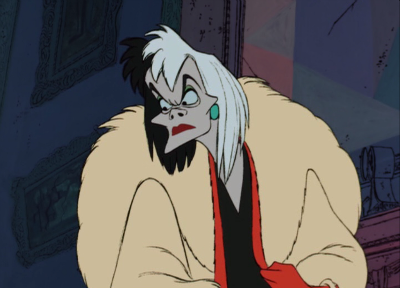 Yet, in a final touch of creative artistry, Cruella is also thrilling, even delightful, largely because of the expert voice performance offered by Betty Lou Gerson. Gerson's vocal performance brings Cruella's disparate design elements -- the character's song, visual look, backstory -- to vividly and plausibly human life.
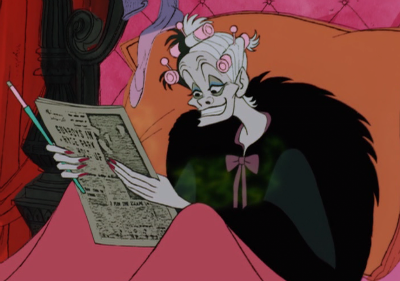 Gerson voices Cruella with a voice that is itself unforgettable and perverse: a high-throated rasp inclined to bellowed commands and maniacal laughter. Gerson voices Cruella as a forceful shriek which amplifies what's most necessary about the character: she's fearsome; she's formidable; she's female. Yet, because of Gerson's humanizing wit, Cruella's also got flair.
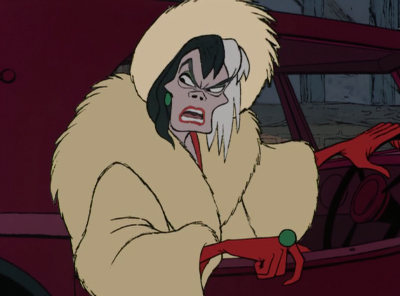 Cruella seems to embody everything that is terrifying about female power in Disney's unrepentantly patriarchal "Magic Kingdom" which is why Cruella's "cop out" vanquishment remains so dissatisfying.
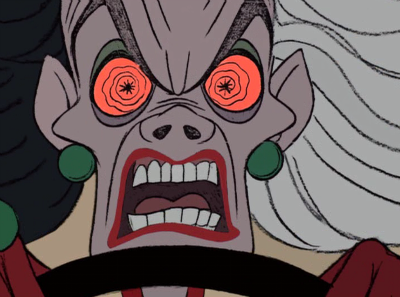 (The character's cheap ending is compounded by the fact that the narrative doesn't really stage a confrontation between Cruella and the piece's ostensible hero -- puppy papa Pongo. Pongo's valor is demonstrated by how adeptly he avoids the gender monstrosity Cruella, itself a fascinatingly oblique moral to this gender story.)
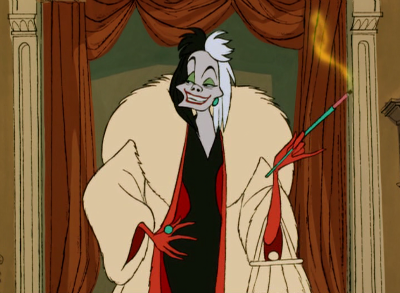 I suspect that Cruella De Vil remains an iconic Disney villain largely because of the complexity and clarity with which the character was brought to vocal life by Betty Lou Gerson. The character design and narrative make her monstrous but it's Gerson's funny, terrifying yet somehow human vocal performance that makes Cruella enduringly fabulous.