
Showing posts with label maureen stapleton. Show all posts

6.13.2007

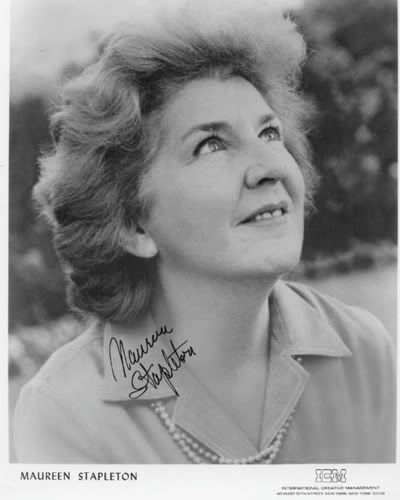
Maureen Stapleton in Interiors (1978) - Supporting Actress Sundays

The following (tardy) Supporting Actress Sunday profile revises and slightly expands on a previous treatment of Maureen Stapleton's nominated performance (viewable here).

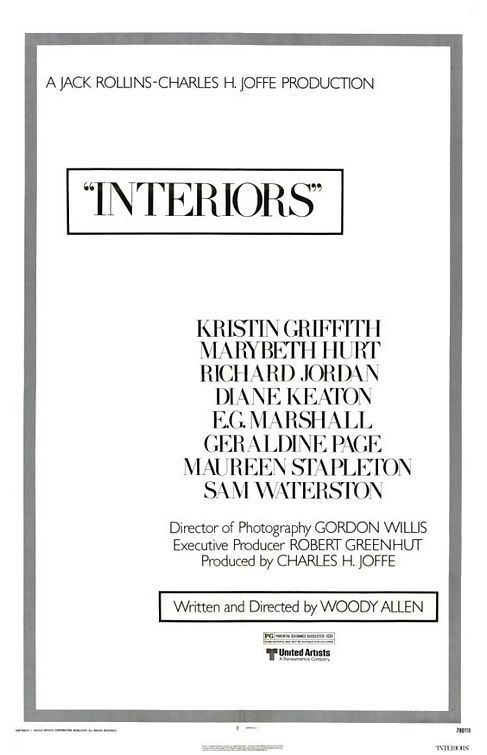
Interiors -- Woody Allen’s singular tragedy -- is often alleged to be the filmmaker's barely oblique homage to Ingmar Bergman. To be sure, Allen's assemblage of contrasting female protagonists, his conspicuous use of mirrors and window panes, and the preciously posed profiles (not to mention the sparse decorative palette) might as well be screaming in Swedish. Plus, the movie's just ponderous...unremittently lugubrious...nearly unbearable really. (As Criticlasm is fond of wagging when the subject of Interiors comes up: "Will someone please tell a joke!") To StinkyLulu's mind, though, Interiors is one of Allen's most important films, a collection of character sketches and tone poems that cleared the auteur's stylistic forest for the genius of structure that would sprout eight years later with Hannah And Her Sisters (1986). But where Hannah manifests a palpably Chekhovian dramatic sensibility (an architecturally configured universe of characters, all impassioned mediocrities, staggering about and occasionally bumping into each other), Interiors is savagely Strindbergian (a dramatic world in which even the arbitrary intimacies of life bear jagged edges). Indeed, in Strindberg (as in Interiors), the mere fact of human connection threatens emotional violence. But unlike Strindberg, Interiors boasts a character who radiates life at its most exuberant, a character who proffers the threat of hope...
approximately 11 minutes and 33 seconds
12 scenes
roughly 12% of film's total running time
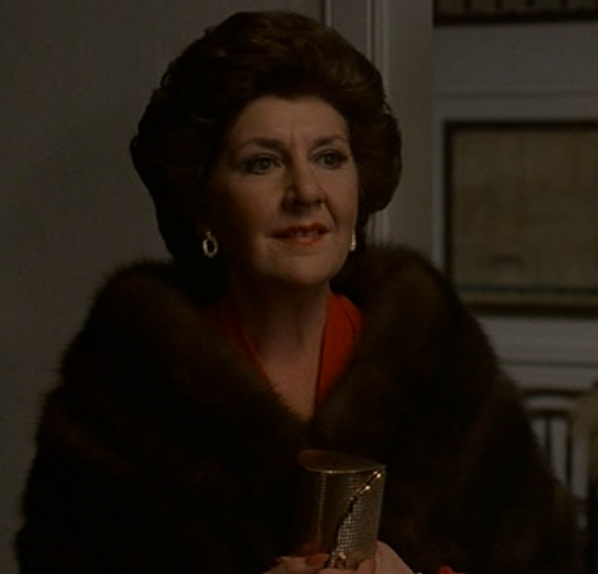
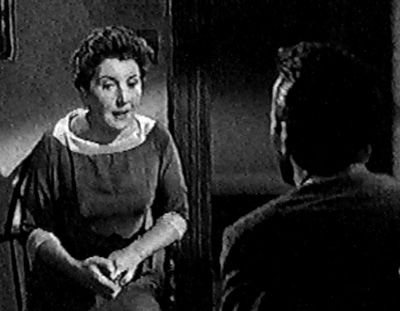
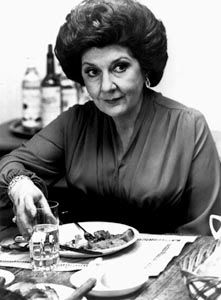
Maureen Stapleton plays Pearl, the twice-widowed woman who arrives more than half-way through the narrative and whose sweaty warmth blasts the film like a tropical storm.
The new "squeeze" of the recently divorced Arthur (E.G. Marshall), Stapleton's Pearl is an affront to everything Arthur's daughters expected of their father and a repudiation of everything represented by their mother. (Geraldine Page, in a Best Actress nominated, mannered shriek of a performance is Interiors's voracious Medea-mother, sacrificing her children, devouring them for the lost love of of their father.) Stapleton's Pearl is something else entirely...
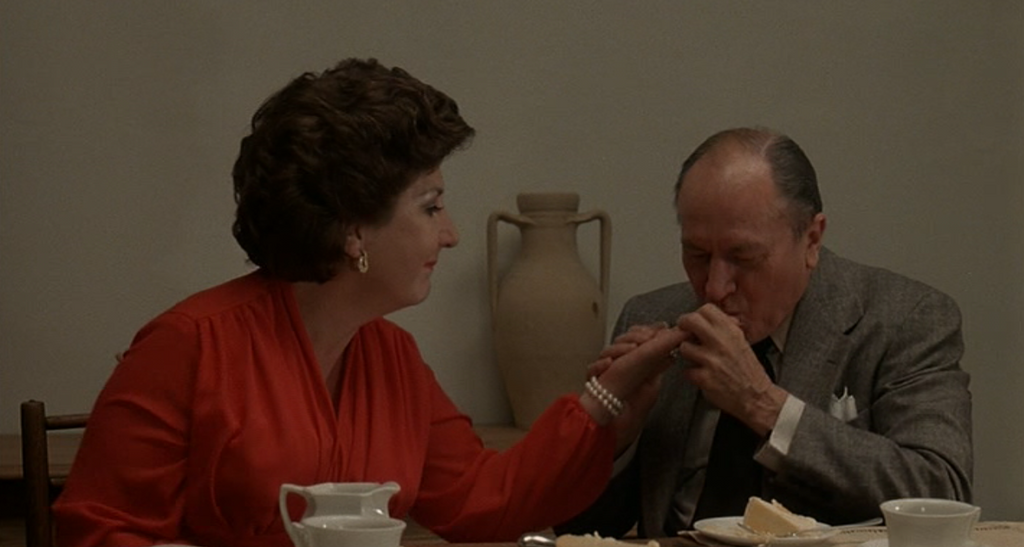
...a stark contrast that Sarah Vowell describes as:

“Geraldine Page is all beige this and bland that so her husband divorces her and hooks up with noisy, klutzy Maureen Stapleton, who laughs too loud and smashes pottery and wears a blood red dress to symbolize that she is Alive, Capital A." (Assassination Vacation, 5)
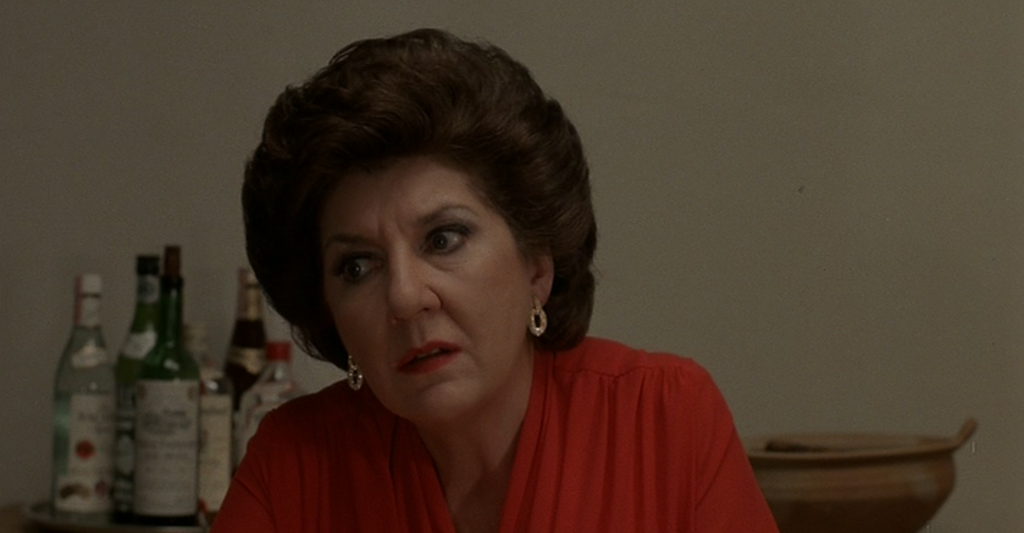
As Pearl, Stapleton demonstates her uncommon capacity to be palpable on screen; Stapleton's Pearl creates a sense of immediacy, of presentness, that slices through the internalized, emotional caul that so stultifies everyone in Interiors. Indeed, Tropical Storm Pearl blows into this family of the walking wounded -- each of her adult stepdaughters tenderly nurse their emotional scars as evidence of their lifetime of slights and disappointments -- and becomes a cleansing, healing breath of life.

Into this family of intellectuals who argue over plays and architecture, Maureen Stapleton’s Pearl blazes with comedic contrast like the proverbial bull in a china shop (even destroying some heirloom crockery along the way). Throughout, Stapleton's self-deprecating but confident Pearl becomes an astonishing creature, as rare and exotic as a unicorn in this family, as a woman much less concerned with being "right" than she is with embracing her choices with enthusiasm and verve. Stapleton's Pearl heralds the potency of a life fully-lived, proof-positive of the possibility of healing -- and, as such, her arrival tosses the whole family into a fresh disequilibrium.
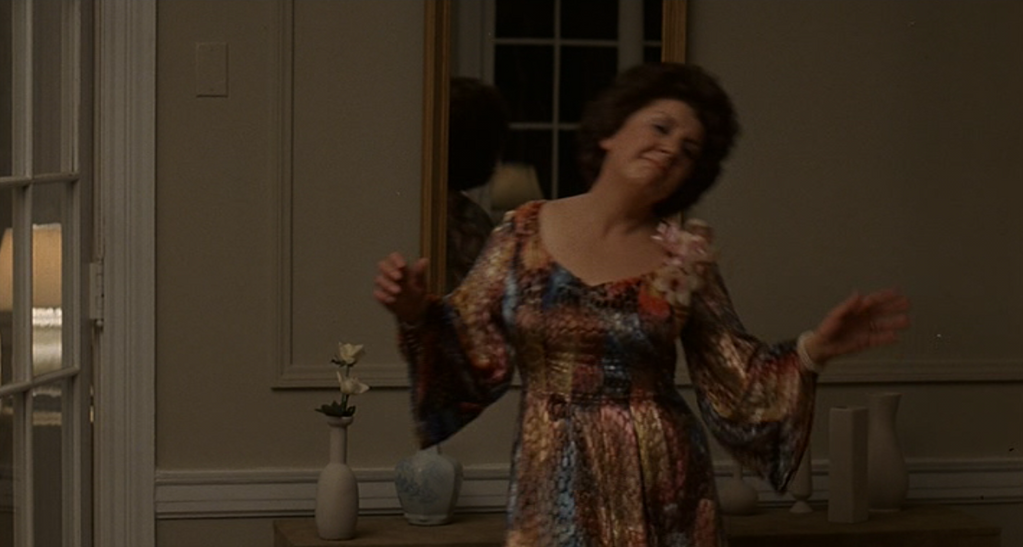
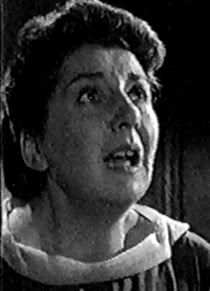
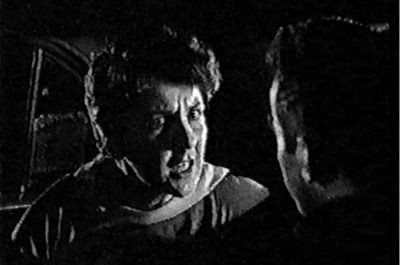
Stapleton's performance as the loose, sloppy Pearl emerges as a marvel of precision. Stapleton shows that Pearl's zest for living isn't so much an act of bravado or denial but the best choice available to this woman. Consider the moment when Mary Beth Hurt's Joey shrieks and calls Pearl an animal. Stapleton's stricken expression communicates (in an electric instant) not only that Pearl's capable of being hurt, but also that she's been hurt before, that -- like her namesake gem -- Pearl's lively luster is the product of grinding life experience.
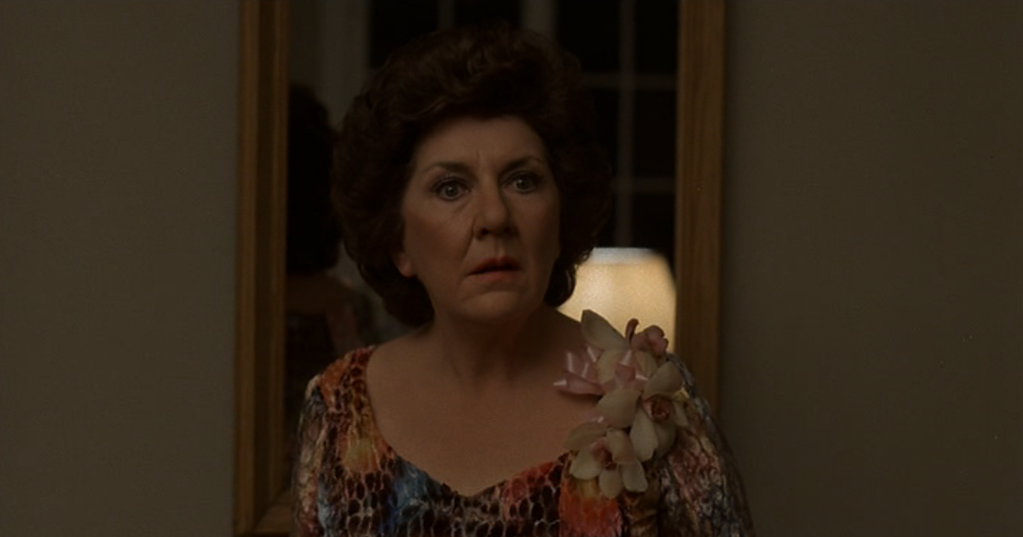
But, in this same moment, Stapleton's expression communicates that Pearl's perhaps the only one to recognize the depth of Joey's hurt, how Pearl's the only one able to hear Joey cry out in deathly pain.
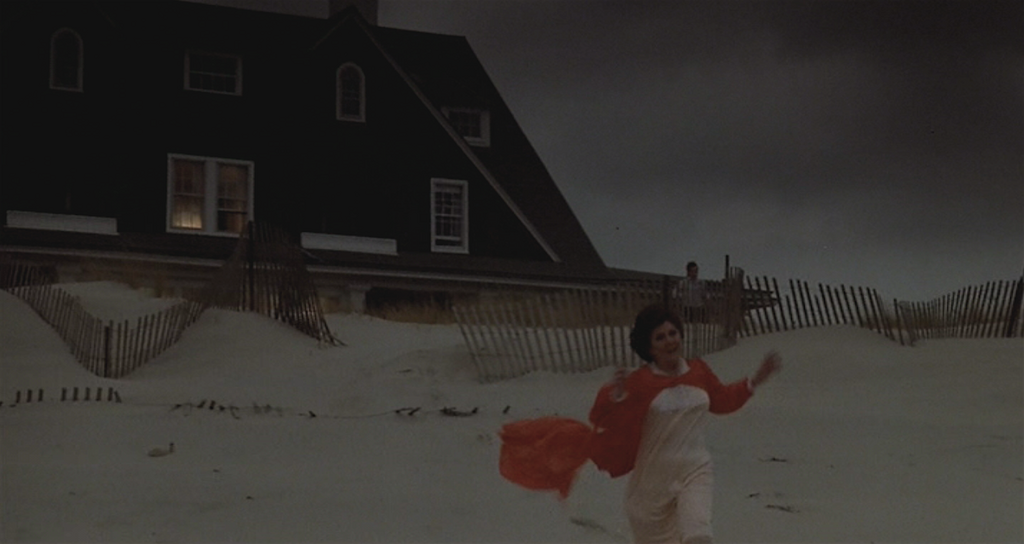
And just as Pearl breathes life into the nearly drowned Joey, so too does Stapleton's performance infuse this odd Woody Allen marvel with a profound and powerful force...
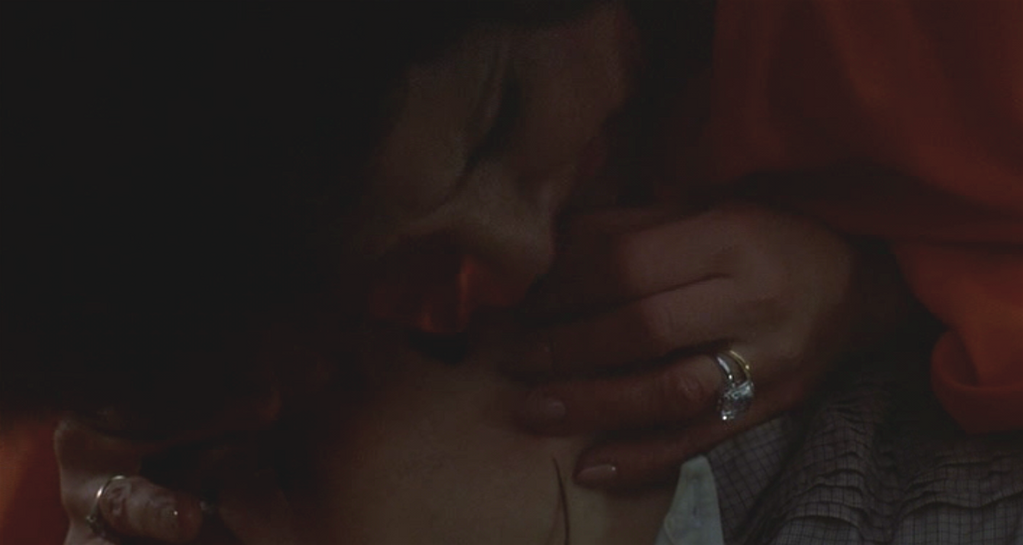
...investing Interiors with a powerful, strange subtext of humility and gratitude. Indeed, Maureen Stapleton's performance as Pearl in Interiors stands as perhaps StinkyLulu's favorite performance by one of the best actresses ever to thrive while actressing at the edges...

4.30.2006

Maureen Stapleton in LONELYHEARTS (1958) - Supporting Actress Sundays

It's only fitting that Supporting Actress Sundays conclude its first month of Sundays with a tribute to Maureen Stapleton...

For previous Maureen love, see here, here & here.


And her 1st nominated performance as Faye Boyle in 1958's Lonelyhearts.


Here, MissMo offers the kind of performance that was to become her signature. At first glance, Faye appears to be unremarkable, in turns awkwardly dowdy & brazenly crass. Scratch the surface, though, and Faye emerges with a roaring explosive passion -- passion for life, for sex, for love, for her beloveds.

The story of the film is pretty simple. Based on the Nathanael West novella Miss Lonelyhearts, Montgomery Clift is a struggling young writer, trolling for a break at a newspaper. As the result of a kind of sick powerplay by the newspaper's editor (played here with a disdainful sneer by Robert Ryan, who -- also in 1958 -- played pervy Pa opposite Tina Louise in God's Little Acre), Monty's awarded a gig writing as "Miss Lonelyhearts." Of course, as anyone who's ever seen that very special episode of any trillion sitcoms knows, Monty gets all embroiled in the fact that his replies have an impact on his desparate readers & he threatens to quit. In an inscrutable narrative turn, Monty then takes the evil editor dare to meet a random letter writer, & off Monty goes to meet Faye.


"For seven years, I've been good and decent...as the saying goes."
(Hat tip to The Film Experience for the screencaps.


Faye's feeling trapped in a loving but sexless marriage & doesn't know what to do. She wants to love her husband, he's a good man, but after all she was sorta wild before her marriage, so she knows what she's missing...


"I feel like I'm dying inside. Please tell me what to do."


So, what does Miss Lonelyhearts advise? It's not clear but, in the meantime, Miss Lonelyhearts (aka Montgomery Clift) sleeps with Faye. (No brainer, eh.) And from here, Stapleton's Faye becomes the prototype for subsequent cinematic ladystalkers -- the kind of role that has given filmfreaks the glorious genius work of Jessica Walter, Glenn Close, Jennifer Jason Leigh, and innumerable Lifetime movies...


See Nathaniel's clipreel for this excellent scene.

See, Faye's (understandably) none to pleased with Miss Lonelyhearts' decision to "get some action" and begone. Indeed, Faye "won't be ignored" & keeps on after Miss Lonelyhearts, so much that her husband & the newspaper catches on. From there, the story spirals into a feverish morality tale about (a) vintage 1950s, post-eugenic anxieties about "bad blood" and (b) the debilitating anxieties of the cuckold. Yes, it's just wierd. But along its way to the film's inexplicably coded conclusion -- there's a drunken brawl, much feminine handwringing among the more respectable female characters, a visit to a prison, a shadowy confrontation at the newspaper office, some gun action, and -- through it all -- Faye is completely forgotten. Go figure...

It's a strange little time-capsule of a movie. The ensemble -- which includes Myrna Loy improbably cast as an alcoholic matron with a taste for ginzano (and Montgomery Clift) alongside Uncle Fester as a depressed drama & culture writer (!) -- offers able performances, though it seems each performance is in a different key or register. Something's just "off" about the whole thing -- except when Stapleton takes the screen. When Faye's on a rampage (erotic or raging), everything's clear -- at least for the moment. It's a starmaking, supporting performance. And it's a reminder of everything Lulu's fallen in love with about MissMo.
.................
So, lovely reader, this concludes the Supporting Actress Month of Sundays for 1958. It's been more fantabulous than Lulu ever imagined... Thank you ever so. And be sure to check back on Monday, May 1, for the official announcement of the Supporting Actress Sunday Year for May. (As of this moment, it looks like it'll be 1942.) But there's still time to vote!

3.28.2006

Maureen Stapleton in INTERIORS (1978) - Supporting Actress Sundays

Okayokay. StinkyLulu knows it's Tuesday but sometimes life intervenes. Plus, this dispatch comes to you live from the glory of StinkyLulu's favorite place in all NYC: HousingWorks Bookstore on Crosby Street in SoHo.

So without further ado, it's time for the second installment in StinkyLulu's Supporting Actress Sundays: Maureen Stapleton in Woody Allen's Interiors.

Interiors is one of those movies that's nearly too excruciating to watch, but remains endlessly fascinating to contemplate. Sorta like a soap opera for folks in therapy. It's barely a surprise that Joel Schumacher did the costumes for this flick (his directorial oeuvre suggests anything but subtlety) -- it's prolly his handiwork that makes Interiors one of those pictures where pretty much everything you need to know about a female character is conveyed by a quick glance at her hairdo.

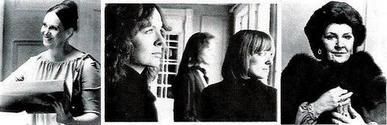
Geraldine Page as Eve, the mother = severe topknot.
The sisters = Frizzy, Blunt, & Feathered, or Diane Keaton (Renata), MaryBeth Hurt (Joey) and Kristin Griffin (Flyn) respectively.
Finally, Maureen Stapleton as Pearl, the stepmother = Hot Roller.

Again, Maureen Stapleton sticks out like a sore thumb. But, here, that’s the point of the character. Woody Allen’s only tragedy, Interiors is rightly alleged to be an homage to Bergman, what with the the assemblage of contrasting female protagonists, the conspicuous use of mirrors and window panes, and the preciously posed profiles. To StinkyLulu's mind, though, Interiors is most interesting as a study of both structure and character that clears the forest for the genius of Hannah And Her Sisters (1986). But Hannah And Her Sisters derives from a palpably Chekhovian dramatic sensibility (an architecturally configured universe of characters, all impassioned mediocrities, who stagger around and occasionally bump into each other). Interiors, on the other hand, becomes more Strindbergian, a dramatic world in which even the arbitrary intimacies of life bear jagged edges. In Chekhov, it's a sport of survival and stamina even amidst the soulcrushing disappointment; in Strindberg, the mere fact of human connection effects spiritual violence.

In Interiors, Allen's characters turn tragic, in an epic fashion. Geraldine Page's Eve emerges as the voracious Medea-mother, sacrificing her children, devouring them for the lost love of of their father. In comic contrast, Maureen Stapleton’s Pearl blows into this family -- like the proverbial bull in a china shop, even destroying some heirloom crockery along the way. The contrast of Page/Eve and Stapleton/Pearl is stark. Sarah Vowell describes it this way:

“Geraldine Page is all beige this and bland that so her husband divorces her and hooks up with noisy, klutzy Maureen Stapleton, who laughs too loud and smashes pottery and wears a blood red dress to symbolize that she is Alive, Capital A." (Assassination Vacation, 5)


Geraldine Page (who got a Best Actress nom for her Eve) seems oddly miscast here. Sure, she’s doing her patented shtik – the one where she bravely puts forth a mask which is working less and less, and from behind which she peeks with intermittent ferocity. And, to be sure, it can be thrilling to see those ugly emotions lash out from behind those imperfectly maintained façades… Yet, as always, Page's performance seems to dissemble the very illusions that her character needs for her very survival.

Strangely, though, it's Stapleton's performance of a loose sloppy woman that emerges as a marvel of precision and, once again, Stapleton's immediate palpable presentness anchors Pearl as an indelibly Stapleton character. Indeed, Stapleton's Pearl blows like a hurricane into this family of the walking wounded. (See, each of the girls -- Frizzy, Feathered, & Blunt -- is nursing her wounds, as evidence of a lifetime of slights and disappointments.) Maureen Stapleton’s Pearl, on the other hand, is a creature who doesn’t need to be right. And while Pearl can so clearly be hurt (remember Stapleton's stricken expression when Mary Beth Hurt's Joey shreiks and calls her an animal), Stapleton's Pearl provides proof positive of the possibility of healing. And that astonishing fact of life fully-lived tosses the whole family into a fresh disequilibrium.

StinkyLulu's rushing now...
But it's a powerhouse performance, Stapleton's Pearl. And just as Pearl breathes life into a nearly drowned Joey, so too does Stapleton infuse this odd Woody Allen marvel with a profound and powerful force. That Maureen, she could be real good.

3.19.2006

Maureen Stapleton in AIRPORT (1970) - Supporting Actress Sundays


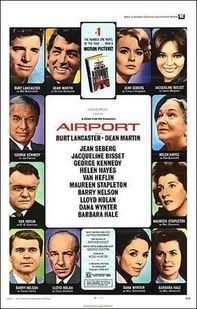
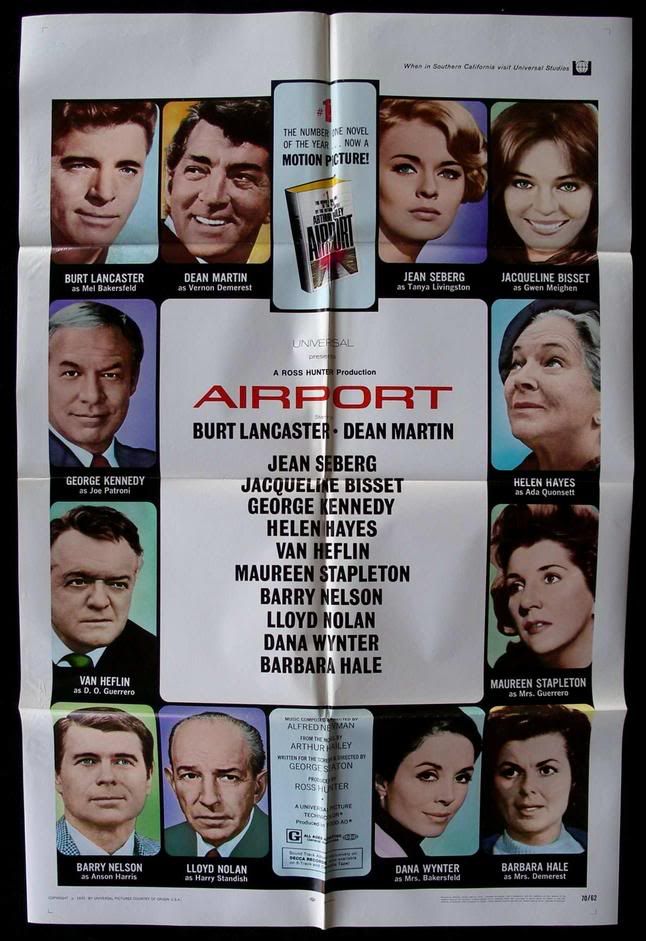
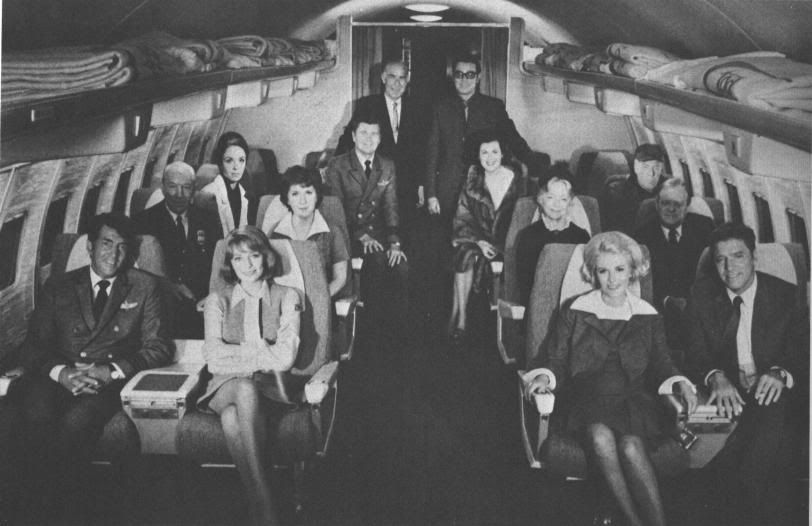
Watching Maureen Stapleton among the huge cast in Airport (1970) feels at times like a cinematic version of that game/song they used to do on Sesame Street: One of these things is not like the others..."


Nifty pic via Castastrophe In The Movies

Stapleton plays Inez Guerrero, the incrementally hysterical wife of the guy who's trying to take down Trans Global Airline's flight 2 to Rome -- you know, the really sweaty, totally twitchy schlub in 23A who's clutching his attache case with a curious intensity? LaStapleton starts out the flick normal enough; indeed, her first scene, in the coffee shop where she waitresses, plays like someone in the projection booth switched in a reel from another picture. The boozy banter & cosmopolitan cast is suddenly shoved aside for Stapleton's sweet, exhausted, loving Inez. Stapleton's work in this first scene is a master-class in how to make the most banal, expository dialogue rich with emotion and revelatory of character. Even more than Brando's glove bit in On the Waterfront, Stapleton's first scene in this popcorny pic -- simple yet complex; electric with emotional clarity -- is exemplary of what Actor's Studio types contributed to the craft of screen acting.

Soon after, though, Stapleton's Inez begins to unravel the mystery of her husband's departure and each scene has Stapleton spooning out another heaping helping of hysteria. She's rushing through crowds. She's staggering from gate to gate. She even runs into a wall. (Right into a wall, promise.) Even here, though, Stapleton's pretty good and playing these scenes mostly alone, with few technical tricks from the cinematographer or sound guy to support her. Somehow Stapleton's able to hold the focus of the scene, wordlessly, even in long-shots of her amidst a sea of extras or on a vast concourse. (Edith Head has her outfitted in a simple brown coat -- albeit with her hair, scarf & waitress uniform all complementary shades of burgundy/auburn.) Finally, when everything's all figgered out that Inez' hubby's trying to blow up the plane, when Inez is finally integrated among the other characters, Stapleton's Inez merely blubbers -- poor catatonic Inez. (But not before she gets to do one of those "caterwaul-slides" -- where she gets to start weeping full-on to camera, her back to the wall, sliding down as she begins to wail... Love those.) Stapleton's final and somewhat incongruous scene -- in which she bursts upon the spectacle of the ravaged passengers deplaning -- is at once hilarious and heartrending. She goes up to these people, grabbing them (mostly by the face) and babbling: "I'm sorry. He didn't mean it. I'm sorry. He didn't mean it." Thanks, Inez... They'll keep that in mind next time they fly.

Yes, LaStapleton's performance in this flick is strange and not infrequently silly. But sheesh, if the woman doesn't bring on the emotional intensity... And by the end, Inez is one of the only characters that the audience is left wondering about. Sure, Maureen got beaten out by co-star Helen Hayes for the trophy. (Unfair contest really, Helen Hayes is doing a Bugs Bunny number while Maureen's being a serious actress...and everyone knows how the Academy just loves Bugs Bunny.)

But, hey: Stapleton kept it real. That's the sign of a true diva.
Sometimes, it's the greater honor just being nominated.

3.13.2006

Maureen Stapleton (1925-2006) in THE FAN - A Great BM Tribute


News just hit that the indomitable Maureen Stapleton passed away. StinkyLulu's long been quite fond of Miss Stapleton, that rare kind of movie star who always looked a little like someone Lu knew, and probably loved. (In tribute, StinkyLulu's first installment of Supporting Actress Sundays this week will offer commentary on one or another of her many many nominations in the category.)

But StinkyLulu will probably always remember Maureen Stapleton best for her performance as "Belle Goldman" in the deservedly unsung -- and largely unremembered -- "thriller" The Fan. The 1981 flick was ostensibly a vehicle for Lauren Bacall, then flush with a revival of her stardom through her surprise success in the Kander & Ebb musical, Woman of the Year. In The Fan, Bacall plays a stage actress, Sally Ross -- still glamorous and tone-deaf after all these years -- who's the unwitting subject of an increasingly crazed fan. The movie's nearly noxious for its gay-baiting homopanic & is precisely the kind of movie that Vito Russo loathed most. ("The Fan" is a pretty blond music-store guy, whose fey masculinity is almost a prototype for all 80s homo characters to follow.) Indeed, this Sally Ross "fan" reads mostly as a big ole Sally Ross "queen" -- and the flick is basically a woman-in-peril slashy, with all sorts of folks getting offed as murdering queen/fan makes his way to Bacall.

A tweenage StinkyLu fell in love with this flick for three main reasons. First, it's ostensibly about BroadWAY!!! with Betty Bacall tunelessly klomping through several insipid musical numbers. Second, "the fan" has a buncha near nudie scenes & even an almost sex scene with another man (who -- this being the early 80s -- he kills right as the sex starts). And, third, StinkyLulu fell in love with Maureen Stapleton, who played Bacall's tough-cookie secretary who catches "the fan" -- in possibly the only murder scene with actual suspense and emotional tension in the whole flick -- & dies trying to protect Boss Bacall. (Then, in a wierdo Dirty Harry turn, Bacall ends up going all vigilante on "the fan" -- mostly cuz he made the mistake killing her beloved Belle.)

Maureen Stapleton is brilliant in this stupid little part in this idiotic little movie. StinkyLulu can hear her voice in the part now. And it's classic Stapleton. Like that tough old aunt, the kind who drinks like a sailor before she has her way with one. Tough as nails, sweet as pie. And -- oddly cuz Stapleton carries all those Actor's Studio behavioral quirks -- somehow was always able to seem real.
Totally real. Totally fabulous. Totally Maureen.