
Showing posts with label 1949. Show all posts

7.30.2008

Elsa Lanchester in Come to the Stable - Supporting Actress Sundays

At this past Sunday's 1949 Smackdown, Aaron (of Sarcasm with a Light Cream Sauce) described himself as "completely baffled" by the nomination for today's profiled performance. And, indeed, it is quite the puzzler. I can only presume that this nomination is a perfect example of what I sometimes call a "coaster" nomination, in which the general swell of nominations for a given picture ends up tossing a Supporting Actress nomination to a performance that would almost certainly not have otherwise made the cut. Sometimes the "coasters" are a delight (like Joan Cusack in Working Girl or Abigail Breslin's Little Miss Sunshine) but just as often the "coasters", especially in retrospect, prove to be confounding examples of that enduring query: "What were you thinking, Oscar?" Indeed, what else can explain why, in a year in which not a single nomination went to the women of A Letter to Three Wives, Oscar somehow saw fit to nominate...
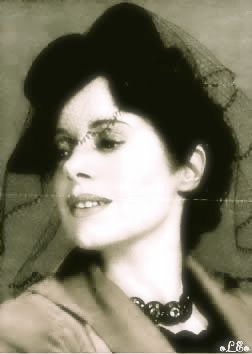
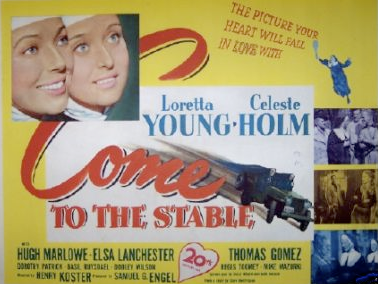
...Elsa Lanchester in Come to the Stable (1949)
approximately 17 minutes and 33 seconds
6 scenes
roughly 19% of film's total running time
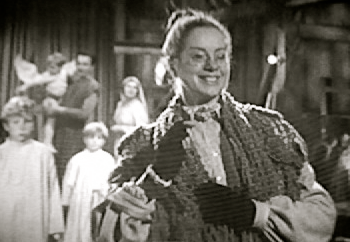
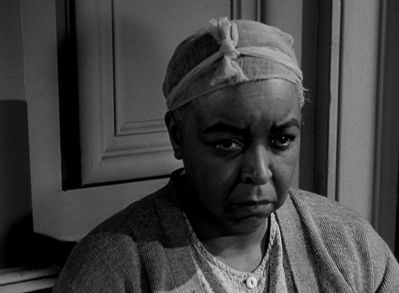
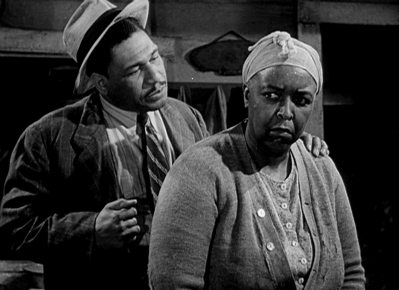
Elsa Lanchester plays Amelia Potts, a painter of religious paintings whose work proves a beacon to two intrepid, entrepeneurial nuns (the nearly insufferable Loretta Young and the nearly delightful Celeste Holm, respectively).
Of course, Lanchester's Miss Potts provides the traveling nuns shelter in her cozy rental shack and listens with interest to their plans to build a children's hospital in her Western Connecticut neighborhood.
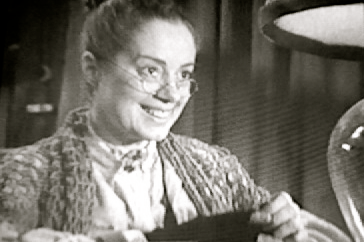
To be sure, Lanchester's Miss Potts also listens with concern.
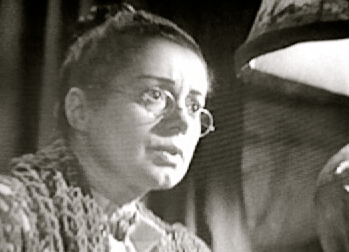
For this religious comedy, Lanchester's Amelia Potts is the essential ambient character, a secondary character who can help set the tone for the whole picture (here, by embodying both good-natured silliness of the piece as well as the sincerity of its religious feeling). Come to the Stable is a very sincere goof of a picture and, on one level, that's precisely what Lanchester's characterization accomplishes: she's sincerely goofy.
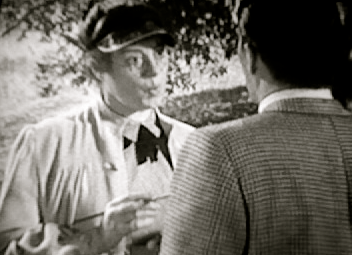
The problem, though, with Lanchester's approach is that she so overplays Amelia's eccentricities that she loses touch what is, arguably, the character's most important feature: her genuine faith.
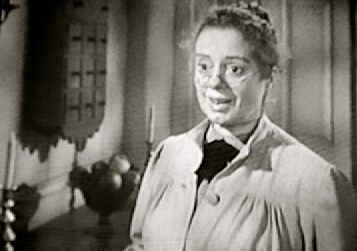
Lanchester's signature quirk might have served the role with charm had she tempered some of Amelia's fretfulness with more of Amelia's genuine faith. But as it stands, Lanchester's performance is a dotty, dithering disaster.
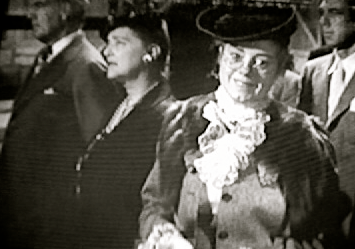
And it's too bad, too. I like Lanchester. A lot. And I think I really like the character of Amelia Potts. It's just that the two put together? This "coaster" is, as one StinkyPal might say, just not good.

7.27.2008

Supporting Actress Smackdown - 1949


The Year is...

And the Smackdowners for the 22nd Annual Academy Awards are...
AARON of Sarcasm with a Light Cream Sauce
BROOKE CLOUDBUSTER of Boy on Film
KEN
of Canadian Ken
with
yours truly, STINKYLULU.

1949's Supporting Actresses are...
(Each Smackdowner's comments are arranged according to ascending levels of love. Click on the nominee's name/film to see StinkyLulu's Supporting Actress Sunday review.)

Ethel Barrymore in Pinky
AARON Miss Em is easily the most important role in Pinky, no matter what the film's title is. She haunts the film before she ever arrives and when she does arrive, Barrymore delivers. It's a star turn, but a well-executed one. Barrymore is crotchety, loveable and sassy.
BROOKE Barrymore manages to live up to the hype that the plot creates for her in a perfectly serviceable and endearing performance. Perhaps it is the film's fault that it ends up no more than this, but it's definitely a worthy nomination.
KEN Barrymore, with her weathered patrician beauty, brings dependable star presence. The sense of imperious mischief is familiar but still pleasurable. Especially her, "All I ever wanted … to have my own way", delivered to Pinky with a conspiratorial wink. (But where was Evelyn Varden’s nomination? She was terrific.)
STINKYLULU Barrymore invests Miss Em with an alacrity and intelligence just slightly beyond what's required by the script. Solid, witty and astute – an entirely adept performance of a showcase role.
TOTAL: 13s

Celeste Holm in Come to the Stable
KEN Celeste Holm realized that Stable was essentially mounted as a vehicle to promote and prolong the box-office twinkle of Loretta Young (which it did). Asked which nun she played, Holm replied "the one that’s slightly out-of-focus". She’s a good sport but the wobbly French accent defeats her.
STINKYLULU Celeste Holm is entirely adequate in the role of Sister Scholastica, somehow surviving both her miscasting and her costar with a witty, empathetic, vivid grace. Holm's face registers empathy and gravitas with undistracting warmth at precisely the right moments but, even so, it’s merely adequate work.
AARON Holm is too good for this role by far, but it seems to fit her in an odd way. The film is a silly little confection, and the viewer leaves with that impression mostly because of the giddy joy that Holm brings to each of her scenes. It's an honest, earnest, Chaplinesque performance that makes the entire film watchable.
BROOKE
For a role in which she was horribly miscast, Holm gives a performance that sometimes edges into greatness. But, Sister Scholastica has nothing to give the actress and she ends up spinning gold from coal.
TOTAL: 10s

Elsa Lanchester in Come to the Stable
STINKYLULU Lanchester's signature quirk might have served the role with charm had she tempered some of Amelia's fretfulness with more of Amelia's genuine faith. But as it stands, Lanchester's performance is a dotty, dithering disaster.
AARON
I am completely baffled by this nomination. Lanchester's performance consists mostly of standing around gaping in shock and awe at the havoc the nuns are wreaking. Even when the film asks more of her, in her single scene with Hugh Marlowe, Lanchester stays on the same note.
KEN The drawling eccentricity, the preoccupied twittering have been used to better advantage elsewhere. Agreed, the picture’s just Catholic cotton candy. But Loretta Young does make a great Supernun (she and Thomas Gomez work especially well together). Lanchester, on the other hand, does little more than exist.
BROOKE Lancaster has perhaps one of the least interesting or compelling roles in the movie and although she seems to be trying to attempt to do something with Amelia, her successes are at best limited.
TOTAL: 5s

Mercedes McCambridge in All the King's Men
BROOKE A disappointingly uneven performance. McCambridge nails Sadie at some moments, but loses her in between scenes and sometimes during scenes; amounting to little more than what is a tag-along nomination.
KEN McCambridge circles this crude mess of a movie like a pissed-off bumble-bee. Best in her moment of cathartic, exultant shock after Ireland (who plods through the picture looking like an unmade bed) slaps her. She knows she’s sunk her stinger into a nerve.
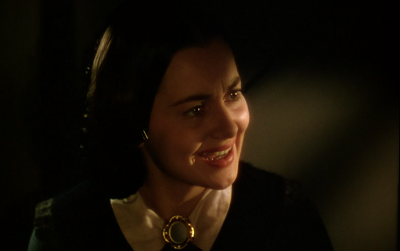
STINKYLULU McCambridge's performance delivers many vivid, and skillfully rendered, moments of clarity to this fascinating and prescient film. Yet, somehow, McCambridge's lapses between electric clarity and indistinct cardboardness culminate in a strangely discordant performance. I wanted to love this performance as much as I sometimes did in a specific moment, but ultimately I'm just confounded and Mercedes McCambridge's fascinating but erratic work in the role.
AARON All the other characters in All the King's Men are conflicted, but McCambridge's Sadie isn't conflicted at all. This makes her interesting onscreen, but only for a limited time. The actress is hampered, too, by what the social mores of the day allow onscreen. It's a performance that starts off wicked and enjoyable, but ends up rather flat and predictable.
TOTAL: 12s

Ethel Waters in Pinky
BROOKE A great performer gifted with a great role. Unfortunately, Waters doesn't even get into the real depths of what could've been a truly heartfelt performance of Granny, but what is there is detailed and full-bodied enough to deserve a nomination.
STINKYLULU Waters' performance is, by turns, vivid and blurry. Waters presents a completely realized characterization in one moment, a 2nd tier stock performance in the next. Waters is good in the role, sometimes great, but even a performer as formidable as Waters can only do so much when the film seems to be working against her.
KEN Granny’s essentially a defender of the segregationalist status quo. Complicating modern reactions to her performance. And her "wisdom" often comes off as sanctimonious badgering. Still, Waters’ face teems with spectacularly photogenic emotion. Especially in that stunning reveal at the end of Barrymore’s final scene.
AARON Waters brings a grounded naturalism to her role. It's a strange performance that feels out of place in this film filled with melodramatic acting, but I loved Waters all the more for this. Nearly every move feels lived-in and real, and the pain that registers on her face when she realizes her best friend is dying is palpable.
TOTAL: 14s
Oscar chose...
Mercedes McCambridge
in All the King's Men
But the SMACKDOWN confers the honor to...
ETHEL WATERS as the
Best Supporting Actress of 1949!


BUT, lovely reader, what do YOU think?
Please share your thoughts in comments.

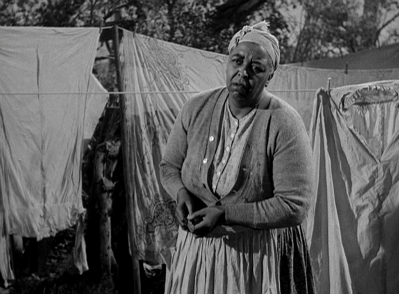
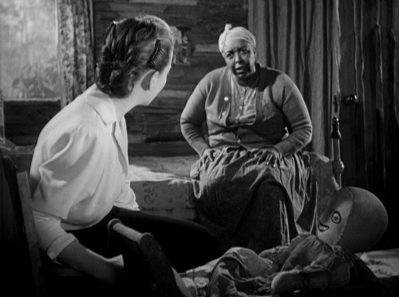
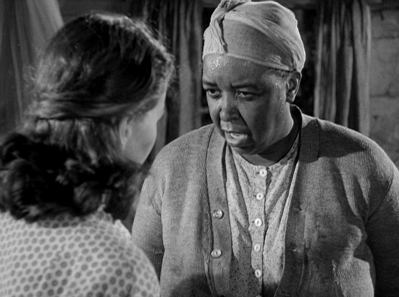
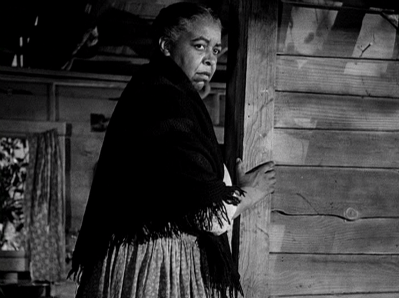
Ethel Waters in Pinky (1949) - Supporting Actress Sundays

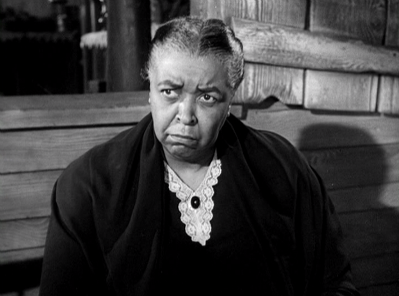
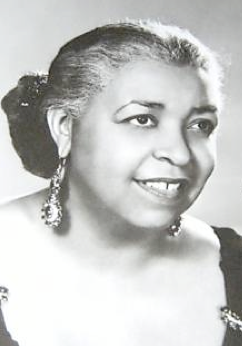
Rarely, lovely reader, have I so struggled in resolving my feelings about a performance as I did while developing this week's profile. It's a legendary performance by a legendary performer, one I'm still struggling to parse out for myself. Of course, I'm talking about...

...Ethel Waters in Pinky (1949)
approximately 29 minutes and 57 seconds
21 scenes
roughly 29% of film's total running time
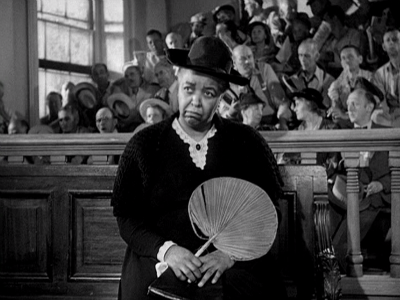
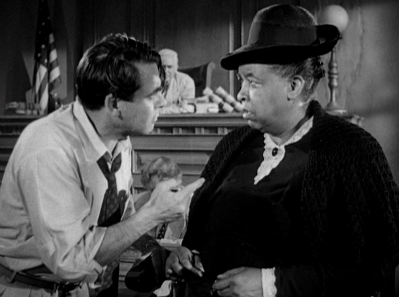
Ethel Waters plays Aunt Dicey, a hard-working washerwoman in the rural South whose devotion to both her granddaughter and her former employer results in a set of events that threaten the only life Aunt Dicey has ever known.
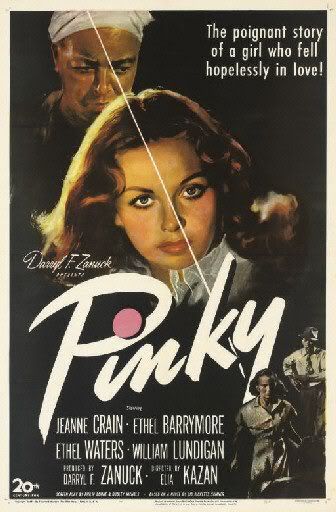
Pinky, the film's title, refers of course to the nickname given Aunt Dicey's granddaughter, Patricia, a fair-skinned young black woman recently returned from the North where she "passed" for white while pursuing her nursing degree.
Waters's Aunt Dicey, of course, disapproves of Pinky's "passing" deception, affirming the core moral of this tale ("you must be decent to others and 'true' to yourself, no matter the consequences").
Waters is formidable in the humble role of Aunt Dicey, especially in the films first several scenes when she's laying down the exposition while also communicating how a humble black woman in the Jim Crow South might maintain her self-respect in the face of daily indignities (a faith in God, a commitment to doing the right thing, and a clear understanding of one's place). Yet Waters's Aunt Dicey is also one of the films most prominent defenders of the existing, racially segregated social order. In many ways, Aunt Dicey is the character who feels the film's central conflict most profoundly: Aunt Dicey's compelled to support her granddaughter as Pinky attempts to honor Miss Em's dying wishes; at the same time, Aunt Dicey's mortally terrified of so violating the social codes of the day.
Aunt Dicey's dilemma is a potentially powerful one, and Waters seems entirely capable of delivering a knockout dramatic performance, yet Elia Kazan's film finds itself more invested in what becomes the core relationship between Pinky and Miss Em (a narrative that is more about accessing the privileges of whiteness than about dealing with the shifting meanings of blackness). So, without much attention from the script or the camera (or, most notably, her own costars), Waters is left pretty much on her own and, perhaps as a result, her performance is marked by curious moments of stylistic discordance.
An organic naturalism amplifies some scenes (as when Waters conveys the potency of Aunt Dicey's grief at Miss Em's imminent passing) while stock posturing diminishes others (as when Waters's face freezes in a broad but hollow grin as she ventures to check on Miss Em, or in a mask of uncertain anxiety as the huckster Jake waxes ominous).
Waters is good in the role, sometimes great. But the film remains uninterested in Aunt Dicey, except as its symbol of everything good in a basically awful social system.
Basically, the film situates Aunt Dicey as someone to be treasured, to be honored, and to be pitied.
And Waters does what she can to elevate the role beyond its base simplicity, but even a performer as formidable as Waters can only do so much when the film seems to be working against her. The film may be "about" the immoral idiocies of the color line but the film also fails to invest Aunt Dicey's character (and, by extension, Ethel Waters' performance) with the possibility of dynamic personhood. (And it's probably best to not get me started on the ignominy of Aunt Dicey's final scene, an ostensibly "lightly mocking" moment which bears a barely hidden cruelty -- to actress and to character -- that I find utterly shocking.)
Waters' performance in Pinky presents a frustrating conundrum. Her Aunt Dicey is, by turns, vivid and blurry. Waters presents a completely realized characterization in one moment, a 2nd tier stock performance in the next. It's an erratic performance of a complicated role that seems to have been directed with benign (?) neglect. A worthy nomination for a formidable performer, to be sure, but the performance itself remains a confounding mess that I yet struggle to sort through.