 Check back later today/tonight.
It's almost done but...
I gotta catch a plane.

Ponders the myriad pathologies of pop culture.
Obsesses about actressing at the edges.
Loves grilled cheese.
ARCHIVE OF SUPPORTING ACTRESS SUNDAYS & THE SMACKDOWN
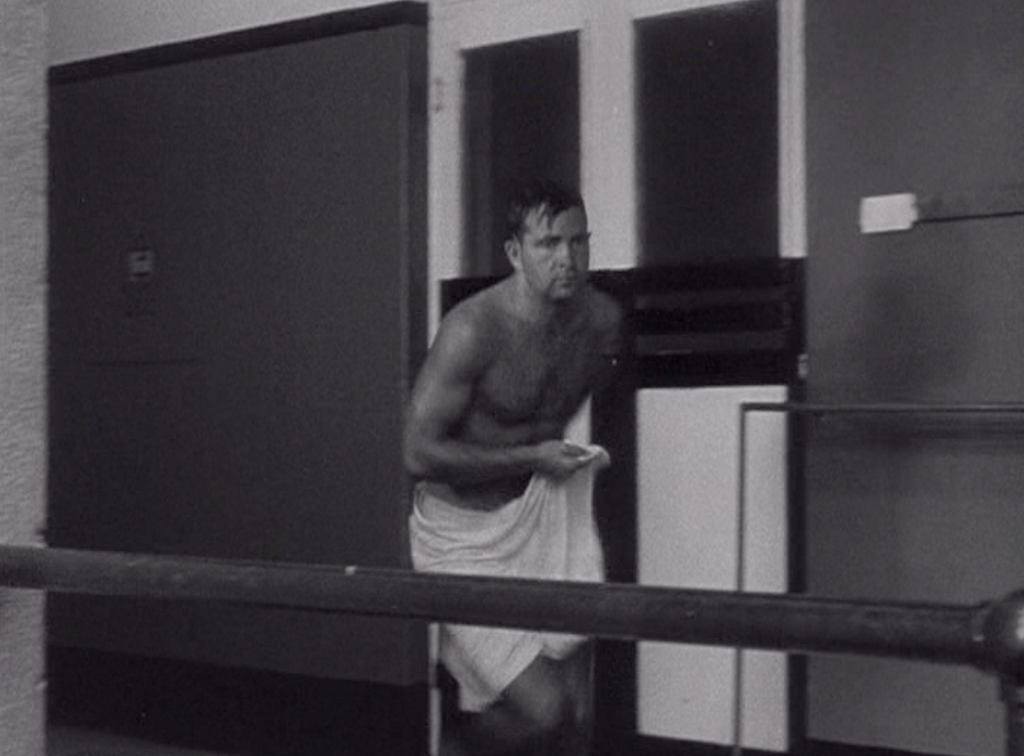
Among the more startling moments for me in Martin Ritt's Cross Creek arrived with the introduction of the ancillary character of Paul, the hired man who helps Mary Steenburgen's Marjorie Kinnan Rawlings whip her orange grove into shape. Within the film, the character is nearly incidental -- part narrative necessity, part ambient detail. But 'twas the casting of the role that yanked me awake...

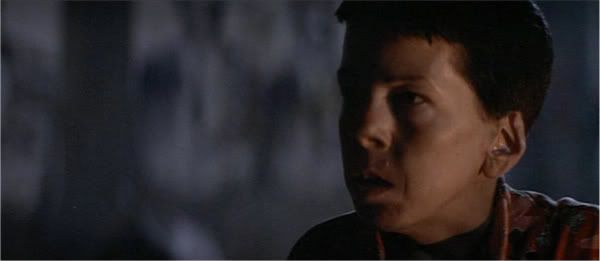
For, in the 1983 film, the role of the hard-working farmhand and part-time moonshiner is played by one of the most important actors of my childhood, Ike Eisenmann. Eisenmann is perhaps best remembered for his portrayal of Tony, the boy witch from the first iteration of the Witch Mountain series (a role which had him adopted/abducted by a guignol Bette Davis in the wackadoo sequel). But I first fell in swoon with Ike as the child protagonist of my favorite teevee show circa 1977, The Fantastic Journey. And for a brief period, young Mr. Eisenmann enjoyed, along with Matthew Laborateaux, the status of being my very favorite actor. At least through the end of the 4th grade. 'Tis always strange to see kid actors grown up. And even stranger to reencounter adult versions of those kid performers, especially when those actors were the ones who stirred such intense but not-yet-understood feelings way back then. And when they look so much as they did, yet entirely -- ahem -- different? It's a startling encounter, to say the least.

 "Actressing at the edges" emerged almost inadvertently as my descriptive catchphrase for what I'm most fascinated by in the Supporting Actress category. It evokes what I love most about watching certain performers on screen -- their ability to make the most of whatever they're given to do onscreen in ways that suit the character, the situation and the film. I love scenestealers, to be sure, but great actressing at the edges isn't really about yanking focus -- it's about transforming the limits of a role (nominal screentime, scripted cliches, banal stereotypes, etc) into unanticipated possibilities. And I can think of few better examples of someone turning such scripted limits into unforeseen performance possibility than...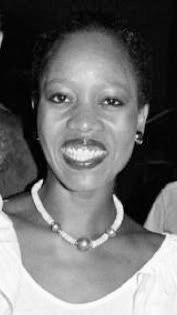

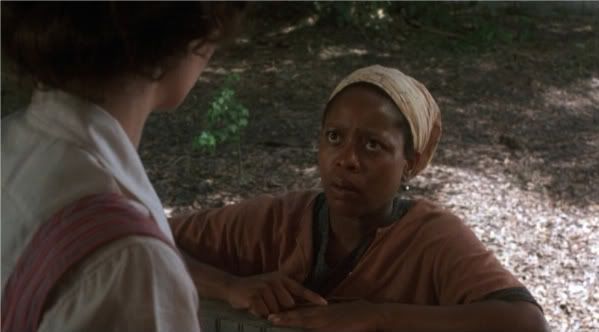 Marjorie's arrival -- as an apparently wealthy and well-mannered single woman -- to the (literally) backwater community causes a flutter of interest, most notably that of Woodard's Geechee who arrives inquiring about job. Woodard's Geechee wheedles her way into a position as Rawlings's maid, mostly by pretending not to understand Marjorie's painfully polite demurrals as she gregariously chatters on and on. The combination easily erodes down Marjorie's feints at resistance and also lays the foundation for what becomes a foundational relationship for Marjorie's life in Cross Creek.
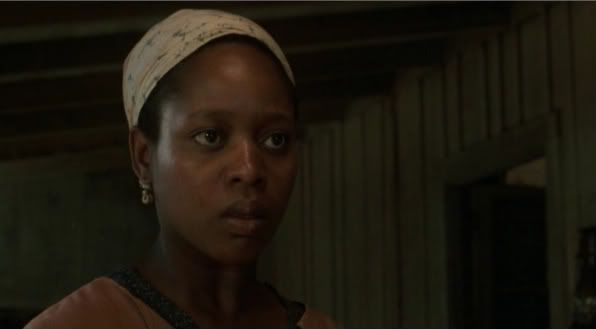 Among the handful of Cross Creek denizens that the film depicts as shaping the writer's vision of her world -- the poor white family who are in so many ways up the creek; the proud hired man and his pregnant wife; the moonshiner; the child whose choice to make a pet of an orphaned fawn became the inspiration for Rawlings's Pulitzer-Prize winning novel The Yearling; the hotelier Norton Baskin who would become her husband -- Geechee emerges as perhaps Rawlings's most intimate friend. As I understand it, the figure of Geechee in the cinematic treatment of Marjorie Kinnan Rawlings's story is a composite based upon lives of several maids who worked for the writer throughout her time on Cross Creek. I don't know enough about the Rawlings story to know which elements came from what, but this little bit of trivia amplifies what I admire most about Woodard's work in the role of Geechee.
 The role of Geechee is laden with racial cliche. She's poor, unsophisticated, deferential, devoted to her white employer and provides some of the film's few flashes of comic relief. To her credit, and to the credit of the filmmakers, however, Woodard utilizes such cartoonish character traits as the broad outlines for what is a boldly independent characterization.
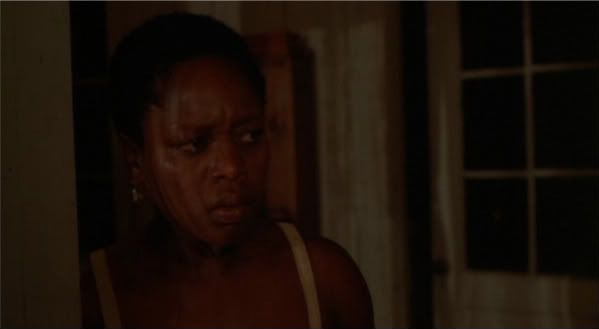 Woodard's characterization establishes Geechee as utterly distinctive person.
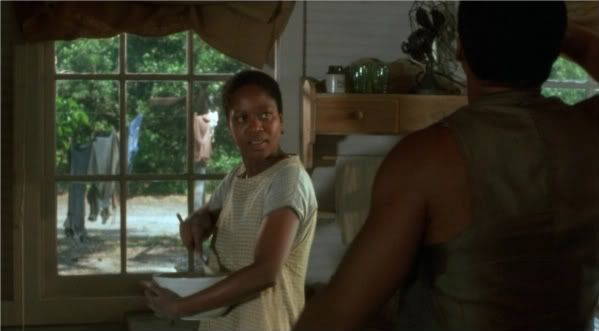 Her work in the role -- the flashes of contradictory emotion that complicate the meaning of her words and actions -- seems to actively resist the cinematic idealization of black servitude. Woodard's Geechee may be this white lady's maid but Woodard's performance reminds us at nearly every turn that Geechee is also a complex individual making complicated choices as a poor, single black woman making a living in the rural south.
 Woodard's biggest scene elaborates Geechee's dilemma. Marjorie has fired Geechee's layabout ex-con boyfriend, and presumes that Geechee will be leaving with him. Woodard's Geechee confronts Marjorie on this choice, on whether Marjorie wants Geechee to leave and why Marjorie's not speaking up when she sees Geechee making a bad decision. Woodard handles this scene with acute insight. Geechee's challenge to Marjorie works largely because Woodard has already shown Geechee to be independent, strong-willed and fairly bold.
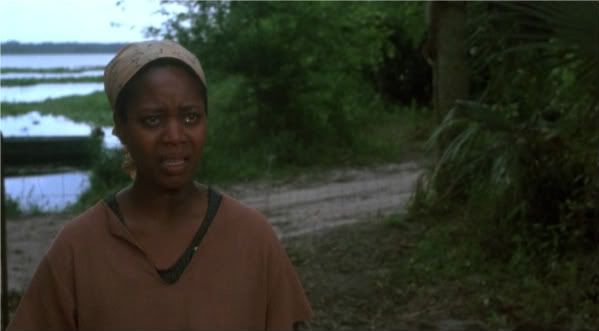 Woodard textures this scene with complex, idiosyncratic emotions that amplify Geechee's clarity as a character, transformed -- not defined -- by her professional relationship with Marjorie.
  Indeed, Woodard's presence in the film is one of Cross Creek's most clarifying threads. The film is one of those writerly pictures where people amble about making pronouncements about the way things are. And, with the exception of her two or three big head-butting scenes with Steenburgen's Marjorie, Woodard's Geechee is largely an ambient presence in the film -- part of the landscape of the film's tribute to Rawlings appreciation of this particular landscape and its denizens.
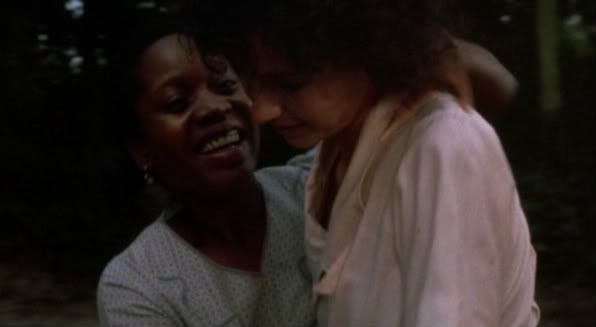 That said, Woodard's work in the role of Geejee is a near perfect example of what I mean when I say "actressing at the edges." There is no reason she needs to be this good in this role. The film certainly doesn't need Geechee to be as human, as complicated, as strange as Woodard makes her here. Plenty of the other supporting players do just fine in Cross Creek, floating on the buoys of familiar stock characters and delivering pleasant, effective but unremarkable performances. Yet, in nearly every scene, Woodard gives Geechee far more than the role requires while maintaining the necessary level of plausibility and the balance of the scene.
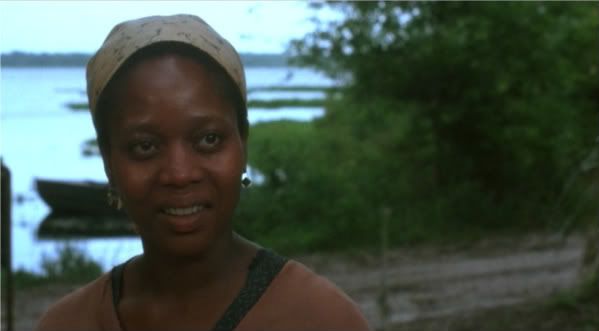 Woodard invests nuance, texture and humanity in what was scripted to be a one-note role. Yet through the combined force of her charisma, empathy and intelligence, Woodard's performance permits us to hear and feel that one-note with uncommon depth and resonance. And that's what actressing at the edges is all about...
There are some rare instances of exceptional actressing at the edges that, no matter how hard I try, continue to defy my powers of explication. They are the sorts of performances that remind you that the word "extraordinary" does not simply mean "remarkable" but also "very unusual." This is one such performance. I'm transfixed as I watch it, but flummoxed when I try to talk about it. Of course, I'm referring to the "extraordinary" trophy-snagging work of...
Woodard invests nuance, texture and humanity in what was scripted to be a one-note role. Yet through the combined force of her charisma, empathy and intelligence, Woodard's performance permits us to hear and feel that one-note with uncommon depth and resonance. And that's what actressing at the edges is all about...
There are some rare instances of exceptional actressing at the edges that, no matter how hard I try, continue to defy my powers of explication. They are the sorts of performances that remind you that the word "extraordinary" does not simply mean "remarkable" but also "very unusual." This is one such performance. I'm transfixed as I watch it, but flummoxed when I try to talk about it. Of course, I'm referring to the "extraordinary" trophy-snagging work of...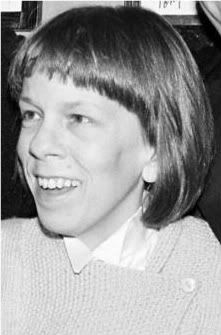

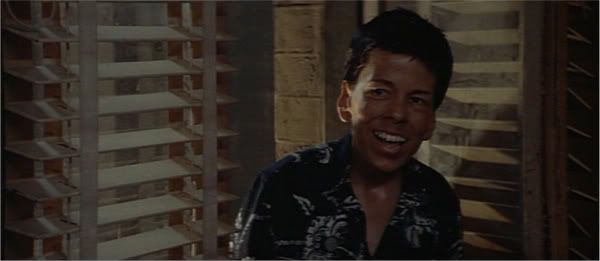 A fixture among the loose cohort of Western journalists reporting on the political unrest in Indonesia circa 1965, Hunt's Billy Kwan is a stranger among strangers.
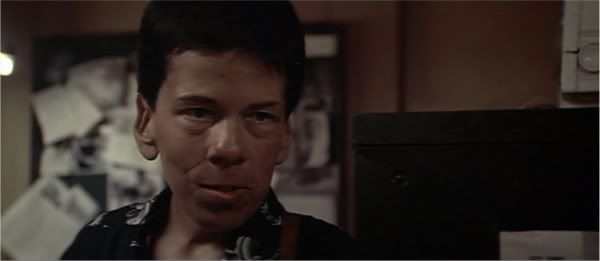 Short of stature (Billy's regular referred to as a "dwarf" by others within the narrative), and of mixed-race descent, Billy's an outsider everywhere he goes, which he -- through sheer force of personality -- parlays into a curious elite status.
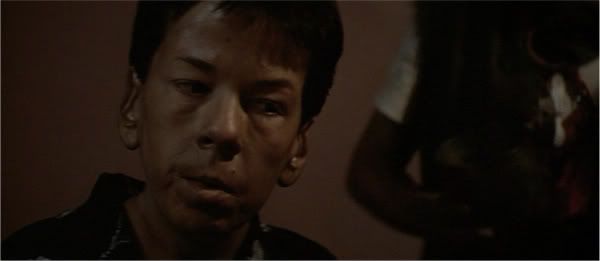 He may not belong anywhere, but he gains access everywhere.
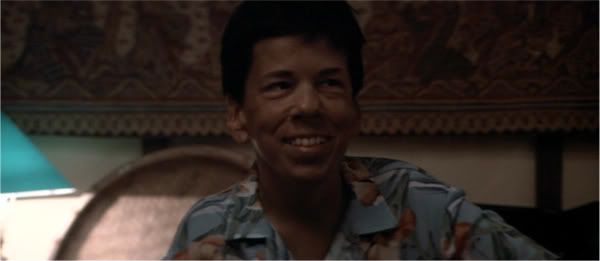 Gregarious, confident, and passionate, Billy also fancies himself to be something of an independent spy, a freelance covert agent assigned to keep an eye on the political scene in post-colonial Indonesia (and of the intricate social networks of the expatriate journalists).
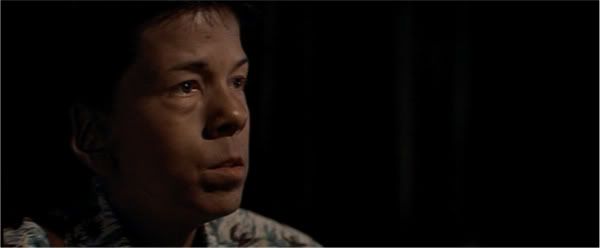 In what is possibly the film's most compelling mystery, Hunt's Billy Kwan keeps "dossiers" on all the people he knows, in which he preserves photographs and observations of particular "figures of interest" in his world.
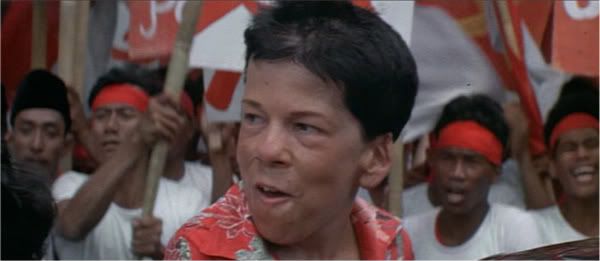 In Gibson's Guy, Hunt's Billy Kwan discovers his ideal collaborator -- a man capable of getting the story and getting the girl, all while Billy's right behind him making everything happen.
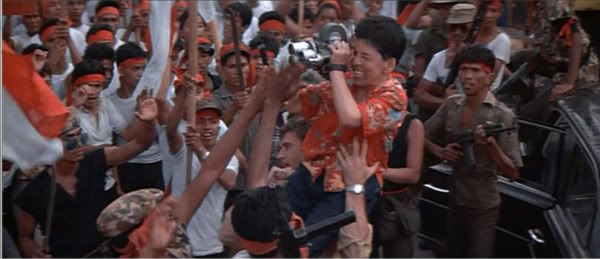 (Director Peter Weir utilizes an elaborate shadow puppet metaphor to underscore the ostensibly greater themes of the film, the most conspicuous of which is "who's really manipulating the characters in this oblique drama of adventure and intrigue").
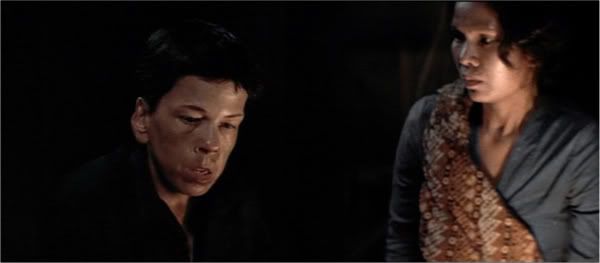 As the journalists around him become absorbed in the minutiae of verifiable details and ideals of objectivity (all while behaving like drunken goons on a weekend pass), Billy remains convinced that he's the only one to understand what's right and what's wrong in this big picture.
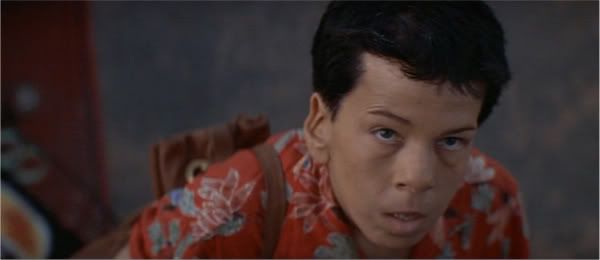 Such grandiosity is both Billy's defining characteristic and, perhaps inevitably, his fatal flaw.
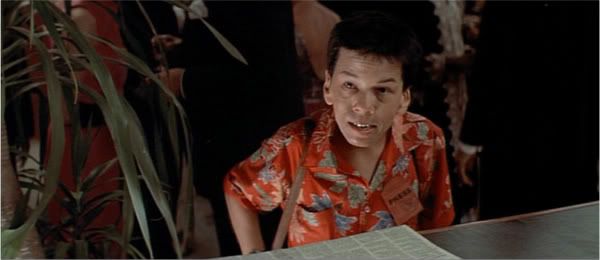 Linda Hunt's performance connects palpably to the character's central conflict and, in so doing, the actress crafts a performance that is, by turns, startling, strange and compelling.
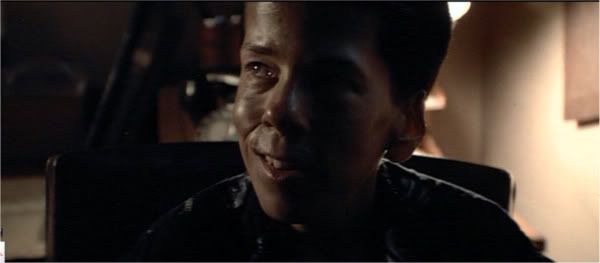 Hunt's Billy is both a cynical realist and a sensitive idealist. His circumstances of birth have trained Billy to be a savvy manipulator -- someone who understands that it's sometimes easier to be the master of ceremonies while pretending to be the team mascot -- yet Hunt's searching performance underscores how nonetheless guided by an unusually open-heart.
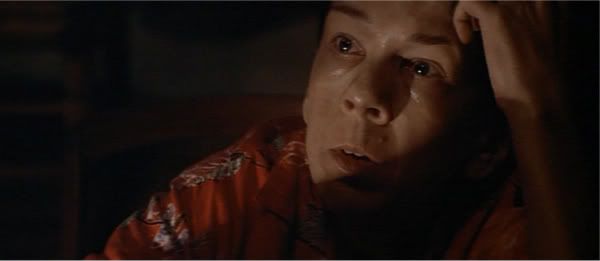 Hunt's performance balances this cynicism and sensivity with an at times electrifying alacrity.
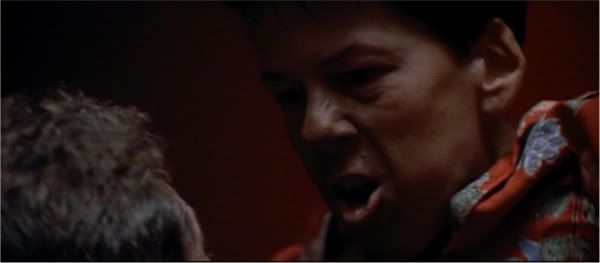 As Billy's ideals are shattered in quick succession by those around him, his manipulations become ever more cruel, possibly -- we are left to wonder as the film builds to its climax -- sinister.
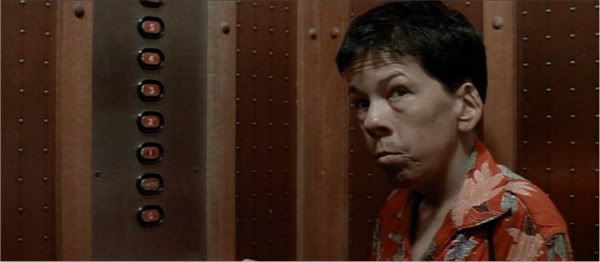 But Billy is the film's moral compass (while Mel and Sigourney are its amoral, adventuring eye-candy), so his final actions necessarily reveal the character to be more of a martyr than a monster.
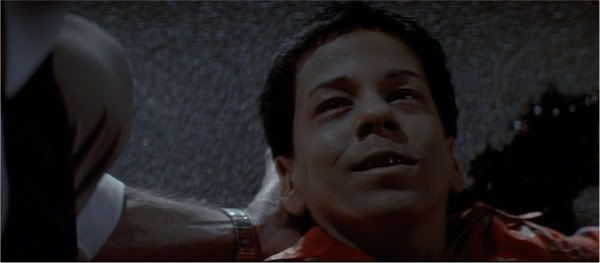 And Linda Hunt's performance as Billy Kwan remains a fascinating artefact.
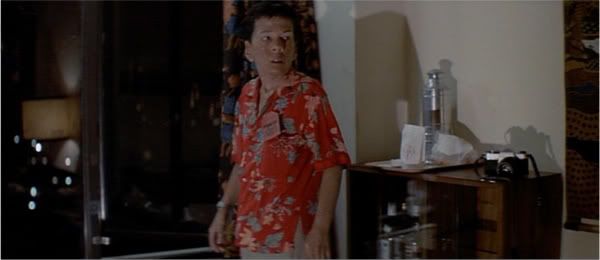 The only example of gender-blind casting to have ever received the Academy's golden seal of approval, Hunt's performance proves difficult to parse for a couple reasons. First, the film's general style is one of glib realism, with the routinely familiar stock characters animated mostly by naturalistic grit (aka sweat, sex, booze and profanity). This is, with the exception of Hunt's Billy Kwan, the sort of movie where the costumer and casting director perform the main work of characterization. Hunt, on the other hand, is almost hyper-stylized in performance and affect -- a choice that both fits with and reveals the character but is sometimes jarring in this otherwise hyperrealistic cinematic landscape. Second, Hunt's physicality in the role is astonishing, not simply for the fact that this Connecticut-born actress is playing a biracial man but for how far beyond such notions of type this characterization effects. Hunt's Billy Kwan is not especially Asian nor especially male; Hunt's Billy Kwan is mostly just this weird little man named Billy Kwan. On stage, I suspect the cross-gender illusion would be incredibly effective; on film, Hunt's performance creates an astonishingly idiosyncratic creature who becomes, in some ways, the most visually jarring but emotionally "real" presence in this ostensibly realistic film.
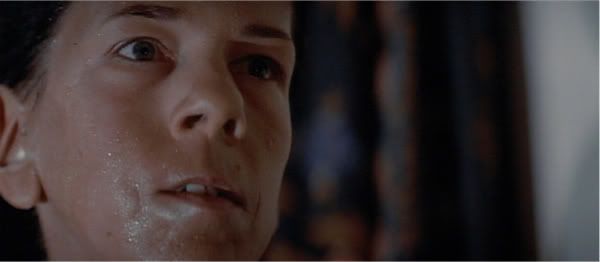 Hunt's work in the role of Billy Kwan is utterly unique and, often, marvelous. And though the role and its presentation remain ripe for easy critiques of the more retrograde aspects of the film's status as a simple-minded, post-colonial parable, it's difficult to deny the accomplishment of Hunt's work -- both in terms of craftsmanship and emotional intensity -- in the role.
 Linda Hunt's performance is strange, compelling and utterly unique. A fascinating entry into the canon of supporting actressness.