
Showing posts with label tennessee williams. Show all posts

11.28.2007

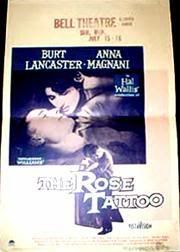
Marisa Pavan in The Rose Tattoo (1955) - Supporting Actress Sundays

Yes yes yes, The 1955 Smackdown's already done and gone but SlackerLulu yet has profiles to post. My apologies for the delay. The Betsy Blair profile will be up...someday; luckily she's used to the wait...

Attentive readers among you already know that StinkyLulu's a little queer for Tennessee Williams. Indeed, few artists in any medium hold more enduring fascination for Lu than Thomas Lanier Williams. A special few among you will understand. (To you others, well...Tennessee geeks are born not made so just suck it up.) Anyway, as tends to happen with obsessions, StinkyLulu has all kinds of theories about Tennessee Williams. Most of which deal with the myriad ways in which civilians misunderstand or underappreciate the Williams ouevre, usually as a result of casual misogyny or crass heterosexism. Theories upon which StinkyLu's capable of holding forth ad nauseum at the slightest provocation (just ask Criticlasm, he's experienced this first hand). But, with this week's (long overdue) profile, Supporting Actress Sundays has now officially inaugrated StinkyLulu's Tennessee Williams Theory #369: "The Girl Ain't No Innocent Bystander." Theory #369 holds that the young/er women of TW's early plays (Laura, Stella, Rosa) are actually the central characters in their respective dramatic worlds -- hermetic family worlds in which the promise of love transformatively disrupts the internecine dynamics of dysfunction. Typically, these "girl" characters are presented as innocent bystanders to this familial pathology, the walking wounded weathering the family firestorm. Theory #369 holds that, in fact, these "girls" actually are perhaps the most instrumental characters in the mix, though their "action" is made to seem negligible because of their age, gender and position in the family. Indeed, the perfect case study of Theory #369 might be seen in the performance of...
approximately 26 minutes and 13 seconds
21 scenes

roughly 22% of film's total running time

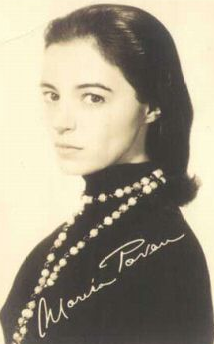
Marisa Pavan plays Rosa, a young woman in full feminine bloom, desperate to escape the shadow her mother, the formidable Serafina (Anna Magnani in an elemental, enthralling performance).
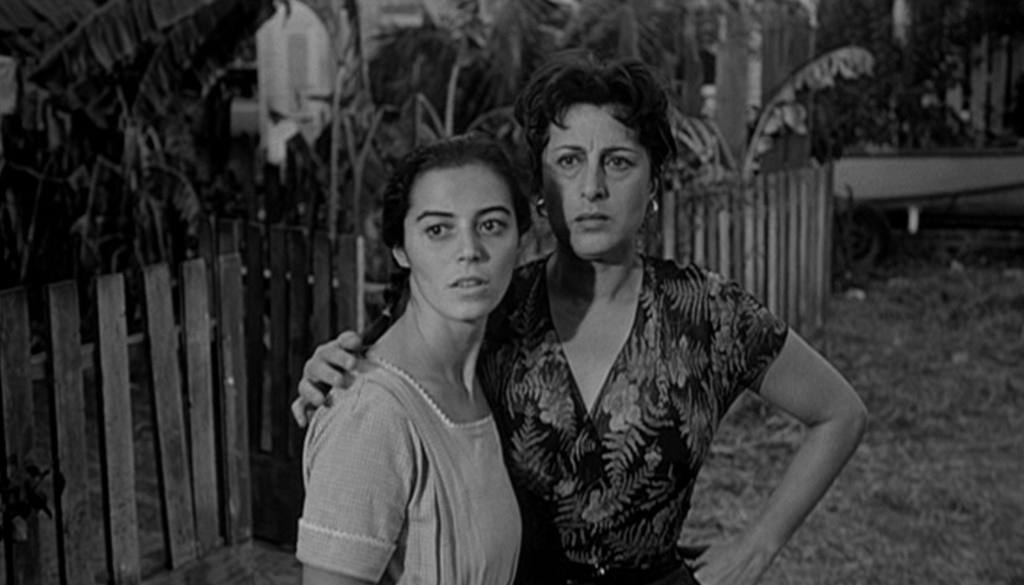
The Rose Tattoo is premised upon the idea that erotic love offers the most potent confirmation that life is worth living. The story begins with Magnani's Serafina, turgid with delight that she's pregnant with the child of her adored husband while Pavan's Rosa -- all gawky adolescence -- is yet a child, naively awestruck by both her parents. When the husband/father is killed, Serafina transforms from a dynamic, proud woman to a shrieking, desperate emotional cripple. Here, the narrative jumps forward a handful of years to depict the squalid wreckage of Serafina's life, in which Rosa's resemblance to her dead father blinds the grief-stunned Serafina to the fact of her daughter's developing personhood. Serafina cannot bear to look at Rosa, for the girl so resembles her father, even as Serafina cannot bear to let Rosa from her sight, for her daughter is the only living reminder of Serafina's beloved.
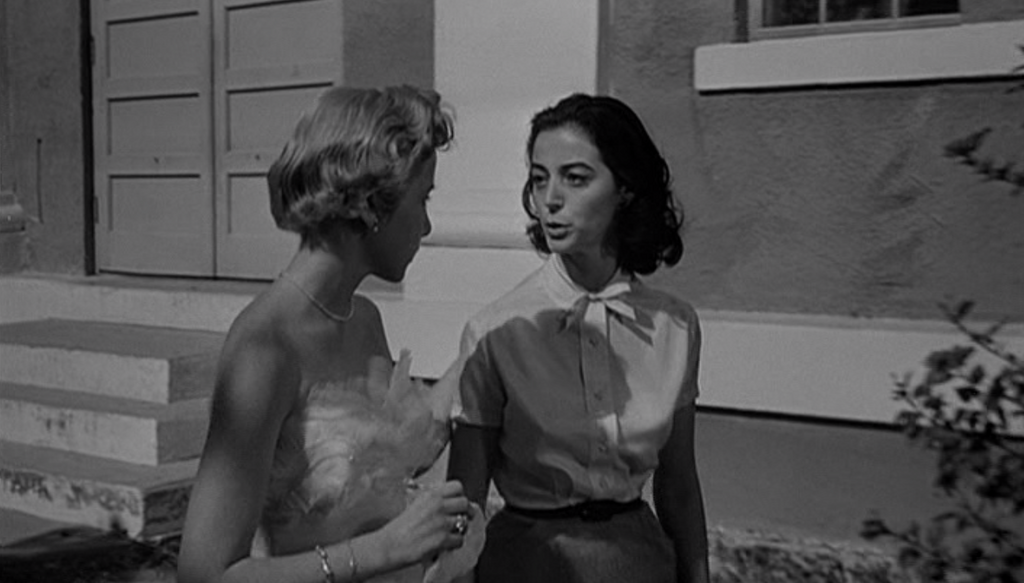
For her part, Rosa reacts as any teenager might: she can't wait to escape the humiliation of her mother's controlling gaze. And, for Rosa, the occasion of her high school graduation is the opportunity for which she's been waiting. Rosa grasps the first accessory in reach that might aid in her escape: a sweetfaced sailor boy named Jack (the perfectly cute Ben Cooper).
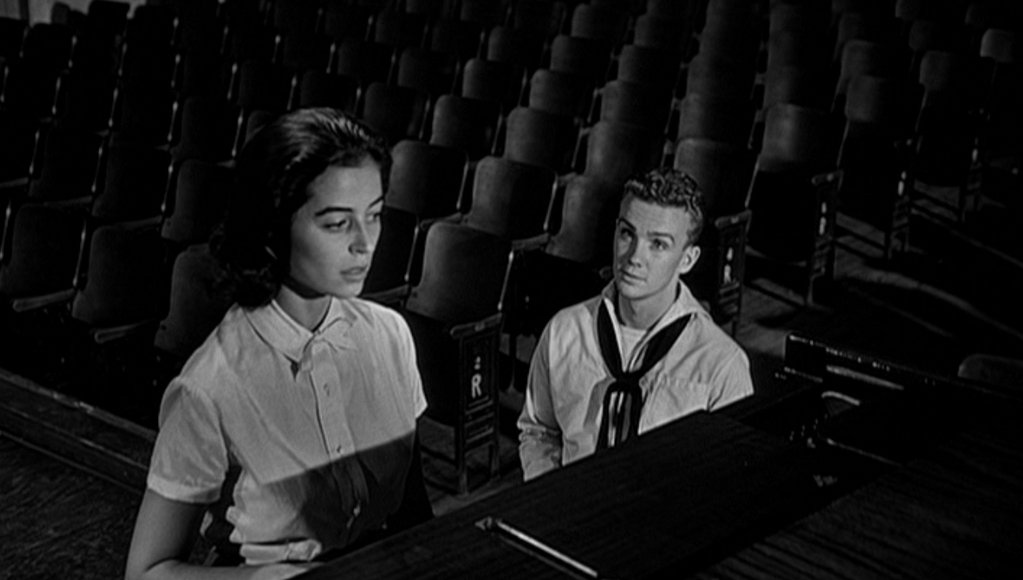
Rosa and Jack embark on a typically insane adolescent whirlwind romance, falling in deepest swoon in the space of an afternoon.
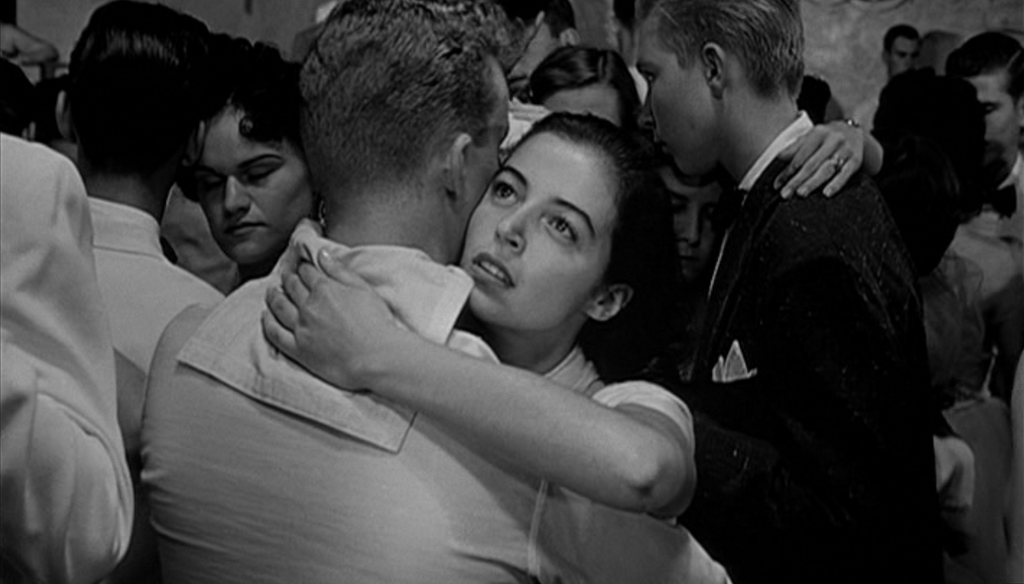
Then, when Serafina -- through a fearsome intuition of which she is almost certainly unaware -- tries to confine her daughter instead of letting her graduate, Rosa realizes -- through an intuition of which she too is likely unaware -- that Jack is her ticket out...out of her mother's control, out of her invisibility imposed by her mother's grief.
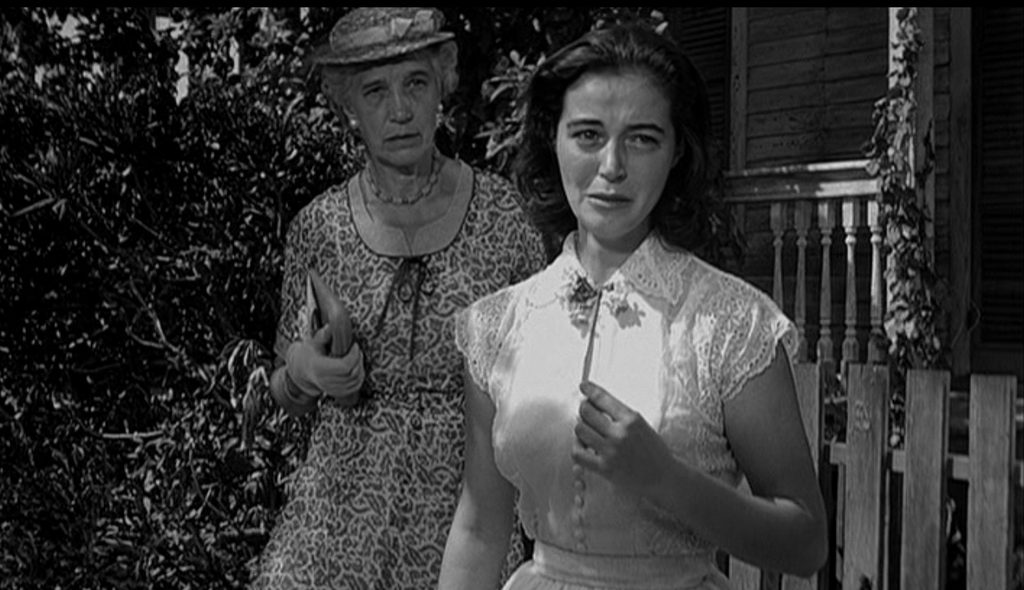
But Rosa needs her mother's approval, and so returns with Jack in tow to introduce her new love to her mother.
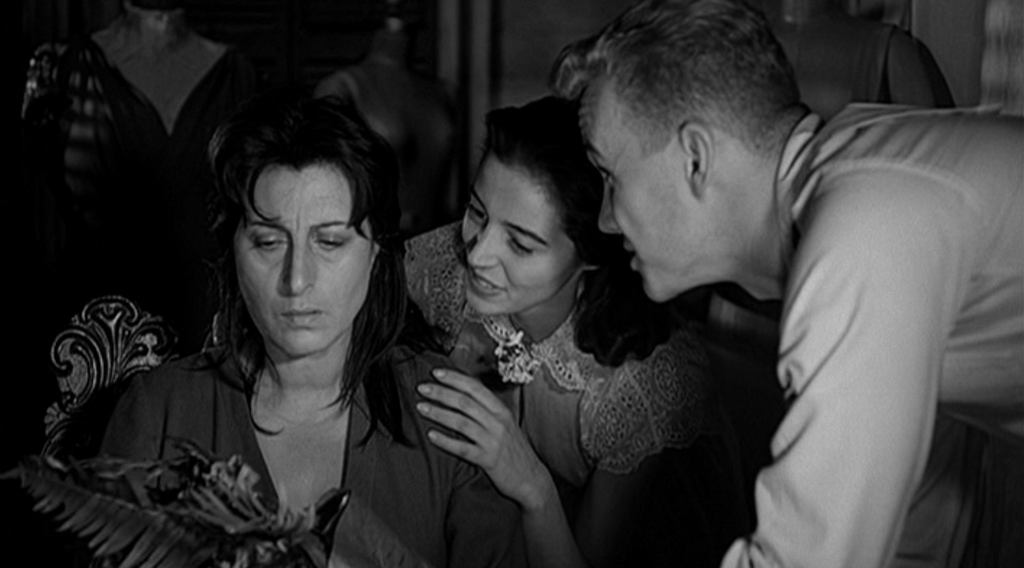
And Serafina, remarkably, awakens ever so slightly to the reality of her daughter's passionate connection to this boy.
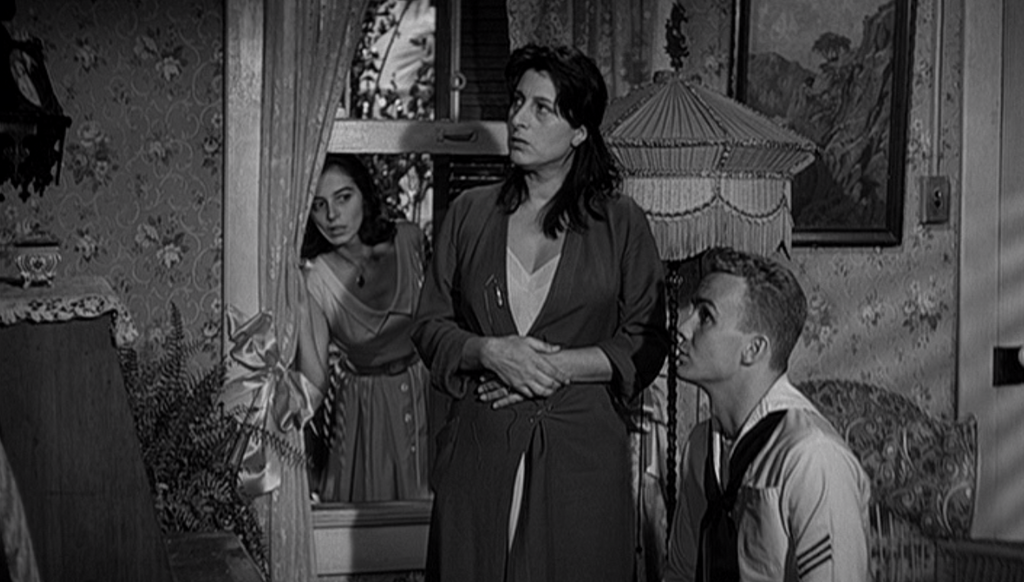
Serafina's acquantance with her daughter's new beau opens the door for what is the central arc of The Rose Tattoo, the story of Serafina's return to womanly life when she meets a man who is not her dead husband but who makes her feel, in some important way, as he did. While all this is happening, Rosa's out playing sailboat with her sailor.
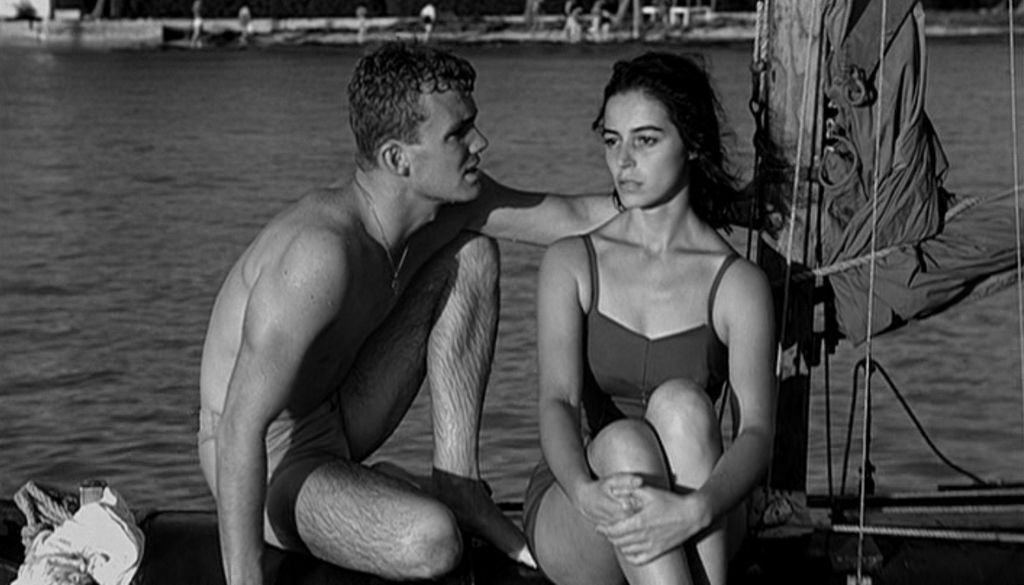
You'll note, lovely reader, that throughout this summary I've assiduously avoided any discussion of Marisa Pavan's performance. And, frankly, I think that's because Pavan's work in the role does little to illuminate either the action or the character. Pavan's performance is, to my mind, a perfect misreading of the role. Pavan's Rosa is the innocent bystander, a sturdy reed withstanding the gale force winds of Magnani's Serafina. Which makes a kind of sense. BUT Rosa's name is Rosa in a play that's all about roses. She should be a prickling beauty, redolent and intimidating, the only creature capable of cowing her mother...
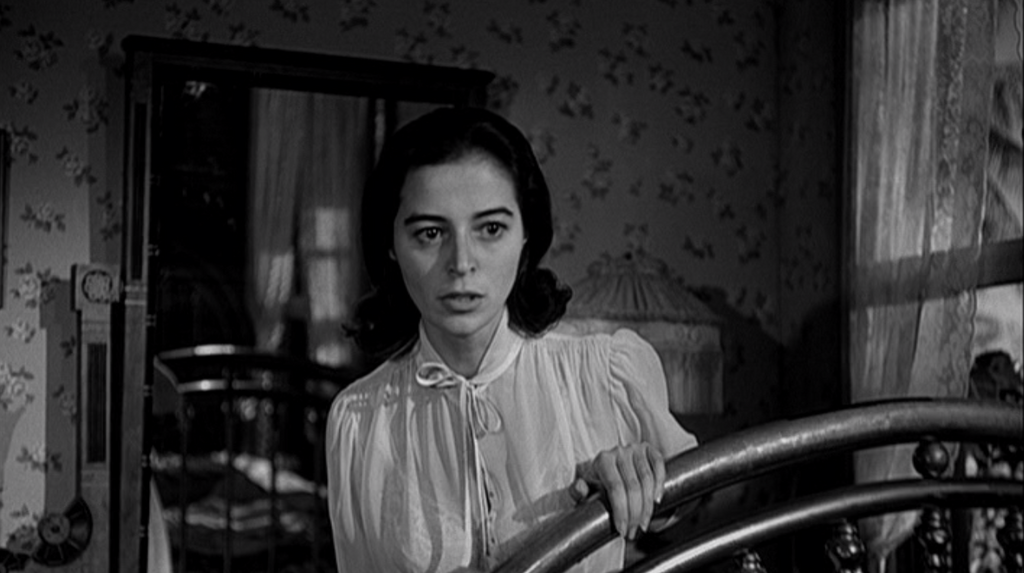
But Pavan's Rosa is tentative where she should burst with youthful confidence, shrill when she should be bold, defensive when she should be strident.
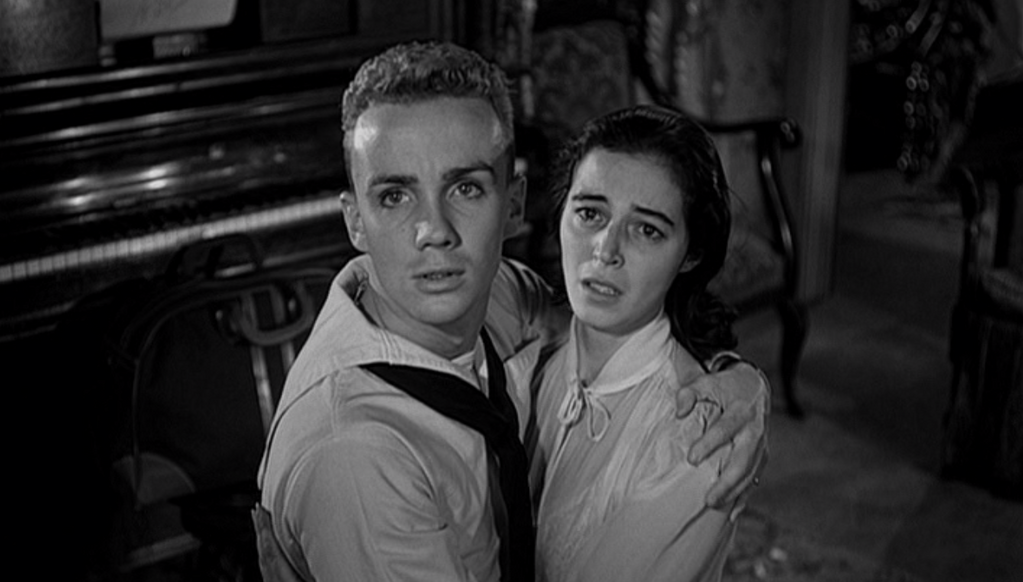
Pavan's Rosa becomes a supplicant, beseeching her mother's blessing. This is not, in and of itself, wrong. But Rosa's love for Jack does not need Serafina's blessing. Rather, Rosa's discovery of love is the blessing, a blessing for Serafina -- a miraculous revelation, really, of the lifeforce veiled by the caul of Serafina's grief.
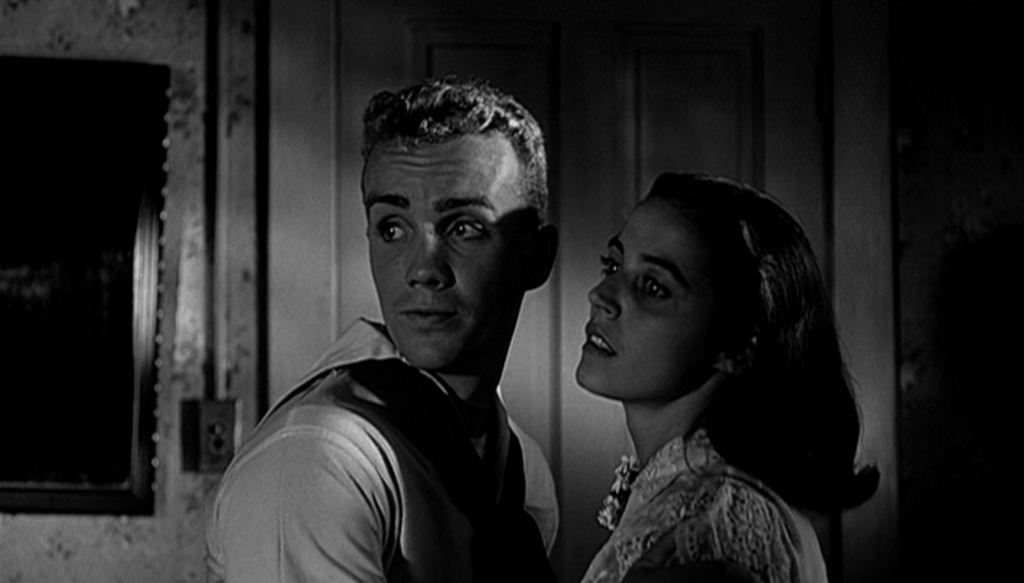
But Pavan's Rosa provides little in the way of revelation, little light amidst the shrieking shadows. As Rosa, Pavan offers a functional but misguided performance, one that tips the balance of The Rose Tattoo, one of Tennessee's most stubbornly, redemptively hopeful works.

11.15.2006

When Queens Collide

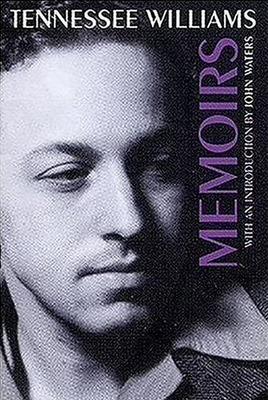
In this coming Sunday's book review section, the New York Times will be running an adapted version of John Waters' introduction to the new edition of Tennessee Williams' notorious, Memoirs (1972). Williams' Memoirs is one of the greatest pieces of loathed literature of the 20th century. And John Waters' essay is simply marvelous all on its own, rife with rank zingers that convey the acuity of his appreciation of Williams as well as his own distinctive taste. To wit:

Maybe I like “bad” Tennessee Williams just as much as “good.” This year a boxed set of DVDs was released containing all of Tennessee Williams’s best-reviewed movies: “A Streetcar Named Desire,” “Cat on a Hot Tin Roof,” “Sweet Bird of Youth,” “The Night of the Iguana,” and “The Roman Spring of Mrs. Stone.” But I want the “bad” Tennessee Williams boxed set: “Boom” (the greatest failed art film ever made) directed by Joseph Losey and starring Elizabeth Taylor as Sissy Goforth, the richest woman in the world, and Richard Burton as the angel of death; “Last of the Mobile Hot-Shots” (the film version of “The Seven Descents of Myrtle”); “This Property Is Condemned” with Natalie Wood; and even “Noir et Blanc,” the 1986 Claire Devers film version of “Desire and the Black Masseur.” The “bad” Tennessee Williams is better than most of the “good” of his contemporaries.
Waters just loves Williams, and it shows. And StinkyLulu loves them both. Indeed, these two crazy visionaries are two of the brightest flamers in StinkyLulu's own personal pantheon of The Patron Saints of Fabulous Faggotry. (BTW - This post's title rips off another in the Fabulous Faggotry pantheon. Any guesses?) What's handy about this new edition of Memoirs -- StinkyLulu already owns 3 -- is that the Tennessee Williams section of StinkyLulu's bookshelf abuts the John Waters section.

It's so nice when the world sees fit to align according to StinkyLulu's obsessions...

8.20.2006

Shirley Knight in Sweet Bird of Youth (1962) - Supporting Actress Sundays

As of today's entry into the Supporting Actress Sunday-palooza, StinkyLulu will be introducing a new feature: a rough accounting of the number of scenes and total screen time in each performance. See, as some of you might recall, just a week ago, Lulu guest-posted on The Film Experience a little piece about the relative scale of "supporting" performances. The resulting discussion that raged in comments suggested to StinkyLu that Supporting Actress Sundays really should include this basic information, if only to round out things a little. Now, StinkyLulu's not promising that these numbers are agonna be scientific, or anywhere near it. This'll just be a rough summary of (a) the total screen time of the performance, (b) the number of scenes in which the nominated performer appears, and (c) percentage of the film's total screen time inhabited by the nominated performance. Only in exceptional circumstances (ie. for the really really short performances) will StinkyLulu undertake a line-count.

So, without further ado, let's get to the Supporting Actress who'll help Lulu inaugurate this new feature and who just happens to be the reliably delightful...

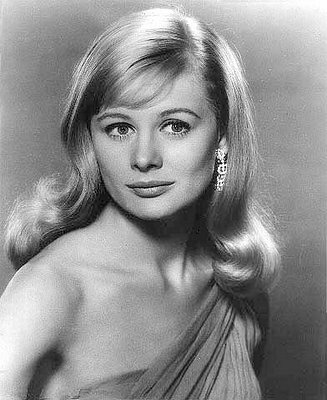
...Shirley Knight in Sweet Bird of Youth (1962)

23 minutes on screen
6 scenes (including 2 wordless flashbacks)
19% of film's total screen time

Now, StinkyLulu would never claim that Shirley Knight is one of the greatest actresses of her era. Her filmography just doesn't hold up next to -- say -- a Burstyn, a Maclaine or a Fonda. But. StinkyLulu would staunchly proclaim that Knight is without a doubt one of the greater actresses of her generation, even though most of her best work has been captured not on celluloid but on the boob tube. Anyway. StinkyLulu loves Shirley Knight. That's that. And it's always a treat to see her radiant pre-plumpness, which is at its near best in 1962's Sweet Bird of Youth. (To see the full force of early Shirley, check out her performance as Lula in 1967's Dutchman & prepare to have your mind blown.)

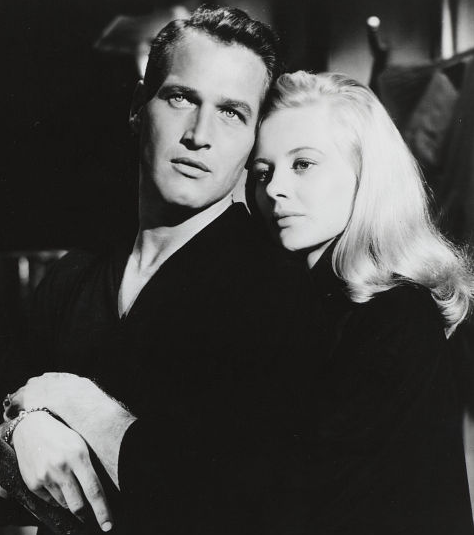
Sweet Bird of Youth -- like most cinematic adaptations of Tennessee Williams at midcentury -- is very nearly a mess. Most essentially, the story's about Chance Wayne (Paul Newman), an uncommonly attractive young man who has no real idea who he is, what he wants, or how to get a clue. At the story's outset, Chance -- a fading gigolo by trade -- skids back into his hometown on the Mississippi Gulf Coast in the company of the Princess Cosmonopolous -- aka the gruesomely addicted actress Alexandra del Lago (Geraldine Page) -- to get "his girl" and take her away with him to fame and fortune. Chance's girl is Shirley Knight's character -- the improbably named Heavenly Findley (bummer of a birthmark, huh). Of course, this ain't the first time Chance has "come back" for Heavenly and the film demonstrates (through insipid flashbacks) just how viciously Heavenly's father, the nasty Boss Findley (Supporting Actor winner, Ed Begley), has gotten rid of Chance each time. Sweet Bird of Youth is an overripe story, chock full of sordid secrets and shocking confrontations, and yet...Chance Wayne remains one of Williams' most mysterious and evocative protagonists and Paul Newman's performance in the part is a recurrent revelation. (Shirley Knight was one of the few newcomers to film production, which was rich with carryovers from the acclaimed broadway cast.)

At first glance, Heavenly seems to be there to be an embodied paragon of Southern white womanhood, but Shirley Knight's performance -- through languid gestures and startling anger -- immediately flags that there's something greater at stake for this belle. As the idealized love that Chance just can't shake, Knight's Heavenly emerges as perhaps the most interesting of Williams' delicate feminine flowers. And that's in no small part because, in Sweet Bird of Youth, even Heavenly has a sordid past (an illegitimate, terminated pregnancy via Chance in the screen version; a hysterectomy as a result of venereal disease via Chance on stage). In the film, Knight's portrayal tracks Heavenly's evolution from the naive schoolgirl to the weary young woman, still beautiful but nearly worn out by the uses she has been put by her father's political drive. Knight's best work can be seen in her first scene opposite her father, in which she confronts his hypocrisy and is humiliated for it. Here, in a scene that could merely be saucy or sassy, Knight conveys Heavenly's complicated intelligence and deep sadness, which her father simply cannot see. Knight's performance also avoids easy pitfalls when she tries to get Chance to give up on her. Knight's Heavenly knows that Chance is nearly as dumb as a post (but in a sweet way) and that he's getting far out of his depth. Knight's eyes convey all of this pity and fear and sadness -- too bad she has to do all this while driving a motorboat and hollering to Chance who's climbing a lighthouse. And even though the filmmakers tweak the story to somehow give it a happy romantic resolution (and thereby divesting it of its nearly classical gory tragedy) the film works as well as it does largely because Knight's Heavenly actually comes off as an unusually intelligent, even special young woman.

Shirley Knight's performance as Heavenly is certainly not the best Supporting Actressing of this year. (Not even of this film, as Madeleine Sherwood chacha and Mildred Dunnock dither their respective circles around the whole cast in small but instrumental roles.) But Shirley Knight is smart, sweet, surprising and sexy as Heavenly, a sublimely difficult role which also happens to be the lynch(!)-pin determining whether and how Sweet Bird of Youth makes any sense at all. Indeed, it's great work from one of the greater actresses of her generation...

*****

Be sure to click back on Wednesday and on Sunday for the final two contenders in July's Supporting Actress Sundays as well as the 1962 Supporting Actress Smackdown! Will it be a rout (ala Lansbury) or will something more surprising happen... Tune in to see the fireworks!

7.30.2006

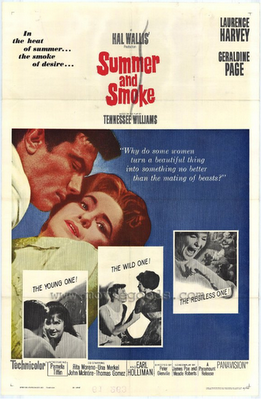
Una Merkel in SUMMER AND SMOKE (1961) - Supporting Actress Sundays

In homage to the performance itself, StinkyLulu's agonna keep this entry into the Supporting Actress Sunday catalog quick. Partly because this performance involves two of StinkyLulu's absolute least favorite things about being a Tennessee Williams fiend: the recurrence of Geraldine Page as a featured player and the simple fact of Williams' worst great play, Summer and Smoke.

Thankfully, there's a touch of delight in this version – a dotty, goofy bauble of a performance by...
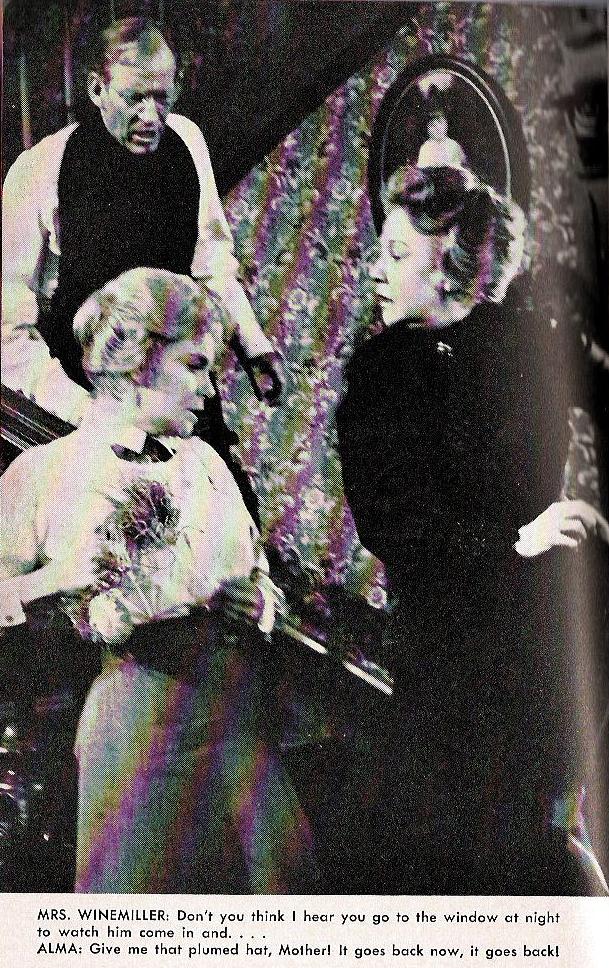
In the 1930s, Una Merkel became somewhat famous in a series a tart-tongued sidekick roles; she revived her career in the 1950s on Broadway. In Summer and Smoke, Merkel plays Mrs. Winemiller – the mother and “cross to bear” of Alma Winemiller (a signature Tennessee Williams’ neurotic played to hysteric dimension by the tic-laden Geraldine Page.) See, Mrs. Winemiller’s a little “off” – possibly senile, certainly nutso, with a penchant for spouting little non-sequiturs that symbolically articulate the emotional subtext of the scene. It’s an open question whether Mrs. Winemiller’s affliction is by disaster or design. (Hey, if StinkyLulu were stuck in the Winemiller house, playing crazy might prove a very useful survival stragegy. You know, lovely reader, like on the subway, when you just want people to leave you the hell alone...)

The character of Mrs. Winemiller serves as a foil for her daughter, Alma (“Spanish for soul” – in case you missed the 300 or so scripted reminders of that fact). To be sure, her mother works Alma’s very frayed last nerve, and Merkel’s Mrs. Winemiller seems almost to have a good time tweaking the mannered “airs” put on by her “spinster” daughter. Merkel spends about half of her screen time in quiet private moments – dressing, struggling with a puzzle, skulking about the house, stealing hats – and the rest shrieking evocative nonsense. Basically, she’s a crazy klepto with a sugar habit and a mild touch of Tourette’s. (Indeed, Merkel's Mrs. Winemiller could probably walk right into a John Waters movie and just blend… And really, Lulu has to wonder if Merkel’s hollering of “The Ice Cream man! Where’s the Ice Cream man?!?!” didn’t just spark the germ that became Edie, The Egg Lady in Pink Flamingos.) Merkel's Mrs. Winemiller is nearly the only dash of surrealist verve in Summer and Smoke, Williams' most luridly sincere piece of romantic piffle. Gotta love La Una for at least that.

But it's a blip of a performance, more an accenting than a supporting role. (Indeed, Una Merkel has more screen time, emotional dimension and narrative import as Verbena the housekeeper in 1961’s The Parent Trap.) Clearly, Merkel's nomination is of the "Not Dead Yet" variety of tributes... Solid, fascinating but incredibly fleeting – without even "that one" scene to which a fan might point in justifying the nomination. And yet, Merkel's Mrs. Winemiller remains the most interesting character (along with the surprising hot Earl Holliman as Archie Kramer) in this turgid plop of a picture.

So, that's it for 1961. Quite a year...
Tune in shortly for The Smackdown.

7.09.2006

Lotte Lenya in THE ROMAN SPRING OF MRS. STONE (1961) - Supporting Actress Sundays

Way back in college, StinkyLulu read Tennessee Williams' novella The Roman Spring of Mrs. Stone over Thanksgiving break one year. And, simply put, Lulu's life was ever changed. Amidst a college orbit that pooh-poohed Tennessee Williams as maudlin and tacky, StinkyLu stood as a staunch (if under-read) advocate for Tennessee's strange magic. Thankfully, a much admired prof admonished Lulu: "You haven't really read Williams until you've read his fiction." It was a passing mention that sent Lulu on a Williams jag (plays, movies, fiction, memoir, biography) that continues, intermittently, to this day. And truly, as much as Lulu does love the plays, Tennessee's short fiction is what most amazes, enthralls and confounds Lulu, time after time after time. (Check out "Hard Candy" -- kazowie.)

Perhaps the most well-known of William's fiction, The Roman Spring of Mrs. Stone tells the story of faded actress Karen Stone (Vivien Leigh, in a great, under-appreciated performance) and her "assignation" with young Paolo (a shockingly pretty Warren Beatty). The story explores the collision of loneliness (Karen, a wealthy American widow listlessly wandering into middle age) with desperation (Paolo, a young man greedily struggling for survival in barely rebuilding post-WWII Italy). Whether on the page or on the screen, The Roman Spring of Mrs. Stone pivots upon one of Tennessee's most thrilling gifts, his adeptness at being at once explicit and oblique. The story's pervy particulars of pretty Italian gigolos hustling monied Americans on the Roman steps are just hanging right out there for all to see, yet somehow the lurid details remain unspoken. This -- staring at the filth while delicately stepping past it -- is Tennesee's trick of tone in this piece about denial, desperation and loneliness. (What the characters call "drift"...)

But a sense of menace haunts this drift, in the person of The Contessa, and portrayed on screen by the second of 1961's Best Supporting Actress nominees...

Strangely, StinkyLulu found it hard to focus on the character of the Contessa. She's just icky, and scary, and discomfiting. That guest who always shows up early to the party, eats/drinks/smokes everything in sight, drives nicer guests away early and yet, through some cruel twist of social fate, must be invited. Adorned with a meaningless title, outfitted with eccentricity, chattering endlessly about her alternately tragic/glorious life, The Contessa's a parasite.


More precisely, The Contessa's a pimp. Pimping boys like Paolo to monied matrons like Karen with aggrieved righteousness. Add it all up & it's a virtually impossible part to play, one of the toughest in the Williams repertoire. Even Anne Bancroft's portrayal of the part in the 2003 Helen Mirren version jumps the tracks & runs into squalid mannered monsterdom. Yes, The Contessa's the villain, at once entirely insufferable and ominously terrifying...but how to play her?

Lotte Lenya's casting here is in itself a genius move. Unavoidably yet abstractly European, Lenya brings a surprisingly effective simplicity to the role. Lotte Lenya distills the character's many malevolent motives to one: hunger. Lenya's Contessa cares little about anything or anyone, except eating. Nearly every conversation, every interaction, turns to food. Will she be eating this week? When? What? It's a metaphor, of course; eating represents security at its basest. More than Paolo's cherished new clothes and crisp haircuts; more even than her own actuarial interests in the gifts received by her boys. All Lenya's Contessa cares about: will she eat?

It's a garish, impolite hunger. Made all the more grotesque by Lotte Lenya's loose, goopy-at-the-consonants, manner of speaking. It's a bizarre genius tweaking even the most banal scenes. Lulu's favorite example comes when Lenya's Contessa descends on Leigh's Karen in the buffet line. The Contessa endeavors to drop a few doubt-bombs on Karen by telling the story of "poor Signora Coogan" who Paolo made so hysterical "that the poor thing broke out in a nervous eczema. She looked so hideous with the rash that she flew straight to Africa and hid herself in the jungles." Then, barely a beat, Lenya lifts her loaded fork to Leigh. "Little ham?" Always, Lenya's Contessa comes back to the food.

Certainly, Lotte Lenya's performance in The Roman Spring of Mrs. Stone is a strange and frequently off-putting one. Yet, this time through, and for the first time attending to Lenya's work specifically, StinkyLulu's convinced that Lenya's Contessa stands among the most effective performances of a Tennessee Williams character on-screen. Thank goodness for this nomination, else Lulu might have kept avoiding Lenya's Contessa. (Cuz dang if she doesn't just squick Lulu out.)

And speaking of the nomination:
Does anyone have a clue as to how in the hell Lenya scored the nomination in the first place? She's hardly a Hollywood trouper (like the remaining nominees) and the character's hardly an exhilarating crowd pleaser (like Moreno)? And the performance itself is hardly conventional screen acting... So, lovely reader, any thoughts?