Showing posts with label rita moreno. Show all posts

3.20.2008

My Dinner with...RITA MORENO

Two Thursdays ago, ModFab tagged me to follow a fabulous meme, one which insisted that I fully imagine My Dinner With...

1. Pick a single person, past or present, in the film industry who you'd like to have dinner with, and tell us why you chose this person.
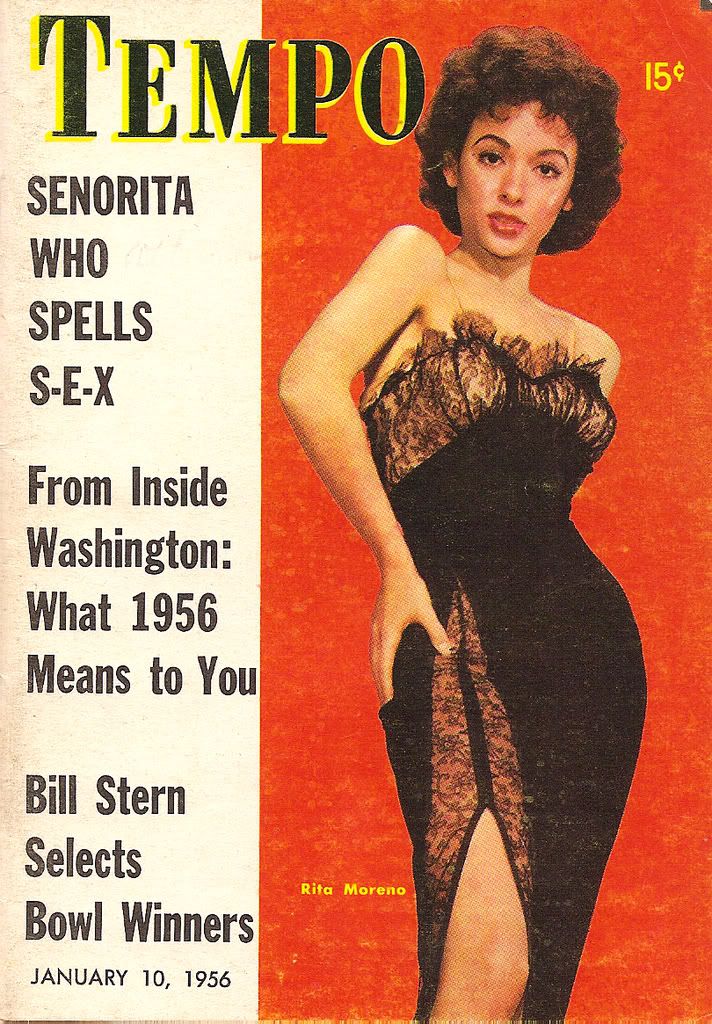
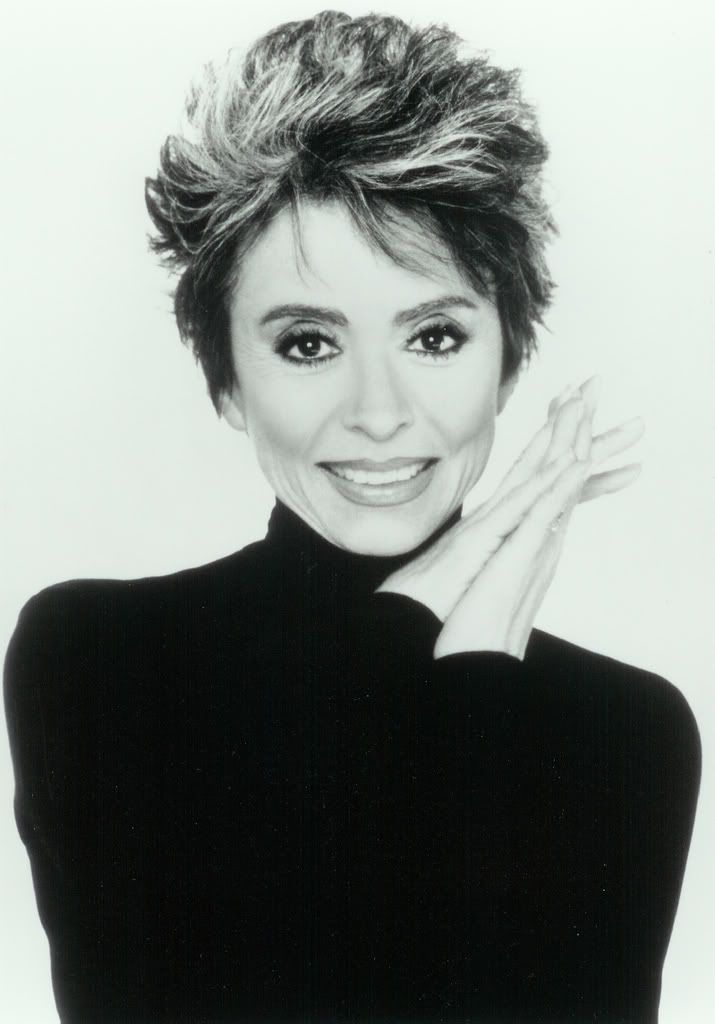
I think I'd like to have dinner with Rita Moreno. And if you have to ask why, lovely reader, you've really just not been paying attention. West Side Story? Tennessee Williams? Gay bathhouses? The Muppets? I've adored Ms. Moreno since I first heard her shout, "Hey You Guyyys," and would love to celebrate the marvelousness of her over a meal.


2. Set the table for your dinner. What would you eat? Would it be in a home or at a restaurant? And what would you wear? Feel free to elaborate on the details.
Hmm. I love boricuan food. A lot. So, I might just go there, perhaps inviting Daisy Martinez to cater a full feast of her choosing while encouraging just a little bit of pan-Latin fusion (you know how much I love a good pupusa). I'm thinking that Rita & I would invite a whole bunch of folks -- only those of whom we were especially fond -- over for a casual gathering, perhaps at a resort of some kind. Dress would be casual, though we'd presume everyone to look fairly gorgeous in that summer afternoon sort of way. After greeting the first few dozen guests, Rita and I would retreat for a time to an opulent private suite. There, we'd dig into a specially arrayed repast, while also dishing the dirt. After about an hour or so, we'd join the rest of the guests downstairs for more fabulousness, reconnecting at opportune, entertaining intervals throughout the evening.

3. List five thoughtful questions you would ask this person during dinner.
- "Where there any interesting conversations about you playing Burmese in The King and I?"
- "What's been the most interesting consequence of your winning the Oscar for
West Side Story?"
- "Tell me all about your scene in
Carnal Knowledge."
- "Which was wackiest: The Electric Company, The Muppets, or The Ritz?"
- "During the 1970s and 1980s, you played non-Latina roles as often as you portrayed Latina roles, while in the 1990s and the 2000s you've played almost exclusively Latin parts. Why do you think that is? And how has being Latina in the entertainment industry changed, or not changed, in the time since you started?"

4. When all is said and done, select six bloggers to pass this Meme along to. Link back to Lazy Eye Theatre, so that people know the mastermind behind this Meme.
I appoint the following as fellow memers: Brad of Oh, Well, Just This Once...; Jakey of Adrift in New York; Rural Juror; Kimberly of Cinebeats; GayProf of Center of Gravitas; and Your Mom.

8.26.2007

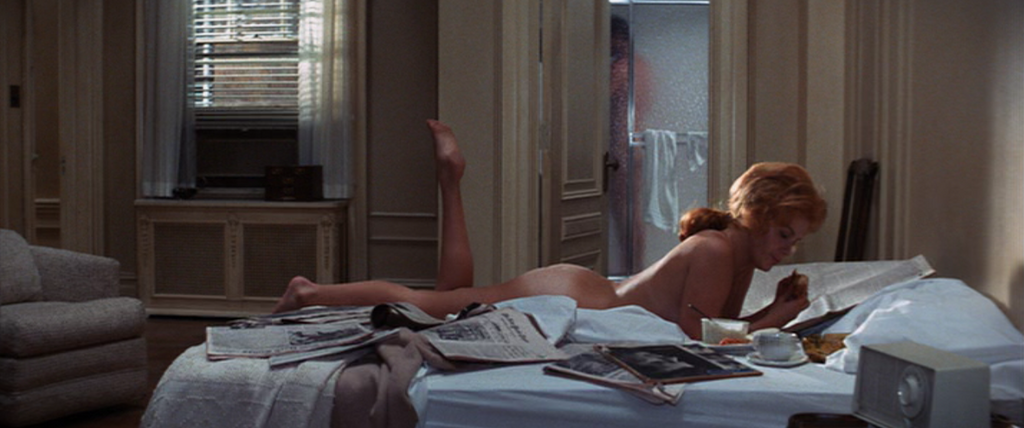
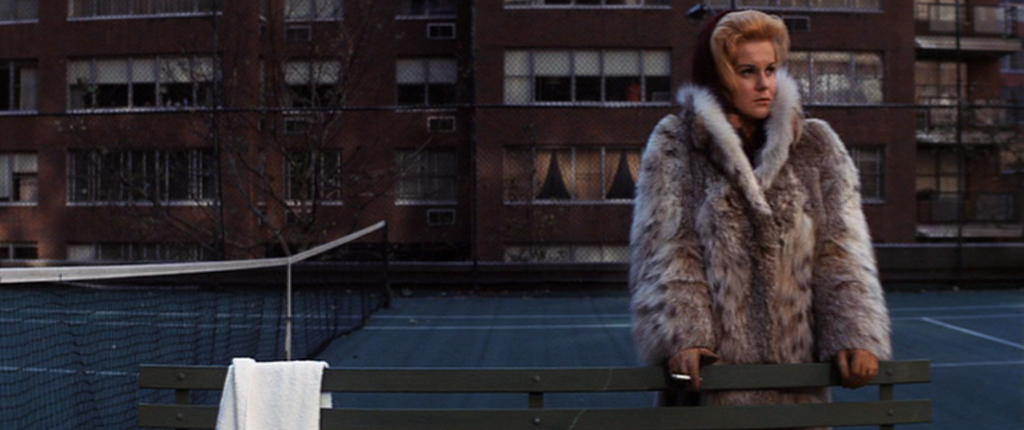
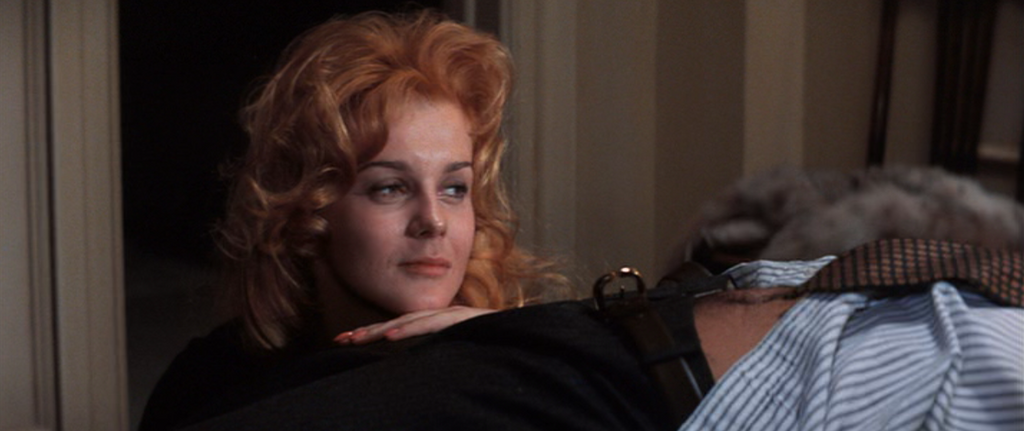
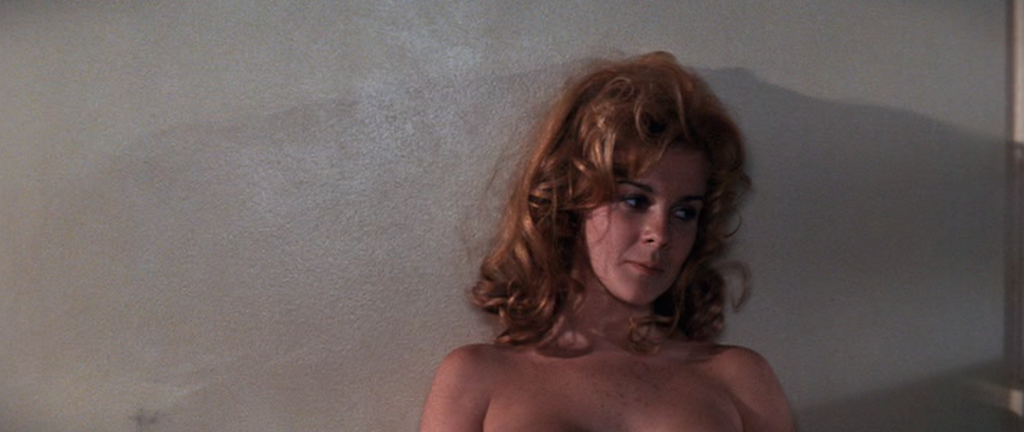
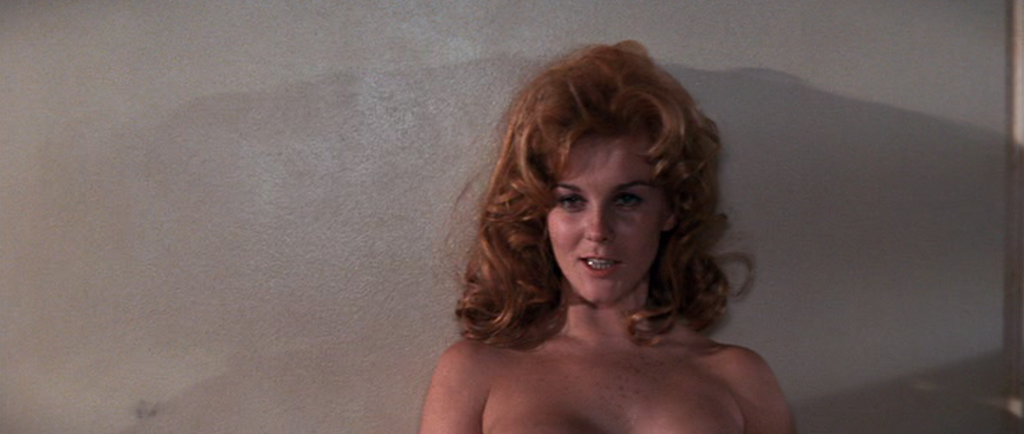
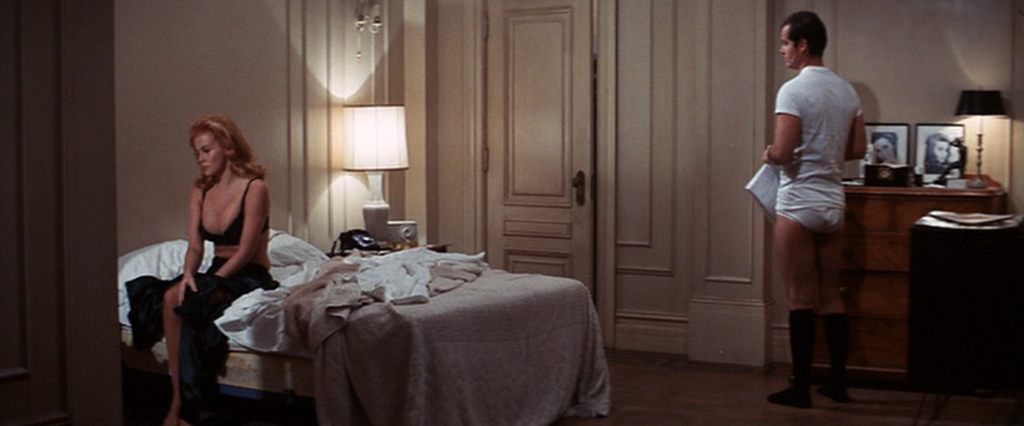
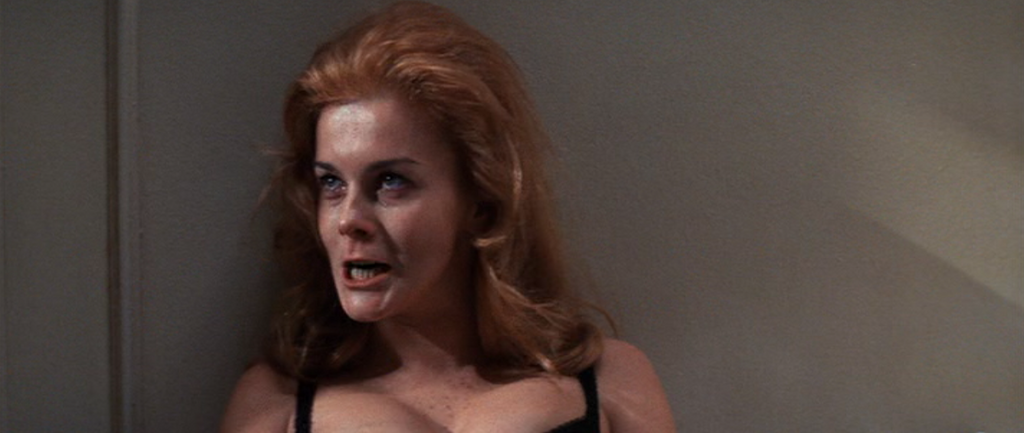
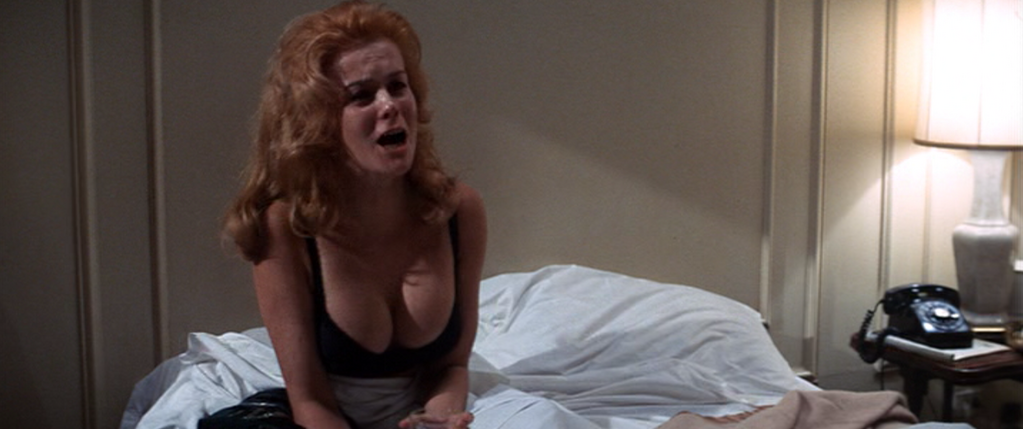
Ann-Margret in Carnal Knowledge (1971) - Supporting Actress Sundays

The category of Supporting Actress often provides a really "supportive" platform upon which performers can receive acknowledgment for branching out, for spreading their wings, for proving their versatility, for demonstrating that they really do have the chops. It's part of what I love about the category -- the opportunity to see performers at what are occasionally watershed moments in their careers. However, time is not always kind to these "breakthrough" moments. Sometimes when the contemporary shock wears off, the seams really show, as this week's actress at the edges...

approximately 21 minutes and 32 seconds
11 scenes
roughly 22% of film's total running time

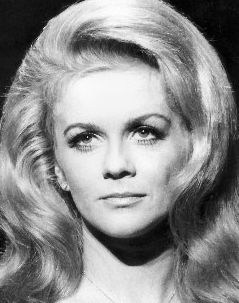
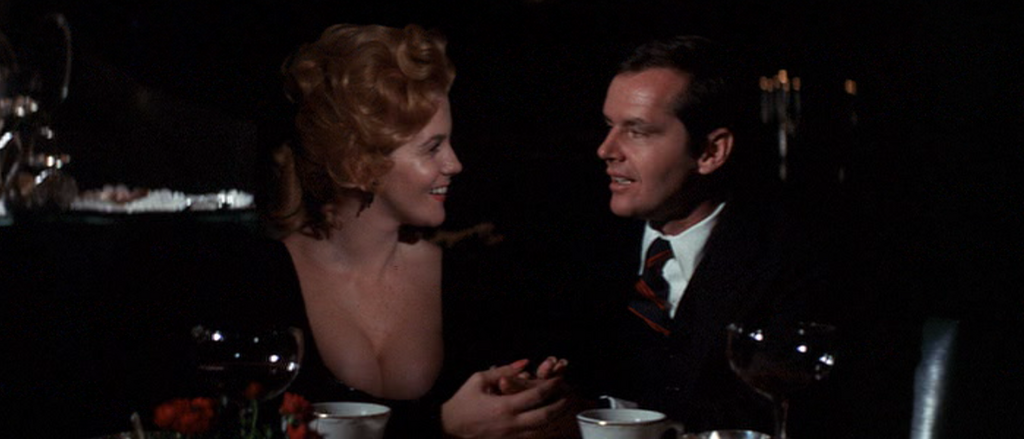
Ann-Margret plays Bobbie, a groovy goodtime gal with crazy curves who happens to be pushing thirty as she hooks up with Jonathan Fuerst (Jack Nicholson, in an implausibly sexy, incredibly loathsome turn as a ladykiller who seems entirely capable of one day living up to the title, literally).

Ann-Margret's Bobbie is (the script tells us) loads of fun...a perfect Playmate, if you will. An actress/model, Bobbie's neither too smart nor too dumb, she's not the marrying kind, and she's stacked with enough junk in the trunk to balance the funbags up top. (Forgive the crass parlance, but the previous statement is merely a contemporization of a speech Nicholson's Jonathan gives in the scene immediately prior to Bobbie's introduction.) Plus, she knows how to have a real good time.

Bobbie's babeness is just the beginning for, soon, Bobbie and Jonathan are enmeshed in a giddy erotic companionship that shifts from a one night stand to one of the one-year variety. And, of course, Bobbie's the one to start bringing up things like "shacking up" and the compromises of commitment (which Nicholson's Jonathan greets with surly, possessive resentment) begin to corrupt the freewheeling fun of their bond. Quickly, Jonathan's fantasy Playmate transforms -- at least in his eyes -- into a dumpy shrew, with Bobbie quickly drowning in the despair of a pathetic domesticity.

On some levels, the pairing (Bobbie and Jonathan; Ann-Margret and Nicholson) is formidable and fascinating. The characters are as equals -- sexual players who discover a kind of impossible compatibility -- and the performers are too -- intensely charismatic personas capable of indelible screen work. And to an extent, the pairing works. Ann-Margret is the ideal kind of actress to play opposite Nicholson (an actor known for playing "against" his co-stars), her tropical storm a formidable front against Hurricane Jack.

And on a couple scores, Ann-Margret nails it. The intensity of her Bobbie's vulnerability is palpable. Her sex appeal is inhabited not adorned. Her charisma is organic, inevitable, unstoppable.

But (and here I've finally figured out why Ann-Margret isn't more of a camp icon) Ann-Margret is no fun. Her Bobbie is utterly humorless, despite the fact that she's supposed to be all kinds of laughs (and despite the fast that she is mildy amusing in the one jokey scene the script gives her - a doctor/nurse shower sketch that plays like a Playboy cartoon come to life). Her Bobbie doesn't enjoy being Bobbie but, from the first scene, wants to be someone else. In a fundamental misunderstanding of the character, Ann-Margret's Bobbie emerges as a vixen of physical circumstance rather than personal choice. In and of itself, this would not be a problem, except that the script keeps talking about how much fun Bobbie is and, if we can't appreciate the fact that Bobbie wants to change while Jonathan does not, the story arc becomes an exhausting dead-end.

Without, then, even a whit of wit, Ann-Margret's performance is further hobbled by her inability to handle the language of Jules Feiffer's patter-dense script. Vocally, Ann-Margret seems incapable of nuance unless speaking in a whisper, and her diction devolves as volume and emotion rise. Yes, Ann-Margret can work a pause like a pro but, once she speaks, any mystery and intensity is garbled along with her consonants.

Sadly, Ann-Margret's goopy humorlessness makes no sense of Bobbie, and all that Ann-Margret can do is lapse to what has become her dramatic default -- feral despair -- thus missing Bobbie's character arc entirely. Nichols makes hay from Ann-Margret's intensity, but it doesn't serve either the character or the film.

Ann-Margret's Bobbie is stunt-casting at its most adept. The shock of Bobbie's curves are equal to the frankness of her despair. But in a film loaded with more skilled performances by actresses who can maneuver the dialog to reveal the nominal depths of Feiffer's shallowly misogynist archetypes (Rita Moreno just "blows" the roof off in an incredible, scary cameo), Ann-Margret's way out of her depth, adding another bold misfire to a career full of same.

7.02.2006

Rita Moreno in WEST SIDE STORY (1961) - Supporting Actress Sundays


It's the first Sunday for 1961 -- & StinkyLulu has a confession to make... You see, lovely reader, for the first time since "Supporting Actress Sundays" commenced in March, Lulu opted not to rescreen the entire film before composing a Sunday Supporting Actress profile. Why? Well, timing for one thing (the determination of 1961 only happened yesterday). But, truly, it's because 1961's Best Supporting Actress just happens to be Lulu's favorite performance in the single film that StinkyLulu's seen more times than any other.
And that performance is...


StinkyLulu's always shocked when pausing to contemplate Rita Moreno's nomination and win for her turn as Anita in West Side Story. First, StinkyLu's still amazed that Rita's nomination/win marked the end of the "golden era" of Latin actors being noticed by Oscar. See, in the fifteen years separating 1947 and 1961 (beginning with Thomas Gomez' largely forgotten Supporting Actor nomination for his performance in Ride the Pink Horse), Oscar had nominated Latin actors/actresses 10 times in 9 different years, sending three of those performers (Jose Ferrer, Anthony Quinn, Rita Moreno) home with four trophies (Quinn took home Supporting Actors in both 1952 and 1956). And among the six performers receiving these 10 nominations during 1947-61 (Ferrer & Quinn were each nominated 3 times in this period), only Katy Jurado '54 arrived to Hollywood as a professional emigré, leaving a successful career in the Mexican film industry to make movies in Hollywood. Six Latin actors (Gomez, Ferrer, Quinn, Jurado, Susan Kohner & Rita). Ten nominations. Four wins. All in the space of fifteen years.

In contrast, consider the 40+ years of Oscar since Anthony Quinn's last nomination (1964, Zorba) and leaving for now undiscussed the 1/4 century "dry spell" between 1964 and 1987: In the space of those 40+ years, ten nominations and one win (Benicio Del Toro, '00). (1947-61, counted 10 noms with 4 wins.) And of of the nine Latin actors nominated since Moreno's win in 1961 (Del Toro was also nominated in '03), three are professional emigrés (Javier Bardem '00; Salma Hayek '02; & Catalina Sandino Moreno '04) and two are iconic film stars in the national cinemas of their home countries (Argentina's Norma Aleandro '87 and Brazil's Fernanda Montenegro '98) whose work registers in the U.S. film industry infrequently, if at all. Only Quinn and Del Toro, along with Andy Garcia '90 and Rosie Perez '93, are what census takers would call "U.S. latinos"... Ten nominations. One win. In the space of forty-five years.

All of which makes 1947-61 look like a comparatively good period for Latin performers. And makes Rita Moreno's status as an iconic Oscar winner (who happens to be latina) all the more exceptional...

But the Latin scorecard on Oscar-night isn't the only shocking thing about Rita Moreno's Oscar for Anita in West Side Story... Almost more shocking is the fact that co-director Jerome Robbins didn't want Rita Moreno for the pivotal role of Anita, considering Moreno "a talentless movie star." As the story goes, the studio refused to consider Robbins' choice (Broadway's original Anita, Chita Rivera) and mandated the casting of Moreno, an established film presence. The famously petty Robbins is said to have used dance rehearsals to brutalize Moreno, relentlessly demanding that she "do it again" & announcing time and again that Moreno would never be nearly as good as Robbins' beloved Rivera. (Of course, once dance rehearsals were finished, the studio unceremoniously fired Jerome Robbins from the project and most principal photography proceeded apace.)

Robbins' comparison of Chita to Rita has endured in countless wags' Chita-Rita-Anita gags. This is unfortunate because Rita's Anita is entirely different than Chita's -- and the most essential distinctions can be seen in the cinematic elaboration of the legendary "America" number. Remember that, in the stage version, "America" is a song sung among the Shark girls, with the naïve Rosalia being admonished for being nostalgic for her island home. On film, "America" draws its energy from an entirely different tension, becoming a battle of the sexes in which the Shark girls and Shark guys match each other's critique point by point. And it's in this dance-off -- a battle at once thrilling, erotic and silly -- that Rita Moreno's Anita emerges as something very distinct from what the stage allowed Anita. She's witty, she's smart, she's sexy, she's wise. And -- with Moreno -- it's all in her eyes. "America" is never not an extraordinary number but here -- even with the crazy sound mix blending Moreno's voice with that of the studio singer Betty Wand -- the screen version of "America" belongs to Moreno's Anita.


And while StinkyLulu'd be inclined to give Moreno a trophy for this six minutes of screen time alone, Rita Moreno actually earns her Oscar more in her non-musical scenes.


Indeed, the scenes between the musical numbers (in the dress shop, Maria's bedroom, the drugstore) show that Moreno can act even better than she dances. Like the early scene in the dress shop where Anita "gets it" that Tony and Maria are falling for each other. In sideways glances and shoulder shrugs, Moreno conveys her many worries about Maria's new romance while also showing herself to be a steadfast friend. Compare that -- much later -- to the unmitigated loathing she conveys in the flash of just one look, barging into Maria's bedroom to see if the man who'll "murder your love, he murdered mine" is still there. But nothing matches the range of emotions Moreno's Anita covers in her climactic visit to the drugstore.


Here, Anita goes to Doc's drugstore to get a message to Tony and is instead assaulted by the Jets, who barrage her with insults and innuendo. The original stage version of West Side Story left little question that the assault was a sexual one, possibly a rape. On screen, however, the nature of the assault is oblique, both abbreviated and stylized to emphasize the dramatic while avoiding the specific. (Indeed, the first time Little Lulu saw the film -- at about age 12 -- this pivotal encounter seemed little more than especially cruel rough-housing.) The moment in the drugstore -- when Anita chooses to lie about Maria's death (rather than convey mistaken information, as in the Shakespearean original) -- is essential in both narrative and thematic terms. And Moreno's performance -- her anguished fury and desperate fear -- delivers the moment's actual import to the screen.
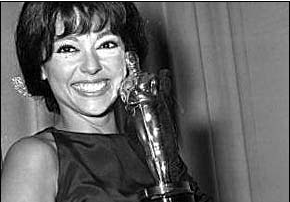
All told, Rita Moreno's performance as Anita stands as one of the few Oscar wins to be both historic and deserving. (After all, she remains the first and only latina to win an Oscar.) Both nuanced and broad, subtle and bold, with kickass dancing to boot -- Moreno'll be a hard performance to top during this month of Supporting Actress Sundays. Nonetheless, StinkyLulu's still totally psyched by this month's roster just to see how close any of these extraordinary nominees comes...

(BTW: If you're at all inclined to continue this meditation on the "History of U.S. Latinos & OSCAR", be sure to look for 1947 nominee Thomas Gomez later this month as Rita Moreno's father in Summer and Smoke for which Una Merkel received a Supporting Actress 1961 nom.)