7.26.2006

Vaya con dios, PapaStinky...

A quick note to let you know, lovely reader, about big news from StinkyLand: StinkyLulu's father (aka PapaStinky) died suddenly after a brief hospitalization on Monday. Services are later this week, & things are kuh-kuh-kuhrazy. (StinkyLulu & the whole Stinky clan are doing as well as can be expected, especially considering MrStinky's seafaringness. The universe sometimes has wacky timing.)

In the meantime -- much love to you, lovely reader, and do share that love of your'n with your beloveds...

Lulu'll be back soon...
Blessings.

7.24.2006

MrStinky's Big Sea Adventure - Day 1

Thanks to the marvels of modern technology, StinkyLulu will be receiving occasional email updates from the Captain (MrStinky's brother) -- o'course, Lu will be sharing the seafaring missives with you, lovely reader...


Poor MrStinky, aka MrStinky-Pukey...

7.23.2006

MrStinky Sailed Away Just Now


After a week in Hawaii, MrStinky sailed away just now.
Cel phones don't work in the middle of the Pacific, it seems.
Cross your fingers for StinkyLulu. It'll be a long 3 weeks.

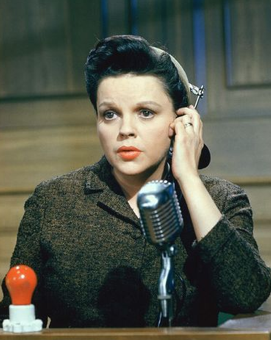
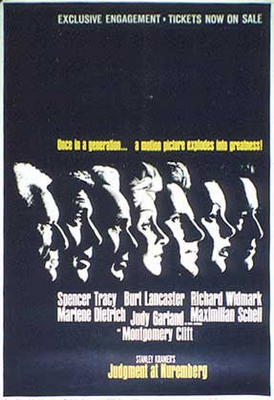
Judy Garland in JUDGEMENT AT NUREMBERG (1961) - Supporting Actress Sundays

Few great actors are as adept as Spencer Tracy at putting StinkyLulu right to sleep. For reals -- comedy or drama, color or b&w, with Hepburn or without -- give the man an extended scene & Lulu just conks out. Lu should really just make a looptape of Tracy's longest scenes as a sleeping aid.

So, Judgement at Nuremberg -- Stanley Kramer's 3+ hour "ripped from the headlines" courtroom epic (with Spencer Tracy as the narrative's central character) -- promised to be something of an ordeal. And? 'Twas. But for better and worse, turns out that the flick contains some truly surreal juxtapositions that periodically pinched Lulu back to consciousness. (Episodic yelling -- by opposing attorneys Maximillian Schell and Richard Widmark -- also helped.) First, the movie's just jam-packed with interesting actors. In addition to gourmet stars like Marlene Dietrich (her enigma switch turned to full power), the flick's minor characters are, almost to a one, solid supporting players who became iconic (in Lulu's imagination at least) for their 1960s-70s tv work. First, there's Captain Kirk -- all sexy and subtle (!) -- as Tracy's assistant/bailiff. With Colonel Klink (his dark side on full display) as a defendant. Plus Pa Ingalls' friend Lars Hanson as the attorney recalling a famous 1930s sex scandal. But most exciting of all: Folger's diva Mrs. Olson (Virginia Christine) as Tracy's housekeeper; she didn't offer Spencer any instant coffee complete with flavor crystals but there she was nonethe...

But -- at its core -- Judgement at Nuremberg aims to tell a painfully serious story about judges judging judges -- to wit, a war crimes tribunal assembled to assess whether Nazi-era German jurists were guilty of crimes against humanity. Set just three years after the end of the war, the film examines whether "regular" German citizens should be considered culpable for Nazi atrocities. Which sets the scene for -- alongside the 70s teevee nostalgia and soporific Spencer sidebars -- the narrative incorporation of actual documentary footage of the concentration camps at the end of WWII... 'Tis truly startling. (Really, cutting from the bulldozers at Dachau to Colonel Clink?!? Brainsprain!!!)

But very occasionally the movie becomes just a touch more than a civics lesson with cinematography. And one of those moments comes in the performance of...

Garland plays Irene Hoffman, a no longer young woman who -- as a teen -- was the non-Jewish woman at the center of a notorious "racial pollution" case targeting a Jewish man. Now married, Garland's Hoffman is reluctant but never resistant to the call for her testimony.


Unlike fellow Supporting nominee Montgomery Clift (who twitches and whines through a single, nearly unbearable scene), Garland's called on for three incrementally intense scenes. In the first, Garland's Hoffman consoles and reassures her husband even as it's clear that the request to testify has stirred ghosts. Garland plays this scene with a stunned directness that underscores her character's dread of reliving this part of her past. Beginning here, Garland's performance anchors the most basic message of this complicated (if not particularly complex) "message picture": even humble people are obliged to be noble, to do what's right. Garland's second scene begins to reveal the depth of her character's devastation. Her cavernous brown eyes convey how haunted Garland's Irene truly is. Garland's signature vocal quaver manifests to underscore both what's left of Irene's pride, as well as her childlike affection for the man destroyed by the earlier trial. But it's in her final scene, when Garland's Irene Hoffman becomes the target of defense attorney Schell's manic cross-examination, that Garland's particular gifts are deployed in transcendant service of the character. Judy Garland's quavering voice, her puddling eyes, that steel-girded vulnerability: Garland channels all these through Irene Hoffman as the unrelenting bully Schell tries to break her. It's one of those great moments -- when a director doesn't shy from the idiosyncratic, oft-ossified gifts of a "movie star" and is able to resculpt them into a character performance that transcends the persona. It's Judy at her jowliest, but it's Judy at her best.

And it was Judy at the crest one of her comebacks, certainly the comeback with the highest stakes. Flush from her legendary Carnegie Hall concert, newly (and expensively) hired for her own tv show, and here displaying the maturity of her acting chops/jowls in an Oscar-bait epic...

Judy -- "an entertainer" -- gives a junket interview from the witness stand.

Judy Garland's performance in Judgement at Nuremberg stands as the most deserved acting nomination of this film's four. (Tracy and Clift both got noms; Schell took the trophy as a token of Oscar's internationalism...) And it's a worthy testament to Garland's most mature gifts as an actress. Here, she plays a character ravaged by life who somehow maintains a poignant optimism that her efforts might matter. Garland's Irene digs deep and finds the strength to show up for the scorchingly brief glare of attention. The film, cruelly, abandons Garland's Irene on the witness stand, mid-assault, never showing her again. The glare of the spotlight vanished as suddenly as it arrived. And the impact on Garland's Irene? That becomes as collateral damage, underscoring the moral of Kramer's story: "If we didn't know, it was because we didn't want to know..." A chillingly apt tagline for this performance as well, one of two last great & ultimately devastating Garland film performances...

...
Tune in next week for the last (& most obscure) of July's Supporting Actress Sundays, featuring Una Merkel in Summer and Smoke as well as the 1961 Supporting Actress Smackdown! Looks to be a goodgoodgoody....

7.21.2006

"Everything From The Studstore Is Guaranteed" (Homo Heritage Fridays)


from Drummer: America's Mag For The Macho Male , August 1983, page 71.
For details, click the image; then click again to magnify.

7.20.2006

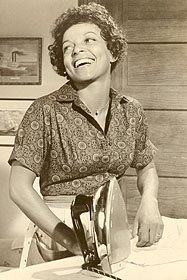
Ruby Dee & Diana Sands in A RAISIN IN THE SUN (1961) - CouldaShouldaWoulda Wednesdays

Yeah. It's Thursday. So?

As things warm up for the 1961 Smackdown -- July 30, mark your calendars -- it's becoming clear that the Class of 1961 was of an especially rich vintage. Just check out that list of nominees, the omissions mentioned by Canadian Ken, and then realize that the Class of 1961 also included screen-scorching work by...


click pics for neat links

Somehow A Raisin in the Sun has gotten stuck with a strange reputation: a respectable, inoffensive, worthwhile, middle-brow piece of American theatre history which -- it seems to inevitably follow -- holds little interest or import for contemporary audiences. Hansberry's play shares this oddly dismissive reputation with a handful of other great plays on the standard high-school drama curriculum (Death of a Salesman and Our Town come to mind). And its a rep to which StinkyLulu has at times lazily deferred... But oh oh oh... All it takes is a top-notch production to remind even lazy snarksters like Lulu to realize how wrong that POV is... And, luckily, the performances by Ruby Dee and Diana Sands are captured on celluloid to provide a permanent reminder of the emotional complexities and intellectual intricacies of Hansberry's legendary play.

The story centers on the Youngers, an African American family in Chicago at midcentury, and captures the moment in this family's history when the Youngers are poised to move from being poor as country dirt to being solidly, if modestly, middle class. The catalyst for this transition is a bequest arriving via life insurance from the family's deceased patriarch, and the narrative presents the events that punctuate the battle between surviving matriarch Lena Younger (Claudia McNeil) and her son Walter (Sidney Poitier) over how best to invest in the family's future. Over three acts, this conflict plays out with an artful complexity that dramatic writing (film, tv, theatre) just doesn't try much anymore. (While skilled, Poitier's and McNeil's performances are exhaustingly tense, offering every hue of a single color, and come perilously close to making this story's journey almost too much.) But of course, for StinkyLulu, the actresses at the edges -- Ruby Dee and Diana Sands -- animate the emotional richness of this piece. Dee plays Ruth Younger, John's very tired wife, and Sands plays Beneatha, his gifted younger sister. Each has her own stake in the family's fortunes, yet -- and this is what Lulu so admires this play for -- each has her own identity, her own life, her own self and that too finds itself at a dramatic crossroads.

Ruby Dee's Ruth is a woman freshly aware of her womanhood, caught wondering what she is if she's no longer young but not yet old. What's more: no one's noticing. Lonely in a 3-room apartment crowded with people, Dee offers Ruth's struggle to the audience through her body. (It must have been something to see on stage.) Radiantly happy in one scene, emotionally flattened the next, Dee's vocal precision modulates a coherence even as her teeny body radiates every mood's swing. Ruby Dee's performance is a subtle force of reckoning, stronger and sexier here than even Moreno. (That Dee didn't score even a nomination conveys much about the time...)

Diana Sands, on the other hand, plays a chattering ditzball who just happens to be a genius. Sands, equipped with a cutie pie's voice and an ingenue's face, channels Beneatha's formidable intellect through a teenybopper's exuberance. The way she bounces every which way, spouting half-understood ideas, toying with suitors -- it'd be easy to misinterpret Beneatha as a flake, but Sands somehow hooks into the character's heady combination of imagination and intelligence to convey that Beneatha's a formidable woman in the making. (Just watch Sands "get it" during the scene with the guy from the homeowner's association.) Sands' Beneatha yet stands as an extraordinary portrait of young black womanhood, one that still has few equals. Diana Sands' performance, too, is a poignant reminder of the actress' own truncated career. (Really -- while StinkyLulu's in love with Carroll's Claudine -- to think of Sands -- who was originally cast -- in the role? Wow.)

It's a brainsprainer that neither of these actresses got a nomination from Oscar. For these or any other roles. (To be fair, Dee's work here was awarded by the National Board of Review, and her longevity has garnered numerous other accolades.)

But if you too, lovely reader, have occasionally succumbed to the notion that A Raisin in the Sun doesn't hold powerful contemporary dramatic interest, (re)screen this version or look for the television adaptation of the celebrated recent Broadway production sometime next year. Allow yourself to be surprised...


7.18.2006

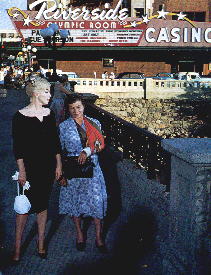
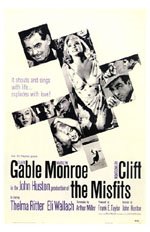
Canadian Ken on Thelma Ritter in THE MISFITS (1961) - CouldaShouldaWoulda Wednesdays

Yes. It's Tuesday but...

Just got a rich message from Canadian Ken with some excellent observations about the Supporting Actress Class of 1961. So, over this week and next, Lulu'll be sharing some of Ken's excellent observations with y'all, lovely reader. Kicking things off, Ken offers his thoughts on one of the more startling oversights of 1961's Supporting Actress nominations...
Canadian Ken sez...
Thelma Ritter's presence is always welcome - and Oscar voters recognized her regularly. But, to my mind, they often nominated the wrong performances. Ritter-wise, The Misfits represented the Academy's most egregious failure to nominate. Onscreen, she redefined the term "down to earth" combining a number of seemingly opposing characteristics - she was simultaneously wary and distracted, shrewd and soft-hearted . And nobody did it quite like her. Or even came close.

In The Misfits, she ratcheted it all up to full, finely tuned glory. Ditzy but pragmatic, shambling around, sometimes carryring her arm in an eloquent sling, Ritter was poignant, pithy and certainly never better. She drifts out of the picture part way through and she's genuinely missed for the rest of the proceedings. (What the heck! I still miss her.) With The Misfits, Ritter was part of a solid gold project, working with a great director and inspired co-stars..
Thanks, Ken!
And stay tuned, lovely reader, for more from Canadian Ken. Ken's thoughts on Mary Astor in Return to Peyton Place are not to be missed!
(Check back next week, same stinky time, same stinky station...)

7.16.2006

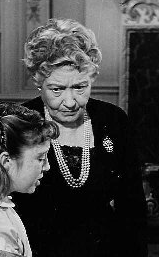
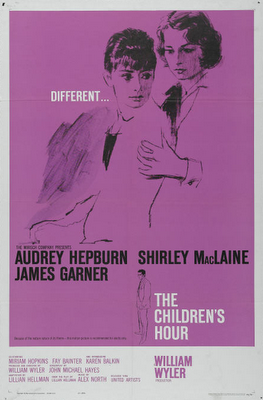
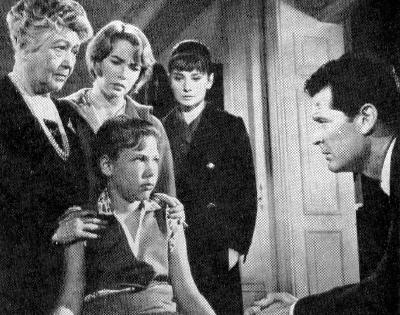
Fay Bainter in THE CHILDREN'S HOUR (1961) - Supporting Actress Sundays

The third Supporting Actress Sunday for 1961 brings StinkyLulu's attention to a piece with which Lu has a peculiarly personal history, The Children's Hour, Lillian Hellman's enduring piece about two teachers being accused of -- gasp -- lesbianism. See, in high school, Lulu acted a production of the play (no drag involved so guess which part). And then, the very first thing StinkyLulu ever directed in college was a scene from this play -- the one in Act2 where evil little Mary makes the allegation to her grandmother Mrs. Tilford -- and guess who played Mary brilliantly in that little freshman acting scene? A certain one hit wonder... Uh huh. No lie.) There's much to loathe about Hellman's most frequently produced play, yet somehow Lulu remains strangely attached to The Children's Hour.

But even then, with all this previous exposure, Lulu certainly did not expect to be completely engrossed by...
approximately 26 minutes and 50 seconds
8 scenes
roughly 25% of film's total running time
(data courtesy of Raybee)


William Wyler's 1961 film is not Hollywood's only adaptation of Lillian Hellman's 1934 play. A quarter century earlier, Wyler himself directed a sanitized/heterosexualized version of the piece, retitled These Three, which premiered in 1936. While the backstory of These Three is interesting, it's most notable for Supporting Actress Sundays to note that Miriam Hopkins -- who, in 1961, is great as Martha's wacky aunt Lily Mortar -- played Martha Dobie in Wyler's 1936 version, opposite Merle Oberon as Karen and Bonita Granville (who the Smackdowners saw in 1942's Now, Voyager) as Mary. By the early 1950s, though, the red-scare and HUAC hearings reactivated an interest in Hellman's play as a theatrical treatment of the power of insinuation and innuendo to ruin lives. Indeed, it's not uncommon to hear The Children's Hour lumped with Arthur Miller's The Crucible as "reactions" to McCarthyism, even though Hellman wrote her play nearly 20 years earlier and based it on an essay she read in a 1930 "true crime" anthology (about an 1809 Scottish scandal). The storied 1952 Broadway revival of the play (starring Kim Hunter and Patricia Neal in the lead roles) certainly fueled the piece's contemporaneity and notoriety in the 1950s but, for a variety of reasons, it took Wyler nearly a decade to bring his new cinematic treatment of the piece to the screen.
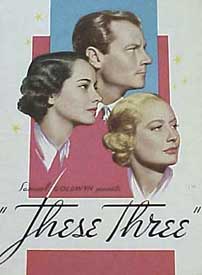
And it's just like a director like William Wyler to bring a trouper back to the screen in the lynchpin role of Amelia Tilford, the wealthy matron who righteously remakes a child's whispered innuendo into the scandalous allegation that destroys three lives. For this essential role, William Wyler smartly turned to Fay Bainter, who he directed to Oscar in 1938's Jezebel.

On first glance, and like fellow Class of '61 nominee Una Merkel, Fay Bainter's nomination might well be understood as one of those "tribute" nominations for which Oscar's somewhat notorious: the kind where the voters give a nod to the work of a performer whose career reaches wayway back in movie history. Not that Bainter was unworthy of such a tribute. An established early 20th century theatre star (she was a "privileged" member of David Belasco's company in the 1910s), Hollywood snagged Bainter in the early sound era and she quickly emerged as one of the most reliable character actors of the 1930s. For those less interested in Fay Bainter trivia than in Oscar's minutiae, Bainter's also an important footnote in Oscar history for being first performer to be nominated both leading and supporting acting categories in the same year ('38); only ten performers have been so honored -- Bainter in '38, previous Smackdown subject Teresa Wright '42, Barry Fitzgerald '44; Jessica Lange '82, Sigourney Weaver '88; Al Pacino '92; Holly Hunter & Emma Thompson '93; Julianne Moore '02; and Jamie Foxx '04). Bainter might also blip across Oscar-fiend minds as the presenter of Hattie McDaniel's historic win in 1939. A reliable film presence in the 1930s and '40s, Bainter worked mostly in television in the 1950s. 1961's The Children's Hour marked both Bainter's return to film as well as her final film performance, a swan song of sorts for seven decades of thespianism. (Bainter died in April 1968, about six years after the 1961 Oscar ceremony.)
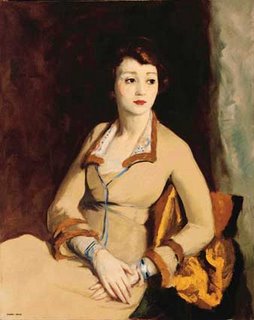

The character of Amelia Tilford might easily be misrecognized simply as the villain of the piece. But neither Wyler nor Fay Bainter make that mistake. Bainter's performance is -- in a very subtle way -- perfectly electrifying. When she walks into the room, everyone seems to stand at attention, a curious power that both Wyler and Bainter expertly deploy in service of the character. Swathed in the garb of a meticulously genteel dowager, the outfits barely disguise the ferocious lionness underneath. Mrs. Tilford's furious instinct to protect her grandchild rages in Bainter's eyes. Bainter smartly plays Mrs. Tilford as a not unkind woman -- just a little too sure of what she thinks she knows -- and whatever villainy follows stems from this misguided righteousness. Mrs. Tilford's problem comes first when she places her cultivated confidence as surety for a petty child's insinuation, and next when the devastating impact of her actions are impervious to her amends.

Bainter's most complex moment comes when her granddaughter Mary's selfish trickery and malicious deception are finally revealed. Rosalie -- Mary's little klepto minion (played very well here by the always delicious Veronica Cartwright, when she was maybe 11) -- has just come clean, telling Mrs. Tilford that Mary forced Rosalie to verify Mary's lies about their former teachers. Just then, Mary (played atrociously by a little beast in her single film role) stomps into the house. Bainter's Tilford demands that she "come here." Frozen still on the stair, Mary sees Rosalie, figures what's happening and begins to protest, but the glare Bainter's Tilford gives her beloved, monstrous granddaughter? It just burns the screen; the genteel old lady is pissed and Mary's gonna get it (nyahnyahnananyah). But right then -- as though the karmic boomerang of righteousness just swoops back and clips her smack in the back of her knees -- Bainter's Tilford buckles and falls to the floor. As she refuses assistance to stand, it's clear: This moment -- not the many good deeds that came before -- will be the defining moment of Amelia Tilford's life and legacy, and that realization seems to age the woman before our eyes. It's deep, this scene -- and Bainter and Wyler pitch the tone of it perfectly. Revelatory without being redemptive, Bainter's Mrs. Tilford emodies the reciprocal damage of deception and Tilford's pathetic and fruitless attempts to make amends for her actions become -- for better and worse -- the most haunting of the myriad tragedies and losses scripted in this narrative.

In a film with powerful performances from James Garner and Shirley Maclaine, with what is -- arguably -- Audrey Hepburn's most textured performance, Fay Bainter's work in this role -- while not necessarily trophy worthy -- is certainly nomination worthy...one of the handful of "tribute" nominations that withstand this Oscar-dork's scrutiny. StinkyLulu's pleased that this nomination served as a powerful re/introduction to Fay Bainter. That's what Lulu so loves about Supporting Actress Sundays: the opportunity to give full attention to brilliant actressing at the edges...like Fay Bainter's performance in The Children's Hour.

7.15.2006

Cast Your Vote for AUGUST's "Supporting Actress Sunday" Feature

It's that time again, lovely reader -- that time each month wherein you hold StinkyLulu's home-movie fate in your hands. (Not to mention the screening schedule for your inveterate SmackDowners...) So, whaddaya think?

What year deserves the focus
for August's month of
Supporting Actress Sundays?


Your nominees for August are:
  • 1944: Ethel Barrymore in None But the Lonely Heart, Jennifer Jones in Since You Went Away, Angela Lansbury in Gaslight, Aline MacMahon in Dragon Seed, Agnes Moorehead in Mrs. Parkington
  • 1953: Grace Kelly in Mogambo, Geraldine Page in Hondo, Marjorie Rambeau in Torch Song, Donna Reed in From Here to Eternity, Thelma Ritter in Pickup on South Street
  • 1962: Mary Badham in To Kill a Mockingbird, Patty Duke in The Miracle Worker, Shirley Knight in Sweet Bird of Youth, Angela Lansbury in The Manchurian Candidate, Thelma Ritter in Birdman of Alcatraz
  • 1971: Ann-Margret in Carnal Knowledge, Ellen Burstyn in The Last Picture Show, Barbara Harris in Who is Harry Kellerman, and Why is He Saying These Terrible Things About Me?, Cloris Leachman in The Last Picture Show, Margaret Leighton in The Go-Between
  • 1980: Eileen Brennan in Private Benjamin, Eva Le Gallienne in Resurrection, Cathy Moriarty in Raging Bull, Diana Scarwid in Inside Moves, Mary Steenburgen in Melvin & Howard
  • 1989: Brenda Fricker in My Left Foot, Anjelica Huston in Enemies, a Love Story, Lena Olin in Enemies, a Love Story; Julia Roberts in Steel Magnolias • Dianne Wiest in Parenthood
Your decision will be determined no later than the morning of July 30, the day of the 1961 SMACKDOWN. (That allows for about 2 weeks for tricksy voting schemes and assorted electioneering.) And please do vote using the poll mechanism below. Opinions expressed in comments will only be considered in the not uncommon event of a tie. (The votes for both June and July ended up being exhaustingly close; be sure to pitch your woo in comments if things start looking tight.) SO: Vote early. Vote often. Vote now. It's the Oscar-obsessive way. (Tell your friends.)



AUGUST's Supporting Actress Sundays

What year's nominees should we discuss during AUGUST's Month of Supporting Actress Sundays?


Current Results


7.14.2006

7.13.2006

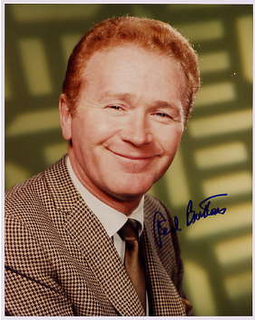
Red Buttons (1919-2006) in SAYONARA - A Great BM Tribute

Honestly -- when recommitting to "Great BM Tributes" earlier this week -- StinkyLulu had no inkling 'twould turn out to be such an, um, busy week. To be absolutely clear, StinkyLu has no insider information 'bout such things. Either midsummer's a busy time or MamaStinky's maxim that such things "come in 3s" is a bitsybit true...

Word just flashed upon StinkyLulu's interweb machine that old reliable Red Buttons made the big move onwards and upwards. For a man lil Lulu first encountered being sorta freaky on the Dean Martin roasts, over the years StinkyLu developed a distinct fondness for Mr. Buttons (almost wrote "old Red" but that seemed just as wrong). Please. In the space of a single decade, the man with the goofy name starred both in Pete's Dragon and in one of Lulu's most favoritest movies ever (see disclaimer below). That sorta forever secures a permanent place in StinkyLulu's movie obsessive hall of fame... Then with reliably cool guest spots on everything from Little House to ER? Well. In spite of his ridiculous stage name, Red Buttons always upped the pedigree.

Anyway, the disclaimer: When encountering this sad Buttons news, the very first Red performance to pop in Lulu's noggin was actually his surprisingly nuanced work in a certain tipsy tub of a movie -- possibly Lulu's most treasured Red Buttons performance. But. StinkyLulu refuses to refer to said movie as a "bad movie" (on certain subjects Lulu just will not budge ) so attention necessarily turns to...


...Red Buttons in Sayonara (1957).

Talk about a kooky racial time-capsule. Jeepers. This epic piece of technicolor piffle is just brain-sprainingly wierd (like most movies based on the work of James Michener and/or directed by Josh Logan). Here, Marlon Brando and Red Buttons are US servicemen stationed in Japan during the Korean conflict. Brando -- sporting a peroxide blond "do" and an awful Southern accent -- plays an officer; Buttons plays Joe Kelly, a enlisted man under his command. The whole hoopdedoo motivating the story is that Buttons' character has fallen in love with a Japanese woman, and must come to Brando's Lt. Gruver for permission to marry her. Under the War Brides Act, all kinds of paperwork has to happen, all of which Gruver (who, remember, is Southern which is Hollywood code for...) must approve.


Buttons' Kelly invites Brando's Gruver over for dinner, and Gruver's shocked to see how far his friend has "gone native." But he's won over by his buddy's sweetheart Katsumi (Miyoshi Umeki) and their giddy love for one another. (Then of course, Brando goes all native himself for a Japanese actress which cause a whole 'nother kerfluffle.) (And this is totally leaving out a whole 'nother subplot containing Lulu's favoritefavorite performance in this flick: Ricardo Monalban as a Kabuki actor. A latin actor playing an asian actor playing female roles. Brainspraining good times. And that accent -- boy howdy!)

But Red Buttons' character Joe Kelly -- a simple guy simply in love -- is the heart and soul of this picture. It's scripted to be a cardboard cutout of a role but when things go wrong -- when the brass rejects Kelly's petition and orders him to ship out; when he deserts his post to stay with the woman he loves; when Katsumi nearly dies following "corrective" eyelid surgery; when Katsumi and Joe make an eternal choice -- its Buttons' honesty and emotional clarity that actually keeps this bus from totally going off the cliff. It's still always something of a surprise, when revisiting this film again and again (it's a teaching fave), that Buttons' acting blows Brando's off the screen. (Buttons and Umeki both took home Supporting Oscars for their work in this film.) It's real, solid work.

You'd think that, after all these years, StinkyLulu'd have come to expect the surprising from Red Buttons. But no. Like the best comics, he always "got" StinkyLulu -- 'specially when he got serious. Blessings, Mr. Buttons.

7.12.2006

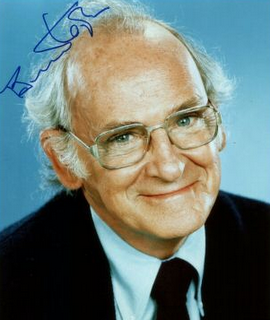
Barnard Hughes (1915-2006) in SISTERS - A Great BM Tribute

Character actors who can be total chameleons while also being somehow immediately recognizable are a particular breed. And a great one passed away yesterday: Tony- and Emmy-winning actor Barnard Hughes. Hughes was great on tv as that Priest whose car was damaged by Edith's stray can of cling peaches on All in the Family and on screen as the unexpectedly savvy grandfather in The Lost Boys and onstage in Prelude to a Kiss as the old guy who got some Baldwin. But as this is a "Bad Movie" tribute, StinkyLu'll try to say confined to:


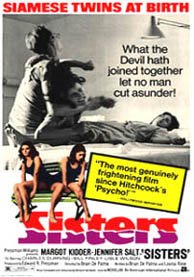
Barnard Hughes in Brian DePalma's Sisters (1973).

In this strange little piece of distinctly 1970s horror, Hughes plays Arthur McLellen, the reporter from Life magazine who helps protagonist Jennifer Salt piece together the mystery of Margot Kidder's character. It's a remarkably effective performance in one of those late-exposition roles so familiar in bottom-shelf mystery/horror -- the kind that show up as new characters in the beginning of Act3 to reveal all kinds of previously secret detail. Well, in this whacked out little movie, Hughes does the near impossible: In long expository speeches (mostly voice-overs) he's able to ratchet the tension of the film back to the level of the campy thrills of the first twenty minutes. On the one hand, Hughes' work here is simply a pro at work; on the other, it's a reminder just how good stage actors can be in trashy movie/tv bit parts. It's also amazing to StinkyLulu that it took IMDB to make the connection from Barnard Hughes' work here (and in all the roles listed at the outset of this tribute) to his work in one of the most life-altering cameos in Lulu's film experience: his performance as "Towny" the old trick who Jon Voight gruesomely assaults in Midnight Cowboy. (When Lu first saw the film about 20 years ago, this scene was the last straw -- a radicalizing moment ala Vito Russo -- for StinkyLulu, after which lurid, cinematic brutalization of queered characters officially became an automatic dealbreaker for Lulu's movie love. But that's a whole 'nother topic...) Not even a whiff of Barnard Hughes' performance in Cowboy (so indelibly branded upon Lu's psyche) carries over to his work in Sisters, just a few years later. Which is a pretty big deal. Few actors escape the aggressive Filmography-Assembly-Mechanism hardwired into Lulu's film obsessive mind. But Barnard Hughes did. (And yet does -- just scan that body of work and see if it don't contain a surprise or two...)

So, Mr. Hughes -- 'twas powerful seeing you so often, lo these many years. (Even if -- or is it 'specially cuz -- StinkyLulu didn't always know to know 'twas you.) Blessings...

BB7 Faikus #2 #3 & #4

Screencaps "borrowed" unceremoniously from TVgasm. Click pics for direct linkage.


will attracts both but
will new retarded friend ride
will like seabiscuit


listen up danielle
janelle is unstoppable
kiss it allison


how did this happen
jase makes even packed spandex
unattractive wow