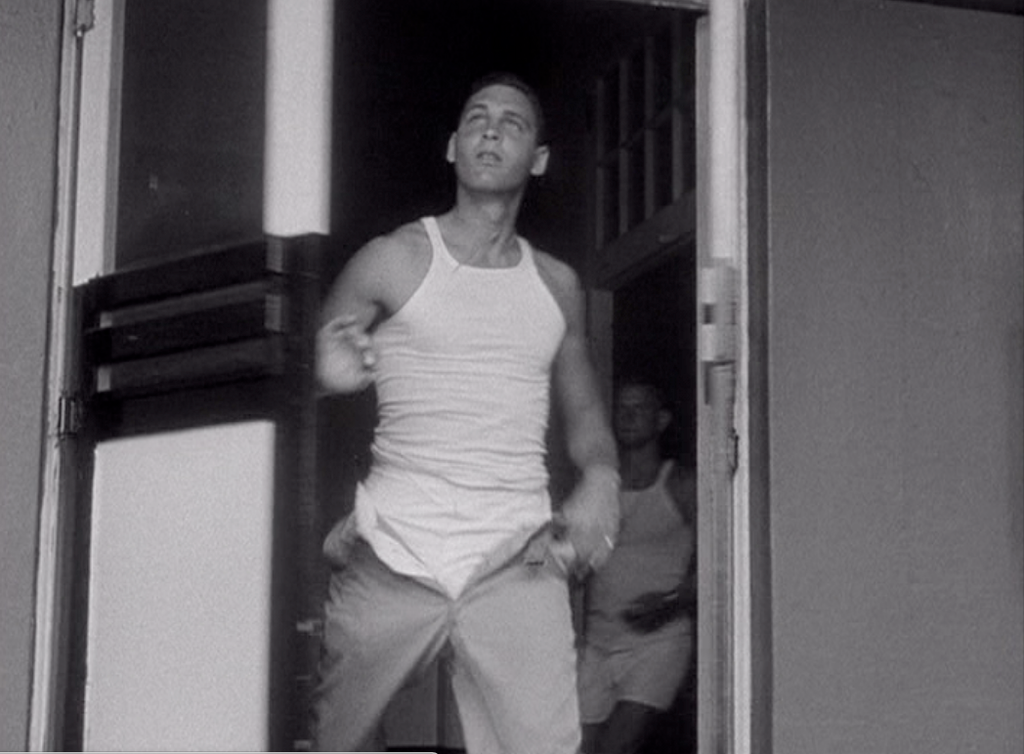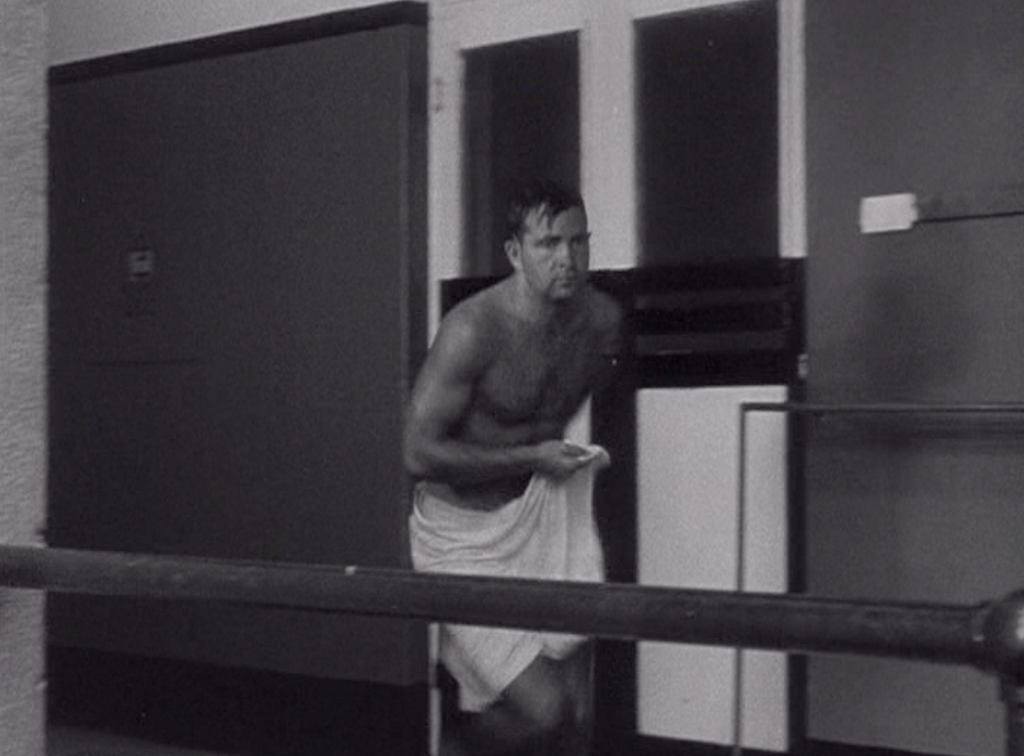
This week's Supporting Actress Sunday profile marks the first profile in the 3rd "season" of Supporting Actress Sundays. Since Supporting Actress Sundays formally began (with
Peggy Cass in Auntie Mame on 4/2/06), StinkyLulu has offered
100 Supporting Actress Profiles and has hostessed
20 Smackdowns, each covering a different year of the category's 71 year history. (A regularly updated "archive" of previous Supporting Actress Sundays can be found by clicking the Supporting Actress Sunday button at the top right of any Supporting Actress Sunday post.) I'm thrilled to be commencing this third year, with some new "voting" strategies and a whole bunch of Supporting Actressness to keep us busy through December. So, fasten your seatbelts, lovelies, as it's agonna be a rollicking ride -- a ride that begins, appropriately enough, with a "type"-defying (and trophy-snagging) turn by...
approximately 20 minutes and 14 seconds
13 scenes
roughly 17% of film's total running time
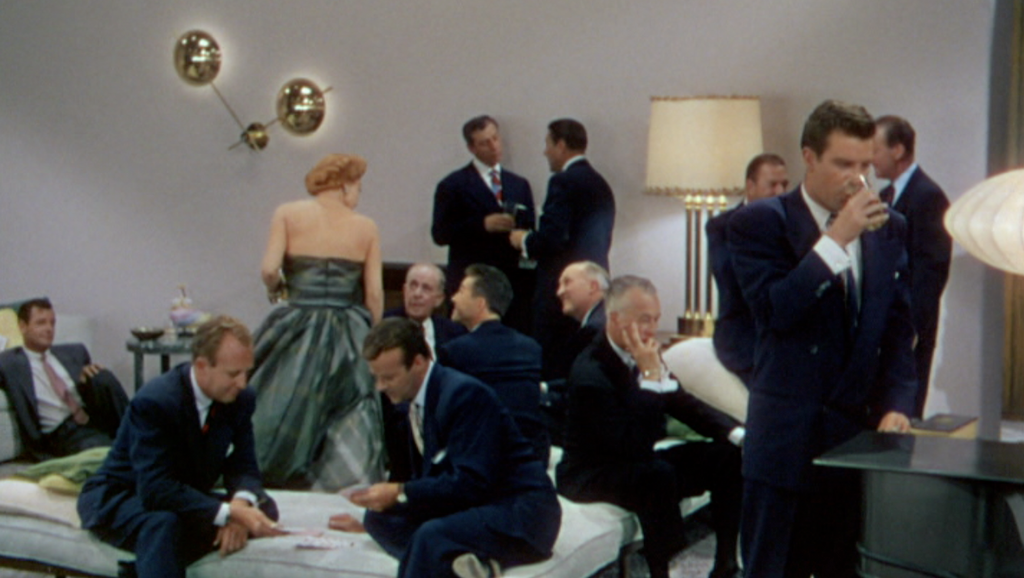
Donna Reed plays Alma, an ambitious young dame who's working in Hawaii at a not-quite seedy dance hall in the days, weeks, and months just prior to the attack on Pearl Harbor in December 1941.

Reed's Alma works under the name "Lorene" (the proprietress thought it sounded "French"), although her colleagues call her "Princess."

Reed's character catches the eye of Prew (Montgomery Clift), who seems to fall in something with her at first sight. For her part, Alma first treats this handsome newcomer as just another client (
"Mrs. Kipfer pays us to be nice to all the boys"), watching him with a combination of curiosity, amusement and contempt.

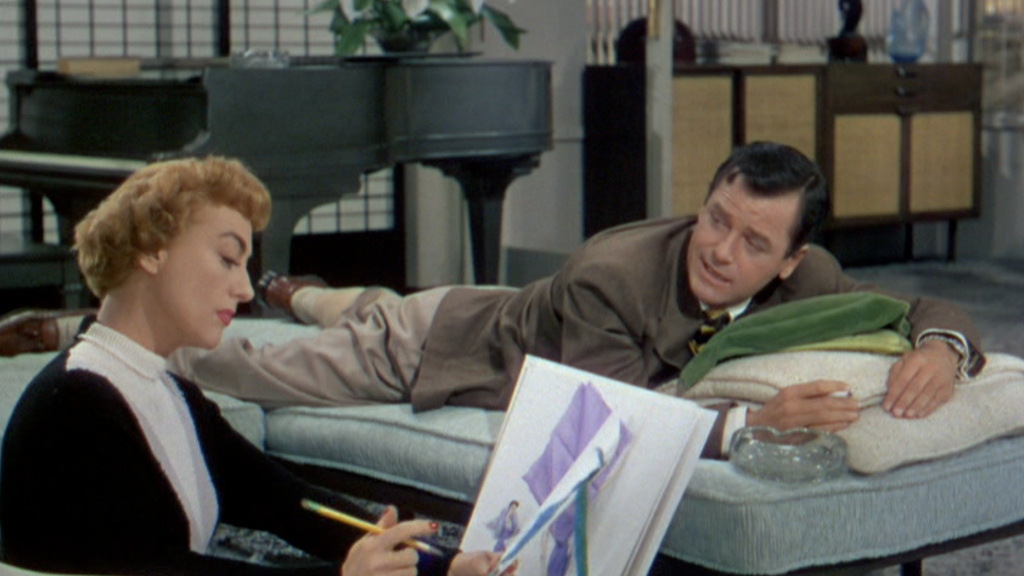
Soon, Prew's guileless tenacity in pursuit of her seems to warm something within Reed's Alma, and she invites Prew to join her in the establishment's "special" parlor, where they laugh and talk and begin to "know" each other. (This being early 1950s Hollywood, the question of whether or not Reed's "Lorene" is an actual "pro" remains a coyly crafted mystery. Filmmaker Fred Zinneman, however, seems to enjoy toying with the studio censors, first allowing the word "French" to hang in the air somewhat salaciously in one scene and, in another, showing Clift relaxing in recline as Reed's head rises into frame from what at first seems to be the area of his lower abdomen. The posture's potentially lewd implications are quickly erased when it becomes clear that Clift's been cradling Reed in the crook of his arm.)
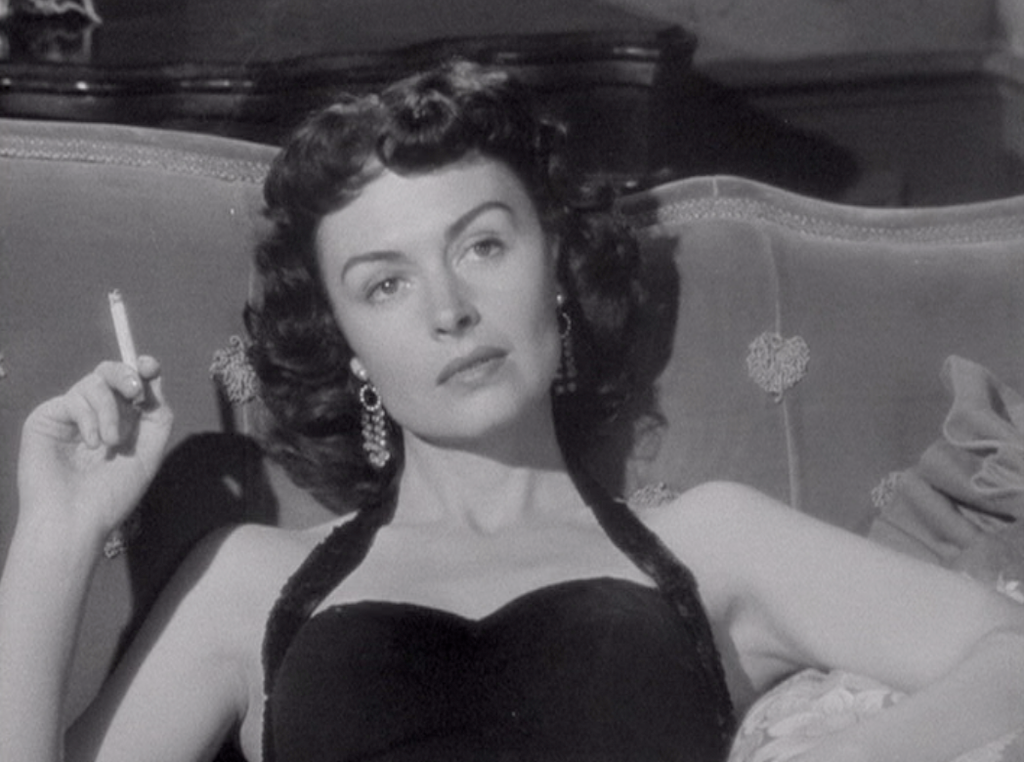
In Mrs. Kipfer's special parlor, Reed's Alma begins to appreciate Prew's integrity, his history, what makes him different -- and the two begin to fall into a kind of love, the kind that seems only to make sense in war movies. Indeed, Prew's and Alma's story -- rebellious soldier falls in love with tough tart -- comprises one of the three (comparably clichéd) storylines that drive
From Here To Eternity, a war-story melodrama rippling with surprising social commentary. (In a nut, the film depicts the social rituals and hierarchies of military culture as irrational, old-fashioned, elitist,
and ultimately indirectly responsible for the U.S. military's unpreparedness for Japanese attack on December 7, 1941.)

Reed maneuvers the cliché's of the role with savvy precision. She's neither a victim of her circumstances, nor is she a hard-hearted hellion. Rather, she's always already a bit of both. Reed presents Alma as an ambitious woman, determined to become "proper" and adept at mercenary tactics to do so. She tried marrying into propriety, which didn't work, and now she's set on earning enough to buy her own way into respectability.

And while she loves Prew, in a way, his defiant humility -- Clift's character artfully dodges acclaim and prestige whenever and however he can, despite his extraordinary gifts -- forcefully reminds Alma that she wants to climb the very social ladder that Prew's intent on defying.

Reed's accomplishment in this role derives from her ability to maintain the heat on Alma's mercenary intentions, even as she deploys her formidable charisma and intelligence to making the character likable and (dubiously) respectable. I find it nearly impossible not to just "like" Donna Reed, and so find it impressive how appropriately Reed underscores that Alma's got some -- ahem -- "issues" that predispose her to a scary sort of obsessiveness and rage. But Reed also demonstrates how much Alma genuinely likes Prew, how she sees in him a kindred spirit comparably abused by arbitrary structures of privilege and power.

The limits of their compatibility, however, is revealed on the morning of the attack, when Prew (
"I'm a soldier") insists on returning to base in spite of Alma's desperate attempts to remind him of the myriad ways in which the Army has done him wrong. Prew leaves and Alma is -- once again -- alone.

Reed is effective and intelligent in the role, drawing an empathetic portrait of a woman who is making mostly self-serving choices. Alma is a possibly despicable character, and Reed maintains her own likability without compromising her character's complexity. It's adept, necessary work -- essential to the film's emotional effectiveness. But Reed probably won her trophy for that final scene in which she, along with Deborah Kerr (not nearly as effective as Reed in a comparably complex role of the adulterous officer's wife), is carried from the shore of Hawaii for presumed safety on the mainland. In this haunting coda, Reed displays the character's darkest sides as Alma uses Kerr's character as a test-audience for her new plan.

In this brilliant coda, Reed reveals Alma's mercenary core with haunting efficiency. As she spins the yarn of her dead fiancé -- killed, she says, in battle on the morning of December 7 -- Reed's Alma cannily surveys Kerr's reaction and we come to realize that Alma's hit upon a new plan in her single-minded pursuit for propriety. She needn't marry for it. Nor must she earn it on her own. Caressing Prew's only truly personal item in her palm, it becomes clear that Alma's finally found her ticket to propriety: a dead "fiancé", killed in the first attack of a new war. Reed's work in this scene is simple, stark, and effective -- and it's certainly what snagged Donna Reed her own permanent ticket to Hollywood "propriety": 1953's Best Supporting Actress Oscar.