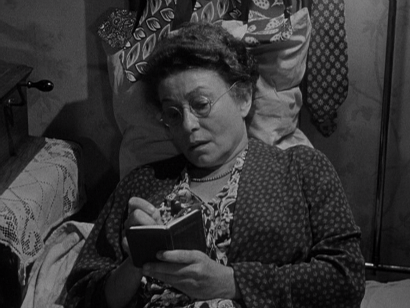
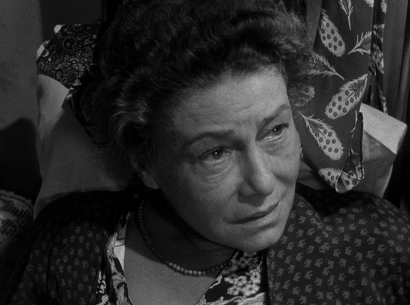
 M. Night Shyamalan is one of those directors whose films I want to like more than I do. And while that, in and of itself, is pretty conventional so far as critical reactions to M. Night go, I feel my longing is of a slightly different nature: I wish M. Night's movies were better because I just love his taste in supporting actressness. (Anybody who thinks to put Sigourney Weaver, Cherry Jones, Judy Greer, Jayne Atkinson, and Celia Weston in the same movie definitely has my attention.) Alas, only one of M. Night's many worthy actresses at the edges has been able to parlay M. Night's fascination into an introduction to Oscar...

...Toni Collette in The Sixth Sense (1999)
approximately 18 minutes and 29 seconds
13 scenes
roughly 17% of film's total running time
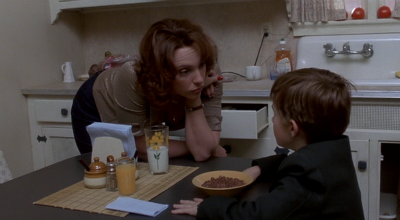 The role of Lynn is ripe for cliché. She's yet another regular mom terrified by the mystery of her child's supernatural encounters. But Collette puts a distinctive stamp on the the stock character by emphasizing what is most simple and most true about the character: Collette's Lynn loves her son Cole (Haley Joel Osement in a memorably vivid performance) with an equal mix of ferocity and vulnerability.
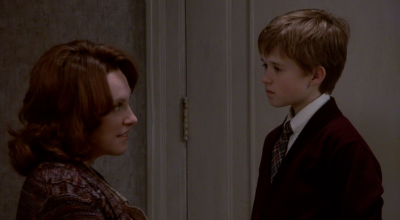 From the first scene, there's no doubt that she will do anything within her power to keep her weird little son safe and secure, at least in the knowledge that he is loved, that they are in this life thing together.
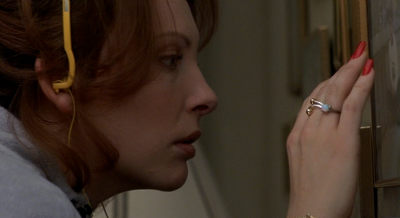 Yet for all her devotion, Cole remains a mystery to Lynn, a mystery that frightens Collette's Lynn on a daily basis.
 Lynn's character arc charts the shifts in this mother's fear -- her fears for her son,
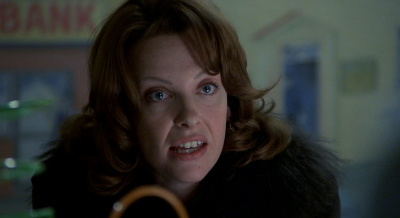 ...her fears of her son,
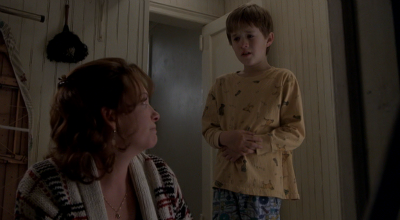 ...and, most terrifyingly, her fears that her son is beyond her protection.
 Collette's Lynn has a ritual that she enacts with her son every time he wonders aloud that she might think him a freak. "Look at my face," she commands before affirming -- to herself as much as to her young son -- that she will always love him, and stand by him. It's the way Collette's Lynn rights herself when she gets a little off course, and it's what lays the foundation for what becomes the film's most emotionally substantial scene: the revelation in the car.
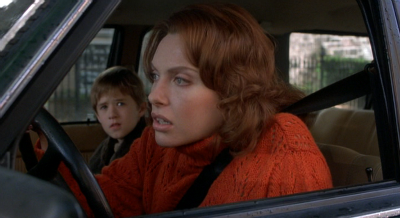 In this scene between Collette and Osment (their final scene in the film), Osment's Cole decides to finally "come out" to his mother about his secrets.
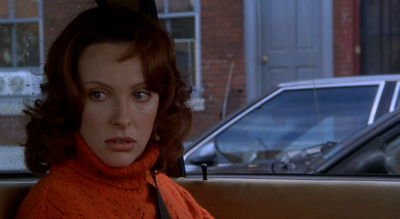 Collette's Lynn has been begging Cole to open up to her for the entire time we've known her, yet, when he begins to do so, she's wary -- skeptical -- unsure.
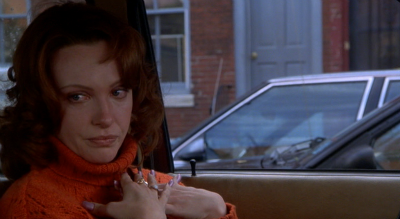 Until little Cole drops a big bombshell, which rocks his mother to her emotional foundation, permitting the two to embrace with a renewed trust that helps assure the audience that, together at last, this mother and son will find a way to maneuver Cole's mysterious path through life.
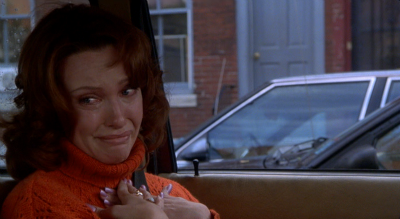 Collette's work in the role is beyond merely effective. She layers complexity and compassion into Lynn's every gesture, providing the emotional anchor for a film that threatens in every other scene to float away into genre-study abstraction. Collette is funny, formidable and fundamental to the film's success. And while the nomination likely came because of the haunting veracity of her scene in the car (it's always good for a possible Supporting Actress nominee to have an extended heartrending scene toward the end of the picture), Collette's nomination is worthy recognition of an actress who has proven to be one of the most delightful practitioners of Supporting Actressness in her generation.