Showing posts with label thelma ritter. Show all posts

4.26.2009

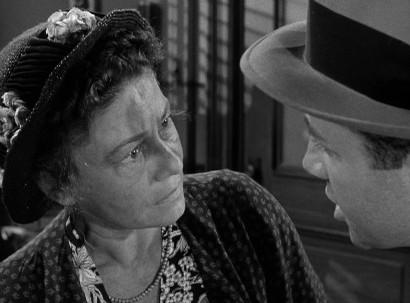
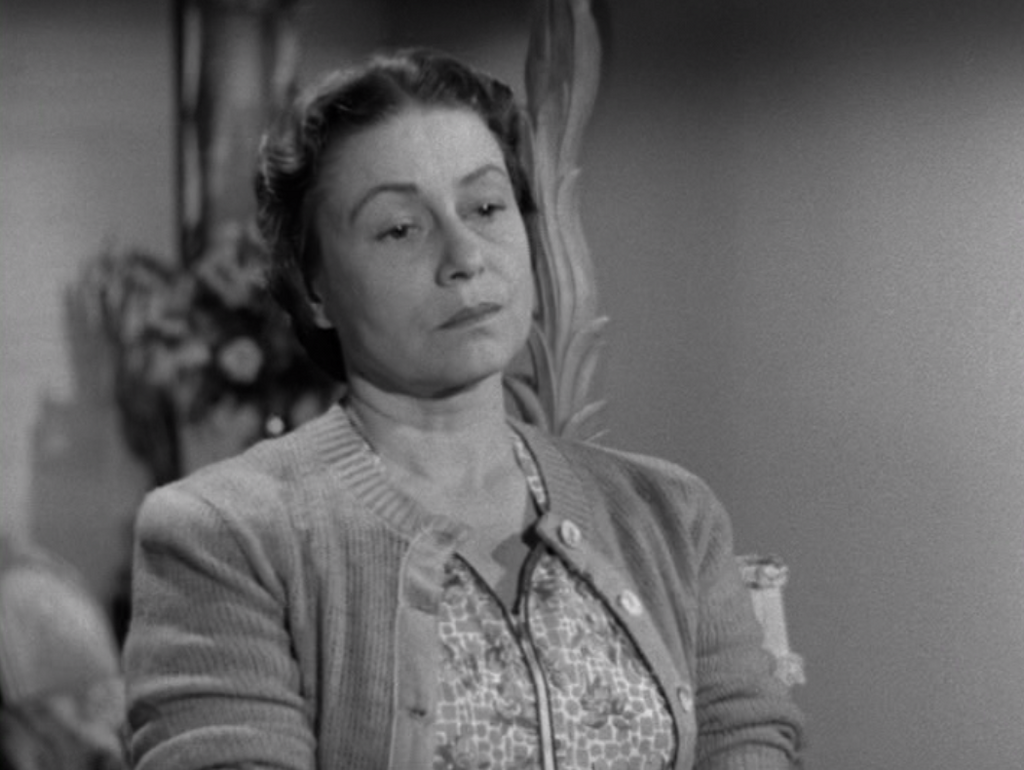
Thelma Ritter in Pillow Talk (1959) - Supporting Actress Sunday

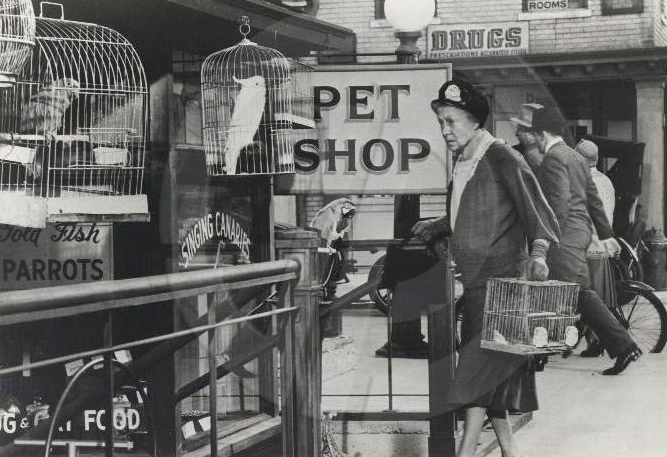
With the 1959 Smackdown only a few hours away, I'll keep the month's final profile comparatively brief, even though it's a performance by the reigning queen of supporting actress -- the single Supporting Actress with the greatest number of Supporting Actress nominations (as well as the most losses) in the category's history. And, here, this particular actress is stretching far beyond her typical genres. With, alas, mixed result. Of course, I'm talking about...


...Thelma Ritter in Pillow Talk (1959)
approximately 7 minutes and 2 seconds
8 scenes
roughly 7% of film's total running time
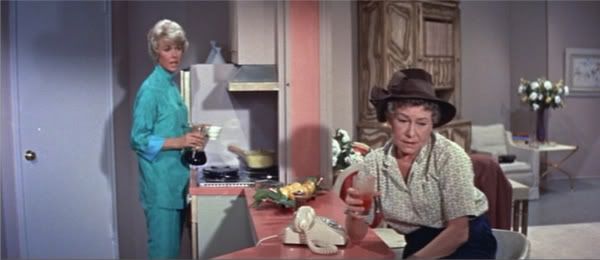
Thelma Ritter plays Alma, the soused housekeeper of interior decorator Jan Morrow (the blithe Doris Day).
The character of Alma is less a character than a plot device who possesses three main character traits. One, Alma's a complete lush; she's almost always hungover, drinking or both. Two, as a hardbitten cynic with a soft heart, Alma's got strong ideas about how women and men should relate. Three, Alma's got a sharp, sardonic wit which gets looser and sharper whenever she's drinking (which is always) and whenever the subject turns to romance (which, in this movie, is also always).
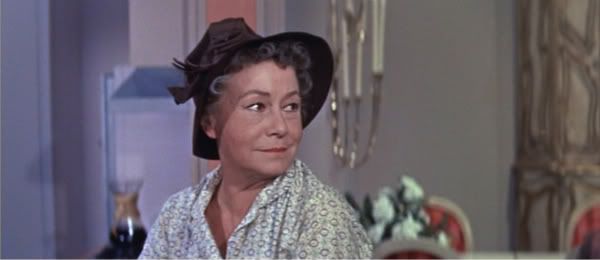
On these three counts -- the total lush, the cynical romantic, and the sharp wit -- Thelma Ritter's particular gifts are mostly suitable for item three (the sardonic wit). And throughout the performance, Ritter nails Alma's many laugh lines using her signature, wry warmth.
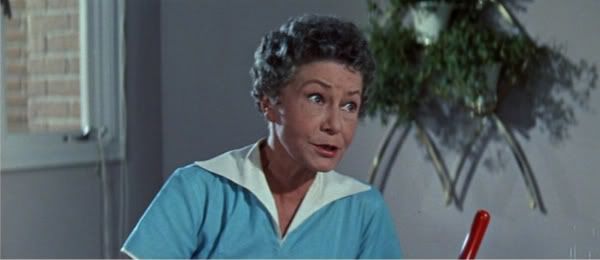
As regards the other two sets of character obligations (comedic drunkenness and romantic goopiness), Ritters success in the role is a little more mixed.
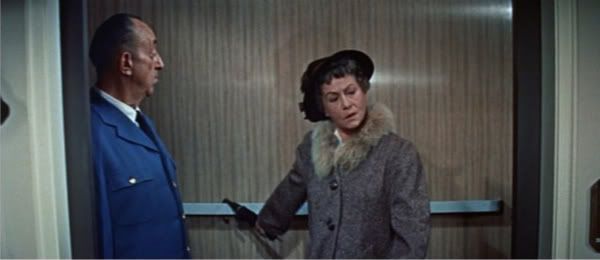
Ritter enacts the physical comedy obliged by the role -- especially the running gag of the elevator "moving too fast" for the hungover Alma -- with a trouper's gameness. To be sure, Ritter makes this recurring bit of silliness work, just not especially well.
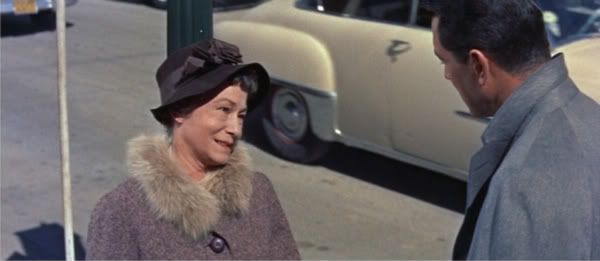
However, when the comedic drunkenness is more text based (as in the scene where Ritter's Alma drinks Rock Hudson's character under the table), Ritter's sublimely effective. (Indeed, this erratic performance underscores Ritter's dexterity with language. When she's got words to use, Ritter's brilliant. When she needs to use her face or body to convey the moment, Ritter seems -- shockingly -- out of her depth.)
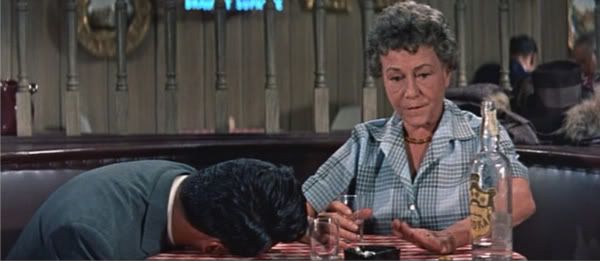
As the opinionated romantic, Ritter's Alma works passably well, and the actress does a nice job of setting up Alma's "crush" on Hudson's Brad Allen. Nonetheless, Ritter's inclination toward wry nuance doesn't awlways jibe with the narrative's hints of broad comic stylings.
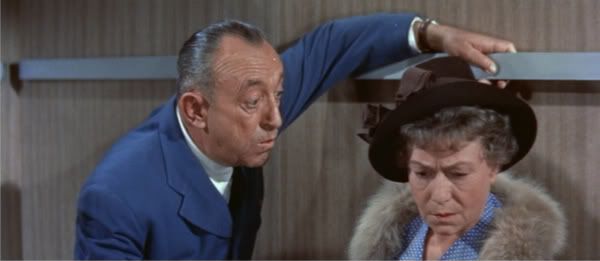
All told, Ritter's performance as the alcoholic Alma ends up being both too broad and too subtle.
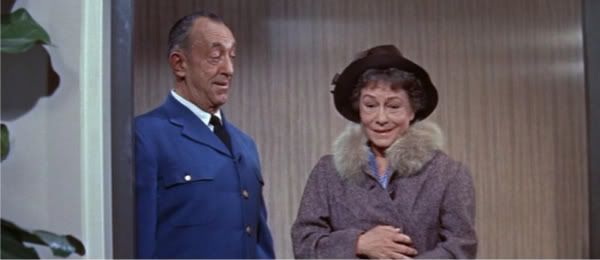
While Ritter's presence in the film does invest a clarity and focus to the proceedings, but the actress's particular brand of midcentury cinematic "realism" (so suited to hard-boiled genre pictures and serious dramas) struggles to find a landing place in this film, an airy bit of high-style frippery.
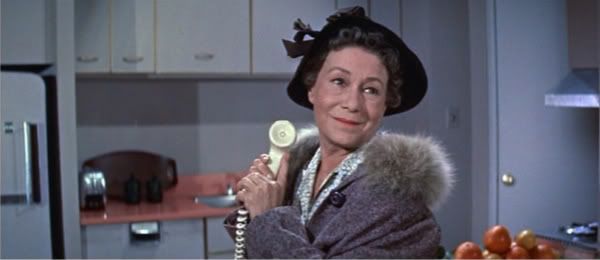
Thelma Ritter is a great supporting actress but, here, she delivers a middling, miscast misfire of a performance.

5.01.2008

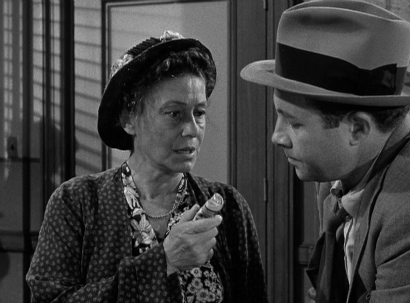
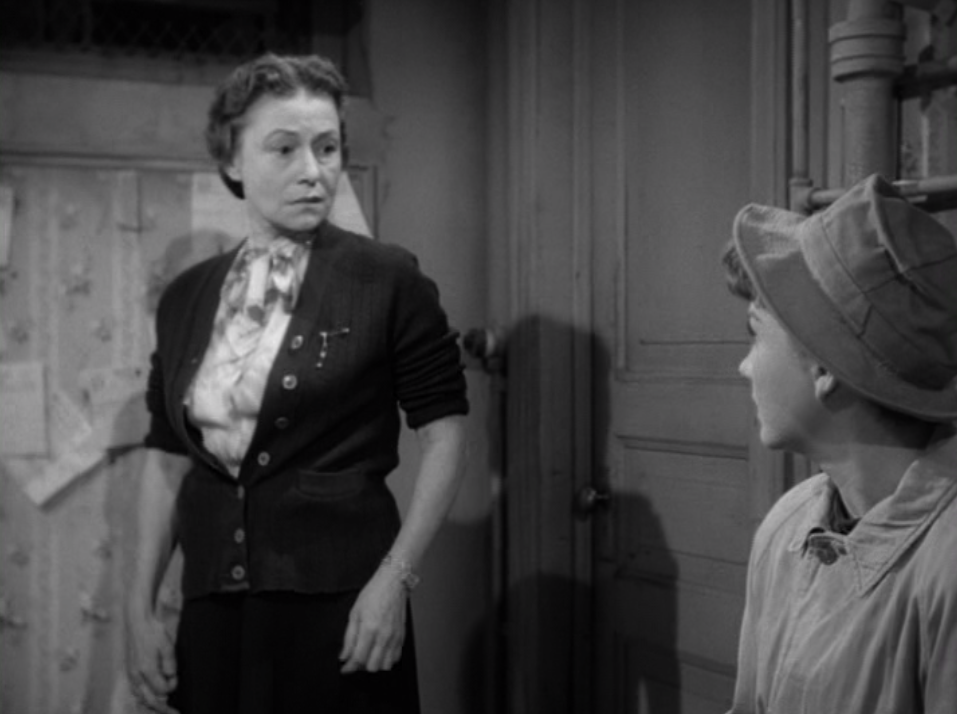
Thelma Ritter in Pickup on South Street (1953) - Supporting Actress Sundays

I am not much of a contrarian by nature. Truly. But given my spoilerish track record on some of the most beloved Supporting Actress performances (exhibit 1, 2), I'm not sure y'all will believe me. As I compose these profiles, I try to tune into my clearest instincts, to not endeavor to sway or convince anyone else but to convey what I honestly think I think about this or that performance. And occasionally that means I end up going against the grain of conventional wisdom about an especially revered performance by a particularly beloved performer, which is precisely what happened this week with...


...Thelma Ritter in Pickup on South Street (1953)
approximately 15 minutes and 43 seconds
6 scenes
roughly 20% of film's total running time
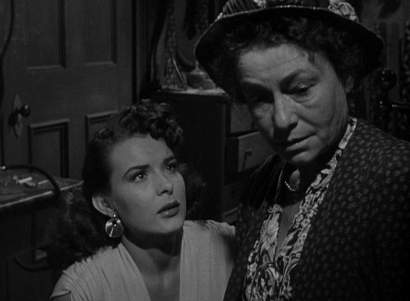
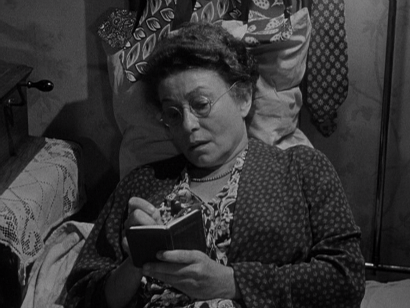
Thelma Ritter plays Moe, a woman who hustles her living at the far edges of New York's underground economy, peddling -- alternately -- cheap men's neckwear and, more lucratively, what she calls "information."
Although she makes her living "selling secrets" in Cold War America, Ritter's Moe balks when called a "stool pigeon," emphasizing her status an enterprising entrepreneur, finding her own way toward success within American capitalism.
The symbol of Moe's success is her "kitty" -- a wad of bills she's saving toward the purchase of a legitimate funeral plot, a proud gesture in defense of the feared ignominy of her anonymous burial as a pauper in New York City's "Potter's Field."
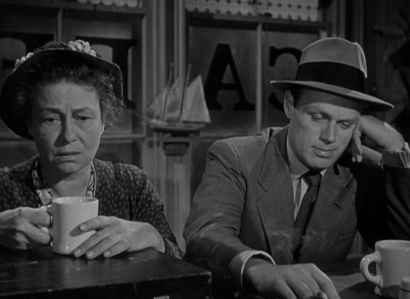
Ritter's Moe is pivotal to Samuel Fuller's elegantly efficient noir narrative - when Skip (the charismatically opaque Richard Widmark) picks a particular pocket and lands in the sights of both the cops and the communists, Ritter's Moe is the one to whom they turn for the "information" she peddles, and so becomes essential to both the narrative and emotional architecture of this enthralling film.
Ritter begins her characterization as the narrative does, with a glib simplicity: Moe's a hustler and she's looking to get on. As the narrative complicates, so does Ritter's work as Moe. When the "muffin" Candy (an appropriately delicious Jean Peters) begins to demonstrate more than a simply mercenary interest in Skip, Ritter's Moe too begins to doubt the economics of her own self-interest. Perhaps the information on Skip's whereabouts is more valuable than she might have originally assessed?
Yet, as Moe privately determines that Skips means more to her than money, Ritter allows Moe's zesty bravado deflate just a little. It's as though, absent the thrill of the dollar chase, Moe's not certain what she's living for...
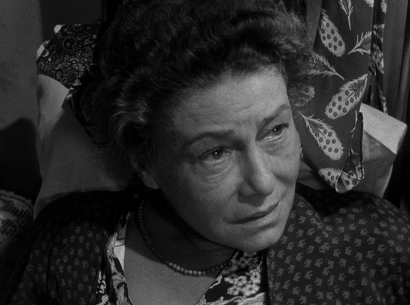
These first two beats -- Moe's (1) the happy hustler who (2) encounters something of an identity crisis -- sets the stage for a final death scene that might just be Thelma Ritter's most glorious five minutes of the actress's deservedly esteemed career.
When Ritter's Moe finds herself not at the shadowy invisible edges of New York's underworld but instead within its glaring spotlight, Thelma Ritter delivers on of the greater death arias I can think of in American cinema. Captured with adoring reverence by director Fuller, Ritter uses a simple monologue to the depth of Moe's sacrifice as she chooses to surrender to death rather than peddle the data of Skip's whereabouts. In this scene, Ritter shows us both "Moe the human calculator" (ever tallying the relative value of the commodities she has to peddle) as well as "Moe the human being" (who operates according to a different, less precise arithmetic). It's a beautiful scene -- warm and moving and memorable -- conveying an unforeseen depth to both the character and the actress.
And right there is the rub. For the first 2/3 of her performance, Ritter only shows us the mercenary Moe, with only a glimmer (in the coffee shop scene) of the human soul beneath the hustler's patter. Then, in the last 1/3 of the performance, Ritter reveals a whole 'nother Moe -- the patter suddenly textured and nuanced with revelatory depth. And, normally, I love watching the surface peel back to reveal the unanticipated depth. So believe me when I say I was surprised to discover, after re-viewing the performance for timing and screencapping, what I felt to be a disconnected break between the first 2/3 of Ritter's performance and the last scene. It's as though Ritter trouped through the first few scenes drawing from her standard bag of character actor tricks only to discover, much later, that Moe was not merely a type but a richly reasoned characterization. The problem? This is what the audience should see, but the actor might be expected to see more, to lay the foundation for the culminating reveal with a little more sophistication. Indeed, Moe's first scene in the station provides nearly the entire subtextual foundation for the final scene, yet Ritter opts for a superficial patter and banter that emphasizes the Moe's short term motives at the expense of the character's actual motivations. Put another way, it's as though Ritter skimped on the house and then, at the last minute, splurged on the furniture. Admittedly, this is a fine line I'm parsing here, and one that I acknowledge will get me in trouble with impassioned fans of this performance. But, as I mentioned just recently, one must remain true to one's self, especially in matters of faith, politics and actressexuality. So, in sum: love Ritter, love that death scene, but remain ambivalent about the performance.

5.13.2007

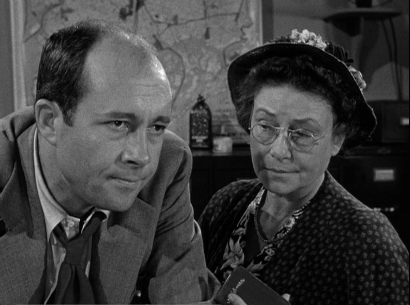
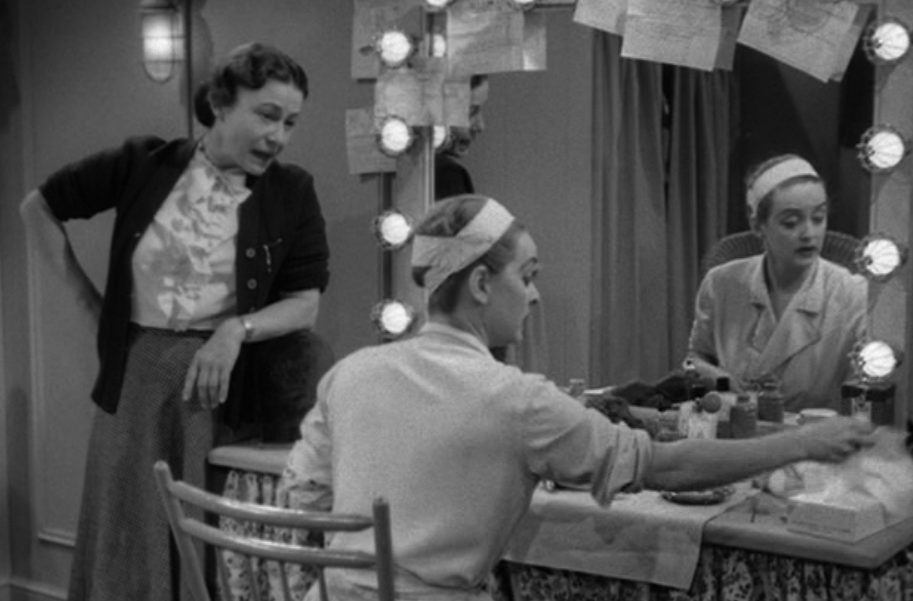
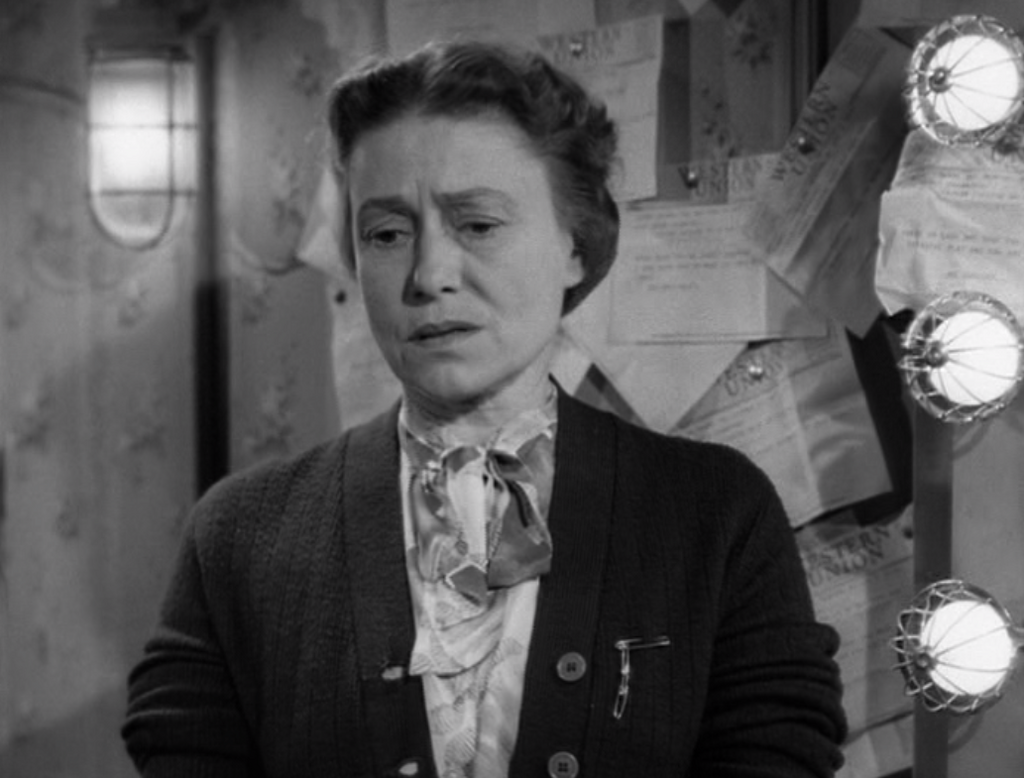
Thelma Ritter in All About Eve (1950) - Supporting Actress Sundays

Joseph Mankiewicz's revered film, All About Eve, depicts that curious species ("The Actress") in her natural habitat ("Just Off Stage"). Layered with all kinds of in-jokes, not to mention the basic melodrama of theatrical/romantic intrigue, All About Eve boasts a loaded bill of legendary actresses each of whom easily overshadows the men (save perhaps for the resident queerish wag, of course). Indeed, All About Eve is a veritable smorgasboard of actressexual delights...a romp really, in the sordid pleasures of actressing at the edges (not to mention the centers). And a few of the choicest bits of said pleasures derive from the Patron Saint of Actressing at the Edges, the one and the only...


...Thelma Ritter in All About Eve (1950).
approximately 11 minutes and 21 seconds
10 scenes
roughly 8% of film's total running time

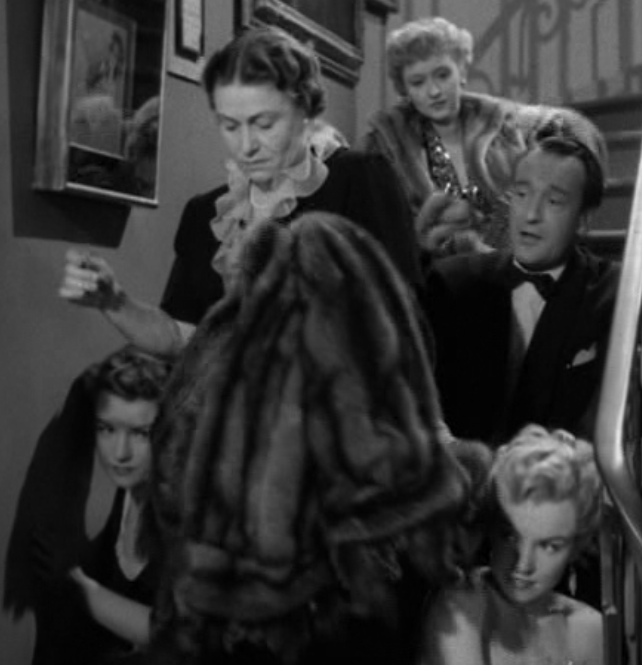
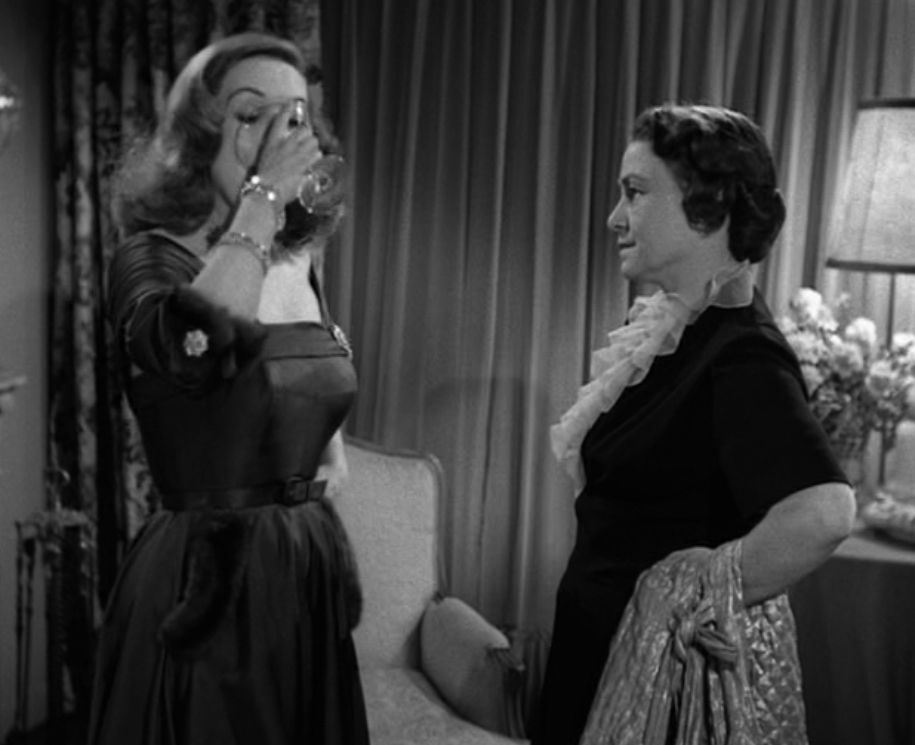
StinkyLulu's waxed rhapsodic about Thelma Ritter before but, truly, Ritter's Birdie -- the former vaudevillian who's somehow found her way to being the maid for a serious stage actress (Bette Davis) -- shows Ritter as her crusty, caring best.

Mankiewicz doesn't give Ritter all that much to do in the film. Most of her scenes come at two plot points (the introduction of Eve & the bumpy night party), with a brief but essential bridge between. Even more, within those scenes, Ritter's Birdie seems mostly to be there to wave the big red flags that the principal characters are too sentimental to see. To be honest, Birdie's a thin wisp of a role, almost a plot device really. Nonetheless, the character is essential to the story and, in Ritter's hands, Birdie also comes palpably to life. Much like another impressive cameo performance in the picture, Ritter brings a formidable clarity and charisma to the role, making Birdie fully memorable besides.

For, in Ritter's hands, there's never a doubt that Birdie's a real person. Crabby, cynical and occasionally crass, to be sure -- but Ritter's Birdie is never a caricature. Ritter manages the banter with Davis easily, allowing Birdie's history as a mid-tier vaudevillian to inform their relationship and explain Birdie's astute capacity to judge character. And few actresses but Ritter would have been so adept maneuvering one of the tart-tongued character's tricksiest moments. Eve (Anne Baxter) has delivered her sobstory. Margo's dressing room -- packed with the NY cultural elite -- is agog with sentiment. But it's Ritter's Birdie who pipes up, breaking the soppy silence: "What a story. Everything but a pack of bloodhounds snapping at her rear end." Ritter plays this moment in a fashion that's testament to her particular gifts. The snark of the line comes through, but so too does the fact that Ritter's Birdie is genuinely moved by what she's just heard. What's even better: Ritter's duality in this moment -- goodhearted sweetness cut with a worldly tartness -- also enables Birdie to wave that big red flag (Bullshit!! Bullshit!!) without compromising the ease of Eve's hustle.

Ritter's characterization of Birdie is a marvel of efficiency and clarity. Ritter -- along with Davis & Monroe -- is pitch perfect casting amplified by the artful execution of what might have easily been a non-dimensional role. (Notably, not all of the roles in All About Eve do as well on these counts. Be sure to check out this conversation about the casting of the central role of Eve between May Smackdowners Ken & Vertigo's Psycho.) But, alas, Ritter's Birdie leaves the scene of All About Eve way too soon, making a characteristically understated exit (albeit with sable coat in tow). It's a pity really, that Ritter's Birdie is gone so soon... Wouldn't "that scene" where Birdie & Eve square off have been a treat? (Much more satisfying in some ways than the gender-squicky one that happens with Addision, if you ask StinkyLulu.)

But that was one of Ritter's most amazing gifts. Dishing everything precisely as it needs to be served, always leaving you wanting just a little bit more...

8.23.2006

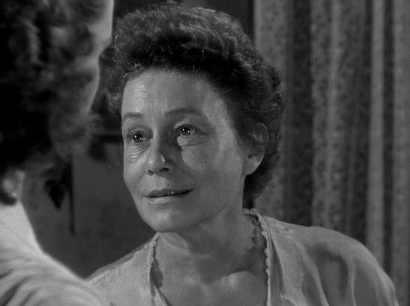
Thelma Ritter in The Birdman of Alcatraz - Supporting Actress Sundays (Wednesday Edition)

If ever there were a holy icon for actressing at the edges, Thelma Ritter would likely have been so canonized. Laboring in character roles at the outskirts of films of every pedigree, Thelma Ritter both maintains the record for most nominations in this category (6 in 12 years) while also having suffered the noblest Oscar ignominy (accumulating a raft of nominations but not a single trophy). Indeed, so ubiquitous is Ritter as a Supporting Actress nominee that Lulu sometimes forgets she's one of Oscar's biggest losers. So, among actresses at the edges, Thelma Ritter's sacrifice and martyrdom at the hands of Oscar do certainly qualify her for a curious kind of Supporting Actress sainthood.

Supporting Actress aficionado Canadian Ken recently observed, when discussing Ritter's overlooked performance in 1961's The Misfits, that "Oscar voters recognized [Ritter] regularly. But, to my mind, they often nominated the wrong performances." Such would seem to be the case for her work as Elizabeth Stroud, the mother of real-life lifer Robert Stroud, the performance which accomplished Oscar's final nomination for...


10 minutes & 30 seconds "on" screen (including 23 second voiceover)
7 scenes (w/voiceover & counting first petition sequence as 1 scene)
7% of film's total screen time

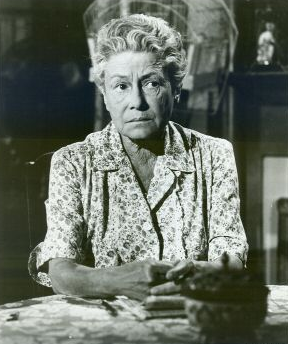
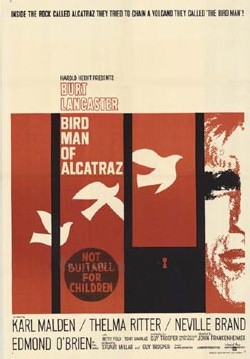
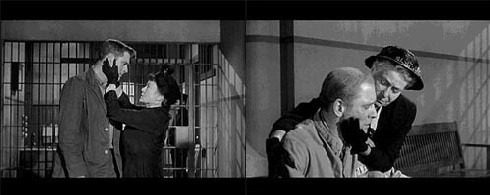
Thelma Ritter's Mrs. Stroud is a force to be reckoned with. Intensely protective of her imprisoned Robert, Ritter's Mrs. Stroud's devotion nearly defines her son (played here with tedious righteousness by the nearly awful Burt Lancaster). For a good two thirds of the picture, Robert Stroud's character is implicitly defined by the obtuse relationship he maintains with his mother. The audience knows little (and Lancaster's performance gives nary a clue) about the man 'cept that he's a murderer with a genius IQ and an anger-management problem. And that he loves his mother. (So much so that he kills a prison guard who thwarts a visit from her.) Ritter's Mrs. Stroud contributes a powerful offscreen presence which punctuates, often detrimentally, the arc of her son's story. Indeed, references to the character of Mrs. Stroud prove pivotal, even focal, to 6 scenes in which the actress herself does not even appear. The relationship between Stroud and his mother remains one of the very few the film explores with any interest and, even with Ritter to anchor the volley, its impact is truncated by the trudge of the narrative. (The film itself is bio-pic pablum, which seems to provide/refine the formulaic template for both the super-serious man-finds-his-soul-in-prison movie genre (exhibit A & B) AND the Lifetime "trauma drama". Director John Frankenheimer's visual flair only occasionally elevates the flick above its preening sincerity.)

For her part, when she's on-screen, Thelma Ritter's Mrs. Stroud is classic Ritter: a solid -- somewhat soiled -- rock (salt-of-the-earth, to be sure). At once humble and noble, Ritter's Mrs. Stroud emerges as the kind of woman to both rant impolitic in court at the injustice of capital punishment and also capable of campaigning all the way to First Lady Edith Wilson to snag a stay of execution for her beloved son. Yet, even from its first note, Ritter's performance cues an uneasy suspicion that there's something a little "off" about Mrs. Stroud's passion for keeping her son alive and imprisoned, one clinging to the other as they each grey and crust over. And when her son marries a widowed bird woman, Ritter's Mrs. Stroud quickly morphs into an exacting, infantilizing monster mother (though it is to Ritter's credit that this transmogrification errs away from the spectacular and centers upon Mrs. Stroud's fearful, heartsick desperation.) As her Mrs. Stroud finally abandons and disavows her son out of misplaced pride, Thelma Ritter also contributes this film's only honest moments of poignancy. (Too bad the film just rushes right along past them.) Hers is a characteristically solid and specific performance -- extraordinary in its ordinariness -- and just the sort that reminds StinkyLulu why Thelma Ritter's such an icon of actressing at the edges. Can't say Lulu loved the performance, but golly StinkyLu does love LaRitter...

7.18.2006

Canadian Ken on Thelma Ritter in THE MISFITS (1961) - CouldaShouldaWoulda Wednesdays

Yes. It's Tuesday but...

Just got a rich message from Canadian Ken with some excellent observations about the Supporting Actress Class of 1961. So, over this week and next, Lulu'll be sharing some of Ken's excellent observations with y'all, lovely reader. Kicking things off, Ken offers his thoughts on one of the more startling oversights of 1961's Supporting Actress nominations...
Canadian Ken sez...
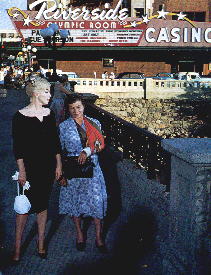
Thelma Ritter's presence is always welcome - and Oscar voters recognized her regularly. But, to my mind, they often nominated the wrong performances. Ritter-wise, The Misfits represented the Academy's most egregious failure to nominate. Onscreen, she redefined the term "down to earth" combining a number of seemingly opposing characteristics - she was simultaneously wary and distracted, shrewd and soft-hearted . And nobody did it quite like her. Or even came close.

In The Misfits, she ratcheted it all up to full, finely tuned glory. Ditzy but pragmatic, shambling around, sometimes carryring her arm in an eloquent sling, Ritter was poignant, pithy and certainly never better. She drifts out of the picture part way through and she's genuinely missed for the rest of the proceedings. (What the heck! I still miss her.) With The Misfits, Ritter was part of a solid gold project, working with a great director and inspired co-stars..
Thanks, Ken!
And stay tuned, lovely reader, for more from Canadian Ken. Ken's thoughts on Mary Astor in Return to Peyton Place are not to be missed!
(Check back next week, same stinky time, same stinky station...)