10.22.2006

Glenn Close in The World According to Garp (1982) - Supporting Actress Sundays

Autobiographical Aside: The World According to Garp occupies a tender place in StinkyLulu's heart. First, Garp's the single film of the 1982 Supporting Actress roster that StinkyLulu saw, in the theatre, during its original release. (Indeed, a cursory scan suggests that Glenn Close's performance might well be the first nominated Supporting Actress performance that bears this original screening/original release distinction in StinkyLulu cinephiliac history.) Even more, StinkyLulu has vivid memories of the screening itself. See, 'twas a mere day or two before the Stinky clan was to return to the desert kingdom of Lulu's adolescence and, still, two of the three movies lil Lulu most wanted to see on this trip stateside had not yet been released. Then...bam. Both opened the same day. (Attentive readers might well recall a similar miracle of movie timing that occurred a week or so earlier this same summer.) Such serendipity enabled StinkyLulu to convince Mama and Papa Stinky to take Lil Lulu, along with Inezita, to this R-rated double feature: The World According to Garp and The Best Little Whorehouse in Texas. Truth be told, the whole Stinky clan has long had a weakness for all things Dolly, so Whorehouse was a no-brainer, but 'twas certainly Lulu's insistence that added Garp to the mix. (Somehow Lulu suspects that it was the recent A+ in 8th Grade English, in which StinkyLulu had submitted a prize-winning -- seriously, kids -- book report on the John Irving novel, that secured the Double-Feature lobbying campaign's success.) Even more, StinkyLulu vividly recalls how, while settling into seats several rows ahead of the 'rents, Lulu and Inez fancied themselves infinitely cultured and all-growed up, both blithely unaware of the butt-tastic lockerroom scenes offered in each film as babyfag bonbons. (And now's not even the time to go into the fact that seeing A Chorus Line on Broadway was just 'round the corner, mere days away in StinkyLulu's future.) Ahhhhh. The summer of 1982 may well have been the summer that StinkyLulu became...well...StinkyLulu.

Anyway, amidst all of this, during the drive home, StinkyLulu also has a distinct memory of defending the curiously powerful performance by...
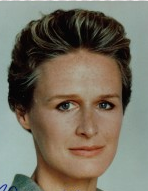
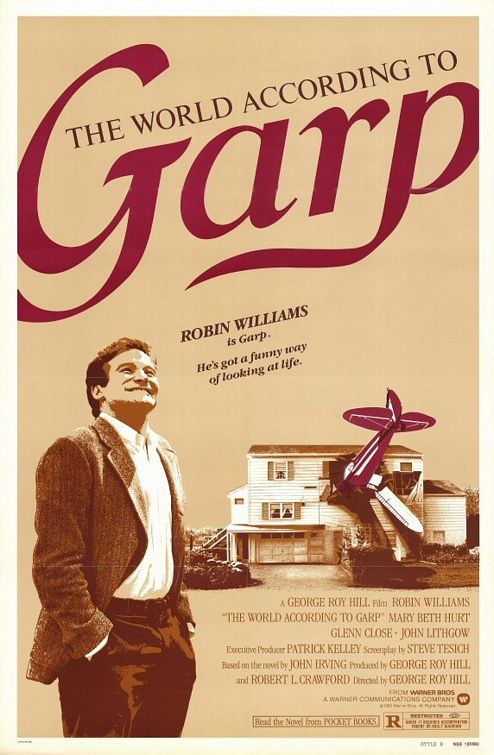
...Glenn Close in The World According to Garp (1982).
approximately 46 minutes and 57 seconds on-screen
34 scenes
roughly 35% of film's total screen time
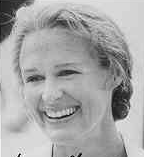
Glenn Close plays Nurse Jenny Fields, single mother and patrician New England prig-cum-radical, who bucks gender conventions by living her life according to a clear moral philosophy of independent self-determination. The film's first scenes show Close's Jenny -- exuding glib contentment -- as she tells her scandalized wealthy parents (Jessica Tandy and Hume Cronyn) how she used a brain-injured WWII casualty for stud service (which in Nurse Jenny's moral universe makes infinite practical sense) and how she is now a happy mother of an illegitimate son. And while the rest of the narrative is ostensibly the story of that fatherless boy (Robin Williams, in an admirably precise and understated performance), Close's Jenny hovers as a formidable and enveloping presence throughout.
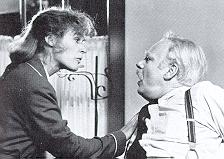
The accomplishment of Close's performance derives from this presence. Close's Jenny exudes a kind of constancy, a certitude, a confidence, a clarity, an undeniable gravitational pull that rearranges her own (and Garp's) universe. Close's performance makes it clear that Jenny's her son's rock, whether he likes it or not. This is perhaps most evident in the way Close allows Nurse Jenny to age without seeming to change in the slightest. Indeed, as the film tramps along the typical Irving expanse of time, space and idiosyncracy, Close's Jenny seems to change not at all (even when she becomes a radical feminist publishing sensation -- !) and, yet, it's her presence as a stubborn force for healing that continues to guide her son and to reconfigure the world in which he lives. (Indeed, Close's star power -- in her film debut -- nearly dwarfs the film; it's like she's the really really really big momma tossing those big naked babies in the credits.) But it's Close's performance that makes room for the vast queer family at the heart of the film, and, in the end, Close's Jenny makes total sense as the role model for the kind of "family man" Williams' Garp so enjoys becoming, and which the film so lovingly depicts.
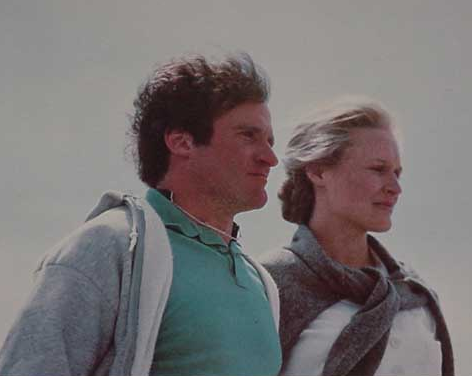
See, for StinkyLulu, the galvanizing appeal of John Irving's fictions derives from the queer marriages he stages between biological and chosen families. The world of this film is jam-packed -- in typical Irving style -- with crazy and delightful characters, devoted to each other yet not always connected by conventional blood relations. This constellation -- in turn -- allows for a thrilling accumulation of character performances, big and small, which y'all know Lulu's just a sucker for. Stage legends John Lithgow (as tranny footballer Roberta) and Swoosie Kurtz (as the unsuspecting hooker whose life changes forever after an encounter with Garp & Jenny) are excellent. Kaiulani Lee, Tandy & Cronyn, and Amanda Plummer -- in an electrifying 58 second performance -- are uniformly great. Even Mary Beth Hurt is really good (and StinkyLulu doesn't say that often). And even more than Garp, Close's Jenny heals them all so they become a queerly wonderful family. (And dang if StinkyLulu ain't a total sucker for that...)

Glenn Close's performance remains a kind of mystery to StinkyLulu -- a strangely affecting performance in a curiously effective film, fascinating then and now. Still don't quite know what to think of it in terms of trophies or actressing at the edges, but dang if Close's performance doesn't work some interesting magic here.

SO, lovely reader, there we go; sorry for the delay. Look for Kim Stanley on Wednesday. And just one week until 1982's Supporting Actress Smackdown.... Whee.

Technical Difficulties - Please Stand By


Due to unforeseen technical difficulties
(amazingly not due to blogger, but a less usual suspect)
this week's Supporting Actress Sunday profile will be delayed.

Hoping
for the end of today, but time will tell...

10.21.2006

Augusten Burroughs & Supporting Actress Sundays

Though it's not opened nationally yet, the passionately ambivalent buzz seems already to have begun swirling around the screen version of Augusten Burroughs' breakthrough memoir, Running With Scissors.
Whether the movie's any good or not, StinkyLulu remains an unrepentant Augusten Burroughs fan -- especially because of Dry, but mostly because of Burroughs' distinctive voice and generational POV. But Lulu just this afternoon discovered one of the ancillary benefits of the movie's opening:


And, no real surprise, it turns out that Augusten's programming for Tuesday is a veritable cornucopia of Supporting Actress treats -- truly a survey of sorts of StinkyLulu's Supporting Actress Sunday profiles Past, Present and (potential) Future. To illustrate, Tuesday's cinemania ala Augusten includes:
  • Supporting Actress Sundays Past: At 10pm, Maureen Stapleton in Interiors (one of StinkyLulu's very first SAS profiles).
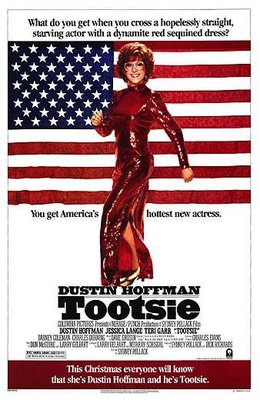
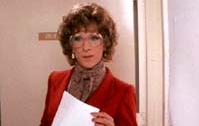
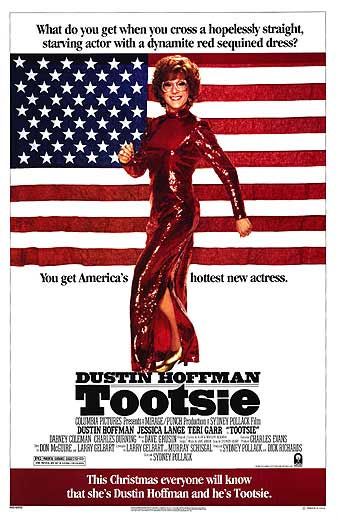
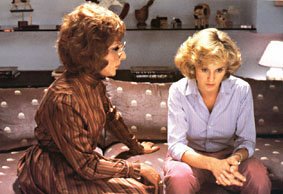
  • Supporting Actress Sundays Present: At 8pm, Teri Garr and Jessica Lange in Tootsie (among October's Supporting Actresses).
  • Supporting Actress Sundays (Potential) Future: At 11:45pm, Dorothy Malone in Written on the Wind (though currently something of a dark horse, this might yet be on the roster for November). And at 1:30am, Lily Tomlin in Nashville (1975's one of the years that you lovely readers will be voting on for December's roster).
Awww.
Swooon.
StinkyLulu does like that Augusten...

10.20.2006

Querying the Future of "Homo Heritage Fridays"...

So, lovely reader, StinkyLulu needs your input.
Should StinkyLulu continue developing entries
for "Homo Heritage Fridays"?
Do tell...


Homo Heritage Fridays


Should StinkyLulu keep doing "Homo Heritage Fridays"?


Absolutely!
Nope.
What's Homo Heritage Fridays?


10.18.2006

Lesley Anne Warren in Victor/Victoria (1982) - Supporting Actress Sundays (Wednesday Edition)

One of StinkyLulu's most favorite things about actressing at the edges comes when an actress spins gold out of straw, transforming lame cardboard claptrap into vivid, surprising characterization. It's what Carolyn Jones did in 1953 and it's what (in what is -- it's prolly safe to say -- her single career nomination) StinkyLulu so adores about...


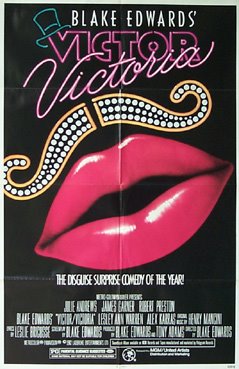
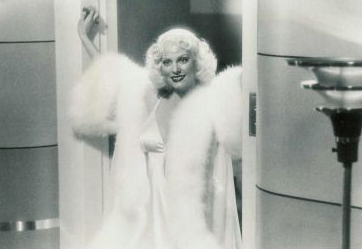
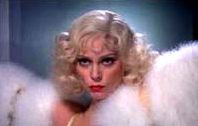
Lesley Ann Warren in Victor/Victoria (1982)
15 minutes and 54 seconds on-screen
11 scenes
12% of film's total screen time

Lesley Ann Warren's character, Norma Cassady, is little more than a plot device in peroxide and cha-cha heels. If a snarky animated feature was based on Blake Edwards' screenplay (which, along with his directorial pacing, is oddly tedious & turgid), the character of Norma would almost certainly have to be anthropomorphized as a goose. Because, really, that's precisely how Edwards uses Lesley Anne Warren in the role. Warren's Norma is the movie's golden goose, a garishly white creature -- all peroxide and ivory satin, with eyes somehow both big and beady -- who gawkishly fancies herself as the center of all attention (a trait which Edwards toys with slyly, ever edging her from the frame). Vocally, Warren's Norma mostly flutters and honks, jabbering in an accent that seems to be "generic gutter" and goosing her every scene with a manic vocality that blares atop the languid urbanity of her co-stars. Finally, Warren's Norma is just the movie's silliest goose, her self-conscious posture of tolerant sophistication debunked by the banality of her homophobia and heterosexism. (Among the queerest pleasures provided by Lesley Ann Warren's Norma comes from tracking how each of her many contradictory slurs derives from her basic cluelessness and prideful pretension. It's as lovingly comic a portrait of full-blown heterosexism as any film has e'er shown...)

But Lesley Ann Warren's performance as an American goose among the Parisian swans moves beyond the simplicity (and vaguely prim) screenplay to emerge as one of the savviest drag performance in 1980s film. Warren's performance is sexy, shameless and smart. Like the best drag personas, Warren's Norma is somehow in on the joke while also completely oblivious to it. Warren's performance as Norma never bores, often surprises (those line readings!) and becomes the only thing about this film worth remembering. (Though StinkyLulu confesses to an enduring softspot for Alex Karras' performance as Squash.)

Pauline Kael (somewhat famously) dismissed the enthusiastic response of gay audiences to Victor/Victoria in 1982: "Why are homosexual spokemen celebrating the film? Perhaps for the same reason that the young American leftist press celebrated Reds. They're hungry to see fantasy versions of themselves on the screen and, forced to, they'll accept crumbs." (p.333-334) Putting aside for the moment Kael's notorious tone-deafness regarding all things camp, here, the scold nails the perils of Victor/Victoria's politesse. And StinkyLulu's convinced it's the key to the enduring pleasures of Lesley Ann Warren's performance as Norma: Warren's Norma is the only unapologetically queer performance in this picture. (Exhibit A: Lesley Ann Warren's best line: "Poooooooooooooooooooookie. I'm whore-neee." Genius. Unfettered, untrammeled, utterly trashy genius...) Lesley Ann Warren's Norma created a campy queer haven in this bizarrely heteroprecious film in 1982...something it continues to do even more, even now. For that accomplishment alone, StinkyLulu will ever reserve two snaps and a dollar-bill for Miss Lesley Ann Warren's Norma...

But how does the campstastic-ness of Warren's Norma stack up against the straight-ness of the rest of 1982. Tune in (in just eleven days) to see. But in the meantime, lovely reader, please do share in comments your own thoughts -- yay or nay -- about this polarizing performance.

10.17.2006

Carolyn Jones at the Castro Theatre in 3D - Supporting Actress Flashback

Many highlights punctuated the Stinkys recent trip (StinkyLulu's very first) to the Bay Area: spending time with some of MrStinky's family; good shopping; better food (a, b, c, d, & e); great museum-ing...not to mention a full bout of academentia (much excellent mingling with long-time buds; some important, necessary & not-too-scary "meetings"; presenting some new material). But amidst all 'dat, perhaps the most exultant few hours were spent at the movies with...
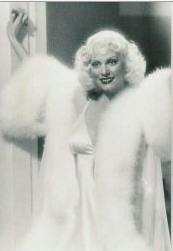

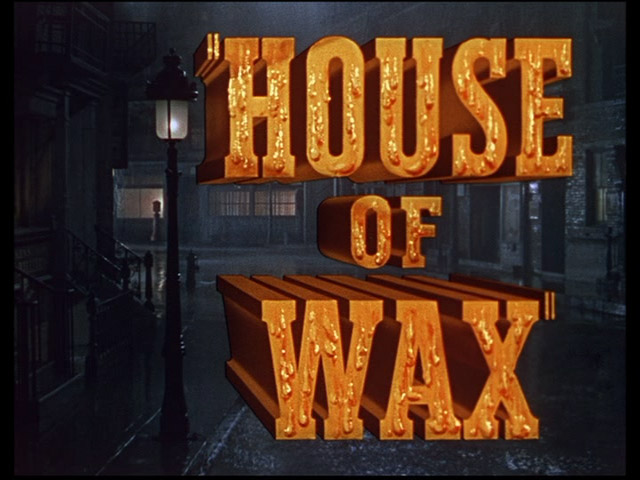
...Carolyn Jones in House of Wax (1953).

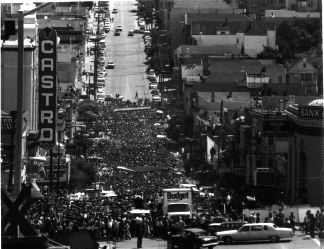
Yes, lovely reader, this past weekend StinkyLulu was able to realize a long-time dream: screening a campy movie at the Castro Theatre. 'Twas a pilgrimage of sorts, as the legend of "the Castro" as a space for gay male identity has long been, in Lulu's imagination, landmarked by the fact of the Castro Theatre's marquee. The footage of Castro pride days often showed hot homos shaking their groove things, but what's long appealed more to StinkyLulu has been the stories of the camptastic movies being screened for the flaming actressexuals just inside the theatre bearing that marquee... So when MrStinky asked: "Is there anything you've always wanted to do in San Francisco?" StinkyLulu meekly but honestly said: "See a movie at the Castro Theatre?" To which MrStinky (being just the sweetest sweetie ever) replied: "What's playing?!"

Turned out that the Castro Theatre was hosting a 3-D Film Series over the last week and the screening that fit best into the Stinkys schedule was the 1953 Vincent Price vehicle House of Wax. Even better, the Castro Theatre was screening these 3-D films in 35mm “Dual-interlock,” an arduous process, especially from a theatre management perspective. Basically, the "dual-interlock" projection system uses two projectors to simultaneously run two versions of the film, one filmed for the left eye and one for the right; further, this screening method requires an actual "silver" screen, special polarized glasses (not the typical red/blue, or anaglyphic ones), and an intermission to allow the projectionist to change the reels on both projectors at the same time. The end effect though? Just amazing. Even the opening credits were exciting. Crisp vivid picture with not even the slightest color degradation creating an often startling 3-D effect. (It's like a full-motion viewmaster.) The House of Wax's legendary paddle-ball & can-can scenes -- set pieces shamelessly exploiting the 3-D schtick -- are totally idiotic and absolutely thrilling. (The paddle-ball barker, especially, totally worked as a way to kick things back into gear after the reel-change/intermission.) But the best 3-D moments felt more fully integrated into the narrative. MrStinky actually screamed out loud a little when the hunky Igor character (Charles Buchinsky aka Charles Bronson) seemed to leap from the front row and right on to the screen. Lulu's favorite 3-Dness, though, came when the detectives wander through Price's studio past variously incomplete wax heads and faces, hung at different heights and depths. Talk about kuh-reepy. (YAY!!!)

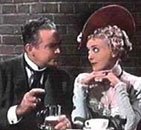
And the cherry atop this 3-D cake? The simply brilliant actressing at the edges by a then-unknown Carolyn Jones. Jones (a Supporting Actress nominee perhaps best-known for tv's Morticia) here plays Kathy, a gold-digging bimbo with her sights set on an ambitious businessman. (Of course, Jones' Kathy has no idea that her boyfriend's new pile of cash came from misdeeds at the expense of Vincent Price's character; cue ominous music.) In a quick series of brief, generally hilarious scenes, Jones' Kathy chatters through reams of ponderous expository dialogue, all the while giving precise and captivating cues that this bimbo's as savvy as they come. Jones' Kathy punctuates her rat-a-tat ramblings with a knowing glance here, a lingering pause there, and an infectious, utterly-contrived chortle that tipples throughout. Both visually and vocally, Jones performs a giddy quick-step of a characterization, a performance of animated liveliness that serves the film in surprising and subtle ways. See, Kathy gets it real early on (collateral damage in film's revenge narrative) but she doesn't disappear. Rather, the film's gruesome conceit -- that the mad wax museum man kills people and covers them in wax for his museum -- pivots on Jones' Kathy being recognized, even in stillness, even encased in wax, even bewigged as Joan of Arc. Jones' performance of Kathy's vivid liveness haunts the wax museum as well as the remainder of the film, investing the cumbersome and plodding narrative with what emotional hook it has (beyond the spectacle of the scenario and the technology). Indeed, in what should have been a throwaway part in this throwaway film, Jones' contributes an expertly-crafted character performance and, though this film is said to have made Vincent Price a horror star, it's Carolyn Jones who steals the show.

So, what a treat: the
utter fabulousness of the afternoon -- homo heritage, cinemania, sweet boyfriendness -- brought to exultant completion by some gorgeous actressing at the edges. Life can be real good. 'Specially at the Castro Theatre!

10.15.2006

Coming Soon... Lesley Anne Warren in Victor/Victoria

Apologies, lovely reader.

Once again, Supporting Actress Sunday will likely be touch delayed this week. (StinkyLulu's still caught in the heady academented fog that's settled over Oakland this weekend.) Sometime between late(r) today and Wednesday will bring the next installment... But in the meantime, please do enjoy the trailer for the next featured performance in Supporting Actress Sundays:


10.12.2006

Teri Garr in Tootsie (1982) - Supporting Actress Sundays (Thursday Edition)

Only one woman's name typically appears on the extensive list of writers variously credited (and uncredited) for the screenplay of Tootsie: Elaine May. One of the great undersung (or overhyped, depending on your POV) comic actresses of the 20th century, Elaine May crafted most of her own sketch comedy material at the height of her popularity (early to mid-1960s) and, in so doing, developed a distinctive (and enduring) modality of female tv/film funniness -- the brainy but neurotic ditz who can just chatter your ear off. May's the foremother to many a contemporary comic actress (ranging from Degeneres to Kudrow) and, though it's always perilous to hazard guesses in such matters, StinkyLulu's inclined to think that those are May's thumbprints all over the character memorably played by...


...Teri Garr in Tootsie (1982).
15 minutes and 17 seconds on-screen
15 scenes (11 of which clock in at less than 1 minute)
14% of film's total screen time

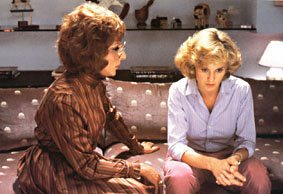
In Tootsie, Teri Garr plays Sandy, the struggling actress/single gal/ball of neuroses whose audition traumas trigger Michael Dorsey's (Dustin Hoffman's) decision to don the dress and become Dorothy. Garr's Sandy is sweet enough, smart enough, pretty enough, talented enough -- but it's sadly clear that even all those enoughs aren't quite amounting as enough to get Sandy noticed, either professionally or personally. Garr's Sandy can't even get noticed when she's trapped in the single bathroom at a crazy NY party. In perhaps the character's emblematic moment, Garr's Sandy bursts into the kitchen (from the bathroom), plunger ready for battle. In a quick little ramble of a speech, Garr's Sandy reveals that she's been trapped in the bathroom, realizes that no one's noticed, and confirms that she's ok with that...as she makes her way to the food table. (A quietly endearing running gag in the film is Sandy's fixation on free food.)

But this bathroom burst isn't the audience's first glimpse of Garr's Sandy. Rather, Garr introduces Sandy nearly wordlessly, in the film's opening credits, during which Garr's Sandy is one of Michael Dorsey's most devoted acting students. Garr's expression in these montage scenes is a combination of rapt attention and utter confusion. Such a foggy fixation seems to underscore much of Garr's Sandy's adept characterization. She doesn't "get" everything happening around her but, make no mistake, she reacts intensely to whatever she actually does (or thinks she does) understand. This mix of utter cluelessness and wounded pride blends the comedy and poignancy girding Garr's performance.

It's so hard not feel just sad about Garr's Sandy. In the first half of her scenes, Hoffman's Michael steals her role, raids her wardrobe, and tosses her a pity-f*** to cover his tracks. Then, after they ostensibly begin a relationship and rehearsals for a new play, the remainder of the role tracks Garr's Sandy as she's trying to get Hoffman's Michael to pay her the slightest respect or attention. (It's really to Garr's credit that Sandy doesn't devolve into a shrewish nag, that she mostly remains a sweet, light and funny presence in the film.) That said, Garr's is a prickly wisp of a performance, left behind by the film as Sandy herself so often is by the world around her. And while StinkyLulu's loathe to add to Sandy's accumulation of humiliations, Garr's nomination here seems an overcompensation (almost a 2nd pity-f***). Never thought Lulu'd be the one to say this, but StinkyLulu's just not sure that Garr's performance -- while deft and memorable -- warrants the nomination here... To channel Garr's/Sandy's nemesis Lange/Julie, "Lulu really loves you Teri, but Lulu can't...can't love you."


10.10.2006

Cast Your Vote for NOVEMBER's "Supporting Actress Sundays"

After a StinkyLulu's birthday-present-to-self of October's 1982 roster, the decision-making power is back in your hands, lovely reader. At long last, once again, you hold StinkyLulu's home-movie fate (as well as the screening schedule of Smackdown fans everywhere) in your hands. (And yes it's a little early but things are busy for lil Lulu over the next few so there.)
So, do tell...

What year deserves the focus
for November's month of
Supporting Actress Sundays?


Your nominees for November are:
  • 1938: Fay Bainter in Jezebel, Beulah Bondi in Of Human Hearts, Billie Burke in Merrily We Live, Spring Byington in You Can't Take it With You, Miliza Korjus in The Great Waltz.
  • 1947: Ethel Barrymore in The Paradine Case, Gloria Grahame in Crossfire, Celeste Holm in Gentleman's Agreement, Marjorie Main in The Egg and I, Anne Revere in Gentleman's Agreement.
  • 1956: Mildred Dunnock in Baby Doll, Eileen Heckart in The Bad Seed, Dorothy Malone in Written on the Wind, Mercedes McCambridge in Giant, Patty McCormack in The Bad Seed.
  • 1965: Ruth Gordon in Inside Daisy Clover, Joyce Redman in Othello, Maggie Smith in Othello, Shelley Winters in A Patch of Blue, Peggy Wood in The Sound of Music.
  • 1974: Ingrid Bergman in Murder on the Orient Express, Valentina Cortese in Day for Night, Madeline Kahn in Blazing Saddles, Diane Ladd in Alice Doesn't Live Here Anymore, Talia Shire in The Godfather, Part II.
  • 1983: Cher in Silkwood, Glenn Close in The Big Chill, Linda Hunt in The Year of Living Dangerously, Amy Irving in Yentl, Alfre Woodard in Cross Creek
  • 1992: Judy Davis in Husbands and Wives, Joan Plowright in Enchanted April, Vanessa Redgrave in Howards End, Miranda Richardson in Damage, Marisa Tomei in My Cousin Vinny.


NOVEMBER's Month of Supporting Actress Sundays


What year's roster of Supporting Actress nominees should StinkyLulu (and the Smackdowners) focus on for November?


1938
1947
1956
1965
1974
1983
1992

Current Results

Your decision will be determined no later than the morning of October 29, the day of the 1982 SMACKDOWN. (That allows for a few weeks of tricksy voting schemes, attack ads, and shady electioneering.) Cast your vote using the poll mechanism above. Opinions expressed in comments will only be considered in the not uncommon event of a tie.

SO: Vote early. Vote often. Vote now. Just vote.

10.08.2006

Jessica Lange in Tootsie (1982) - Supporting Actress Sunday (1982)

Before diving into 1982's official Supporting Actress pool, StinkyLulu simply must pause to acknowledge the amazing presence of one of StinkyLulu's all-time favorite performers, a woman who spent most of her career actressing at the edge: the much-missed Lynne Thigpen. You, lovely reader, will certainly have your own fond favorite of Thigpen's diverse work...but, for Lulu, the Thigpen performance that will always come to mind first is hers in 1979's The Warriors, in which only her lips are seen as she envoices -- by turns -- the soothing, sensual and terrifying words of the ominously omniscient radio deejay. Thigpen's performance in The Warriors is classic Thigpen: a bare sketch of a character fully inhabited by a pitch-perfect performance. The deejay is essentially a plot device, yet Thigpen's distinctive voice (& her uncanny ability for vocal characterization) establishes the deejay as one of the most memorable characters in The Warriors, itself a brilliant guilty pleasure. And watching Thigpen's work in this week's Tootsie (her fully articulated -- though nearly wordless -- performance as Jo, the script supervisor/stage manager), StinkyLulu was once again reminded that Lynne Thigpen is truly an actress at the edges for the ages. And now, on with the show...

Since the 1980s, a goodly number of big box-office movie comedies have been one-ring circuses built around the tent-pole of a central performance. The starring performance grabs the headlines but the supporting performances actually sustain the centerpiece schtick for the film's hour or two of running time. Few films of the last several decades succeed with this formula better than Sidney Pollack's 1982 phenomenon, Tootsie, with a tentpole (pun intended) of a performance by Dustin Hoffman. Hoffman, riffing on his own reputation as a difficult "Method"-y actor, plays a struggling, arrogant, mostly unemployed New York actor who -- in a curious act of selfish defiance -- dresses up like a woman, auditions for a soap, gets the role, becomes a phenomenal success and...madcap hilarity ensues. Hoffman's own performance in the double-role of Michael Dorsey/Dorothy Michaels (while fascinating to watch) is mostly a stunt, testing even the most generous suspension of disbelief. But the film works as well as it does because of the accumulation of exceptionally grounded supporting performances around Hoffman (not to mention a nearly architectural screenplay written by about a thousand people). Big guys Charles Durning, Bill Murray, and Sidney Pollack turn in excellent performances in crucial supporting roles. Troupers like the hilarious George Gaynes and the patentedly prickly Doris Bellack are indispensable. Geena Davis, Lynne Thigpen and Christine Ebersole are memorable in bit parts. And then, there's Teri Garr (more about her on Wednesday). But the performance that truly shoots this film to the moon comes from...


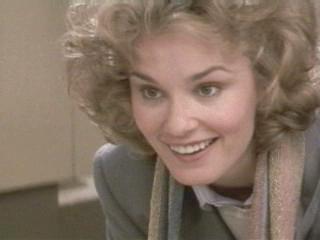
...Jessica Lange in Tootsie (1982).
29 minutes and 35 seconds on-screen
19 scenes
27% of film's total screen time

Jessica Lange's trophy-snagging Supporting Actress performance as Julie (the soap opera bimbo with a heart of gold) marshalls enough clichés for a movie-trailer praise-apalooza. Lange's Julie is sweet and silly and sexy and a whole lot smarter than she gives herself credit for being. It's a radiant, luminous, occasionally astonishing, consistently subtle, expertly nuanced, generally breath-taking performance of surprising depth. In a word, Lange is wonderful. Of course, that's how the character of Julie is written -- to be the breathtaking beauty of unappreciated depth (a stock character that is itself a cliché) -- and that's why Hoffman's character/s fall so in love with her. Indeed, the script's Julie is a trophy passed from the film's womanizing villain (Dabney Coleman doing, well, Dabney Coleman) to the film's womanizing hero (Hoffman). And it's Lange's great accomplishment to rise -- through her performance -- so far above the stock, misogynist, clichéd material.

Beyond the high-drag/high-concept set-up, the film's conceit rests upon the character of Julie and, indeed, it's nearly impossible to imagine Tootsie's success without Jessica Lange's intelligent, human performance in the role. See, the film's ostensibly a post-feminist riff on changing gender roles which uses drag as a mode of masculine infiltration of female intimacy and Lange's character Julie is the primary target/object lesson. From her first real scene (in which she alights as an angel of kindness during Hoffman's first day on set as Dorothy), Lange's Julie becomes the film's dreamgirl and Hoffman's Michael falls immediately in love with Lange's Julie for the mix of moxie, kindness and savvy she shows in her interactions with Dorothy.

The script really only requires Julie to be "more than a pretty face" but Lange's Julie becomes much more than that. Lange's Julie starts out as a sweet girl, a touch lost in her life as a woman. She's pretty, smart, intrinsically decent and, by the end, -- perhaps surprising to all involved in the prodcution -- Lange's Julie is the character who's undergone the most fundamental change. Lange's performance registers Julie's many halting steps in her transformation from a woman trapped by her pretty life to a woman willling to chart her own happiness. (It's to Pollack's credit that he allows Lange's work between her scripted lines to so humanely shade the sketch of a character the screenplay provides.) Lange's Julie is a complex character performance that never betrays the simplicity of the character, and it remains a joy to watch.

Early on in the film, Lange's Julie tosses off a line: "It's complicated being a woman in the '80s." Truer words have ne'er been uttered and sadly Julie's observation goes double for this film. The heart-breaking realization for StinkyLulu this time through was just how garishly anti-feminist this film is, adoring women greatly but respecting them little. "But hey" -- you might say, lovely reader -- "it's a cross-dressing romantic comedy circa 1982!" To which Lu must reply (albeit sadly): "Too true. With the 'radical' message that men might just try listening to and respecting women as people rather than toys..." And that's why Lange's Julie remains today such a redemptive presence for the film (not just Hoffman's tentpole). Lange's performance allows Julie to become so much more than her "role" and, for that, StinkyLulu's ever grateful.

And please don't misunderstand, lovely reader: StinkyLulu does still have a special love for this strange and wonderful film. It's just that Lulu's fanstasizing about the sequel, the one in which Lange's Julie meets up with another Dorothy, played maybe by Kathy Bates or Glenn Close or Catherine Deneuve, and has a whole 'nother set of horizons "broadened." Hey. It could happen...

10.04.2006

Who's That Girl?: Naomi Snieckus

It's really not that often that StinkyLulu gets all hopped up about a performer that Lu's only ever seen in a commercial or two. (Well, that's not entirely true. Happened pretty recently when StinkyLulu became sorta obsessed with T-Mobile's caffeinated cheerleader played by Laura Ortiz.) But it's started happening again because, in this new Fall season, Lulu's convinced that one of the funniest women currently on television just happens to be...


If you know Naomi Snieckus at all, you most likely (A) are a follower of Toronto's Second City troupe or -- like Lulu -- (B) have noticed Ms. Snieckus on one of the handful of commercials she's currently got in rotation on U.S. television.

Naomi Snieckus' most ubiquitous current ad is for Verizon. In it, she plays Susan, a city gal stopped on her way into or out of her urban office by some doof of a guy who's trying to make a love connection. She anxiously rebuffs him, blaming his lost calls on her bad cell phone -- "service is unreliable, arggh!" -- before that army of Verizon folks reveals themselves. For reasons obscure, Snieckus' "arggh" cracks Lulu up every time. But, even better, Snieckus is actually funnier in a Lean Cuisine ad that Lu's caught only a few times. She's one of a crew of clockwatching office-slaves, doing that Lean Cuisine thing of comparing what they've eaten. Snieckus delivers a couple lines peering over a cubicle partition. ("I'm going to scavenge the break room for bagels...You should come?" and "I'm going to eat my keyboard.") Boy howdy. As they say: "That girl is funny...she should be on television!"

So, cross your collective fingers, lovely readers, that Naomi Snieckus can snag a few more roles (hopefully in projects longer than 30 seconds) because Miss Naomi seems to hold great promise of becoming a brilliant actress at the edges...

(Thanks much to the nice community of folks at Answerbag.com
for helping StinkyLulu find Naomi Snieckus' name.)

10.02.2006

Supporting Actress Sundays in October: 1982

THANKS, to you lovely readers (& to the intrepid Smackdowners), for making the 1936 Smackdown such a success. Even with scheduling issues, even with the obscurity of some of the titles, and even without a NatReel -- 1936 somehow got the most traffic of any Smackdown to date! So thanks, all, for sharing so delightfully in StinkyLulu's obsession with actressing at the edges.

But October's a new month, and brings with it a crop of performances StinkyLulu's been giddy to rescreen ever since starting Supporting Actress Sundays way back in March/April...

1982

A banner year for actressing at the edges, on all counts.
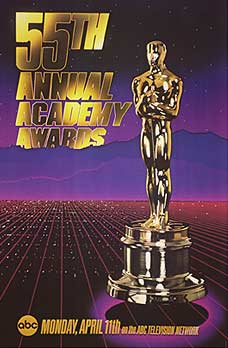
And Oscar's Supporting Actresses for 1982 are:


And, lovely reader, though the selection of 1982 for October was done by executive fiat, know that the voting for November's roster will start in a couple weeks. Also, even though CouldaShouldaWoulda Wednesdays has become an infrequent feature at best, be sure to holler if you wanna hear StinkyLulu ramble about a favorite 1982 performance (awesomely brilliant or bodaciously bad, s'all good). No promises, but Lu'll give it a shot...