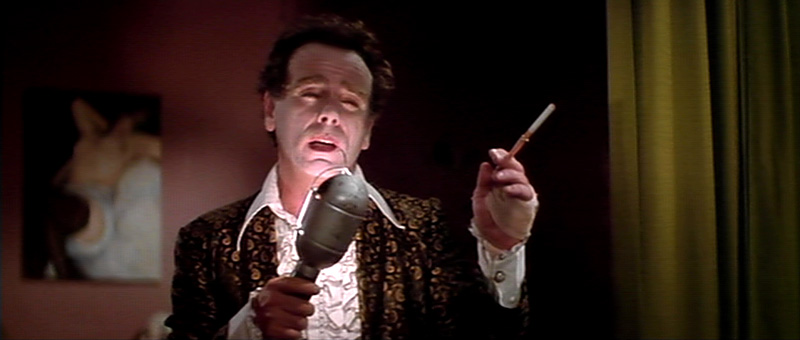
10.01.2006

Supporting Actress Smackdown - 1936


The Year is 1936...

And the Supporting Actress Smackdowners for August are NICK of Nick's Pick Flicks; TIM of mainly movies, and welcoming KEN of Canadian Ken On.... But first, a word about what the Smackdown's missing this time 'round: Alas, alack, aloo -- there'll be no NatReel for 1936. (As happens, life intervenes for even the most devoted cinephile; family obligations have absconded with dear Nathaniel this month.) (In the meantime, to help you hook into the vibe of 1936, StinkyLulu recommends that you do yourself the favor of perusing Ken's generous recaps of Dodsworth, My Man Godfrey and These Three (parts 1 & 2) in his "Overlooked: 1936" series and/or take a gander at goatdog's genius survey of Anthony Adverse.)

So, lovely readers, turn those imaginations on full-power & let cinema's wayback machine take you back to the first year Oscar nodded toward its new category: Best Supporting Actress.

And 1936's Supporting Actresses are...
(Each Smackdowner's comments are listed in ascending levels of love. A summary comment from each Smackdowner arrives at the end. Click on the nominee's name/film to see StinkyLulu's Supporting Actress Sunday review.)
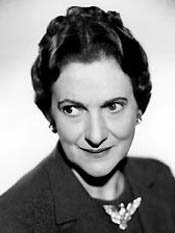
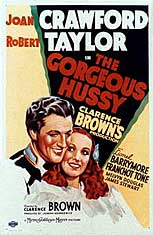
Beulah Bondi in The Gorgeous Hussy
Ken Sez...
I've never warmed to Beulah Bondi - a dry twig of a woman, with rusty bed-springs in her voice. The key element in a Bondi performance is generally smugness. Here, brandishing a corn-cob pipe, she also serves up another unappetizing Bondi staple - coy folksiness.
Nick Sez...
An obvious ancestress of this category's long line of spunky, steadfast, and ailing wives, Bondi's Rachel Jackson is a minor but eloquent creation, whittled from strong, aromatic wood. Terrific chemistry with Barrymore.
Stinkylulu Sez...
Bondi plays most of her scenes opposite Joan Crawford and John Barrymore, and that she more than holds her own against these notorious scene-chewing hogs is a formidable accomplishment in itself. A precise, unglamorous performance.
Tim Sez...
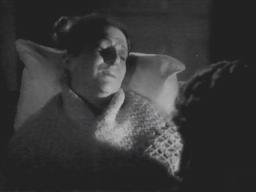
The movie milks her deathbed scene so heavily it threatens to turn to cheese, but she underplays it back down to earth, touchingly devoted and quietly memorable in an otherwise over-declamatory ensemble. Shrewd work, worth its nod.
Alice Brady in My Man Godfrey
Ken Sez...
A shrill, irritating performance - oppressively daffy - and absolutely relentless in its hunt for laughs. None of which materialize. Totally committed to it? You bet she is! But that just means no rest for her - and no relief for us.
Stinkylulu Sez...
Most major scenes happen around or adjacent to Brady's dotty society matron and Brady does little more than punctuate things by warbling breezily absurd non-sequiturs. It's an ambient, ensemble performance -- a perhaps worthy, but certainly unremarkable, nomination.
Nick Sez...
The priceless Lombard aside, Brady's is the most creative performance in this film's gallery of eccentrics. Sometimes she pushes too hard, but her comic timing really works, and she projects more than just foolishness.
Tim Sez...
Flutters sublimely between two registers – airhead anxiety and giggling obliviousness. There’s little time for depth, but the breathless skill of her line readings is all this part needs, and her heroically attentive background playing is a constant joy, too.
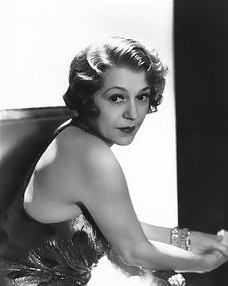
Bonita Granville in These Three
Stinkylulu Sez...
The character of Mary Tilford is part indulged beast, part self-centered bully, part dispassionate sociopath, and Granville's simple and direct approach acquits the task masterfully. Granville avoids easy hysteric theatrics to craft an exceptionally measured -- indeed, mature -- performance.
Nick Sez...
Not the full-on coup I remembered, but Granville's wickedness emerges in disciplined, interesting steps, and she's capable of real calculation. Her best moments limn subtle, disquieting gradations of whining, loneliness, and hysteria.
Ken Sez...
Mostly it's the sort of performance one might expect from a precocious little show-off. But in some non-dialogue moments, usually when she's fixing that threatening stare at Rosalie, Granville achieves a quivering intensity.
Tim Sez...
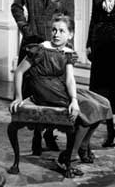
Plays the school bully – inspiredly – like a headmistress, so self-possessed and cruelly demanding it’s a wonder she isn’t teaching all the classes. A prize bitch and perfect little devil at 13: if I decided Oscars she’d be my youngest ever winner.

Maria Ouspenskaya in Dodsworth
Nick Sez...
Adds tension to her single scene with her long pauses and scary impassivity. Her stolidity cracks nicely, though faintly, amid her last few lines. Still, it's only an adequate performance, surely the least interesting in the film.
Tim Sez...
Tricky to grade, this, as it’s too brief a perf to be strictly nod-worthy. But she handles her single scene formidably, with insinuating pauses in all the right places, and casts a large and lingering pall over the picture’s final act.
Stinkylulu Sez...
A wee tiny gorgon swathed in widow's black and possessing the kind of bark that makes you real scared of her bite, Ouspenskaya manages her single slapdown of a scene with clarity, precision and zest. A brief but memorable turn.
Ken Sez...
Whether gussied up as a dowager or travelling around in a gypsy wagon with the Wolf Man, Ouspenskaya was always the same tough, muttering old Pekinese. But she had presence - and for her one scene in "Dodsworth", she summons up every bit of it.

Gale Sondergaard in Anthony Adverse
Stinkylulu Sez...
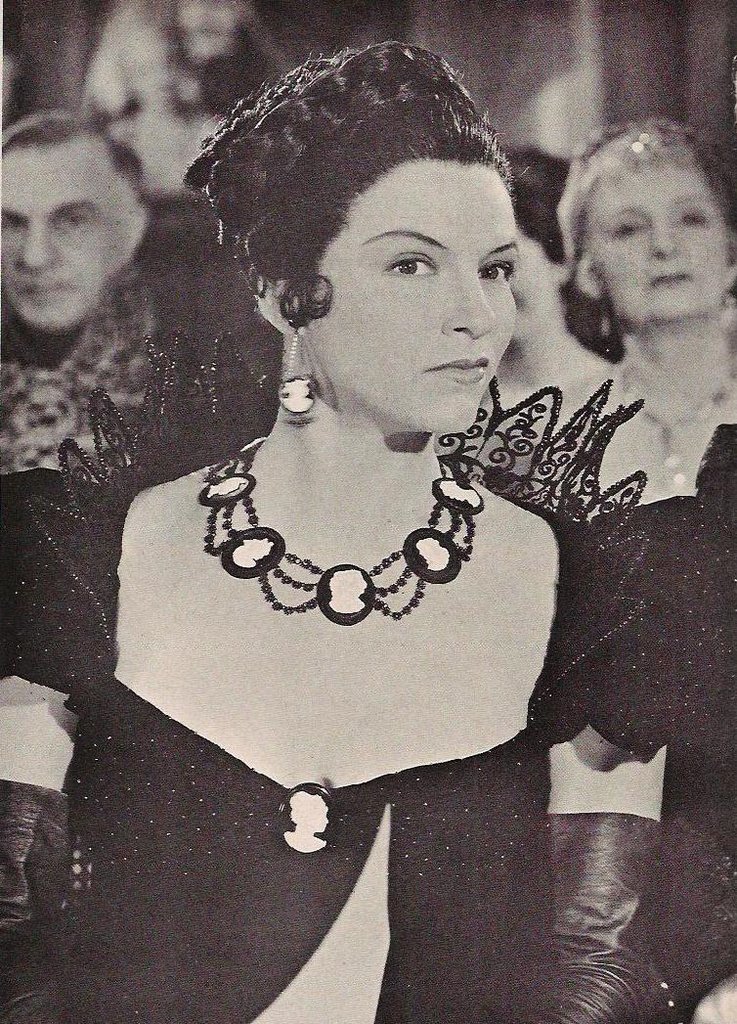
As the hustling, mercenary maid-cum-Marquise, Sondergaard gives good face, punches the dialogue well and generally looks great in the clothes...but beyond that? Nothing much.
Nick Sez...
Occasionally, when the camera isn't squared right on her, Sondergaard projects interesting thoughts and unsettling energies from the edges of a frame. Mostly, though, especially in dialogue scenes, her villainy is pretty rote.
Ken Sez...
Prowling around the outskirts of this ponderous epic, Sondergaard looks devious and gives her nasty Cheshire cat grin a thorough workout. That's about it. The script doesn't even provide her with a proper come-uppance.
Tim Sez...
Bares her teeth to embody a ravenous gold-digger, which she does with striking efficiency in a single key. But the movie’s otherwise so gormlessly lacking in conflict – hell, adversity – that it’s easy to overrate her. Strong playing, just inadequate surroundings.
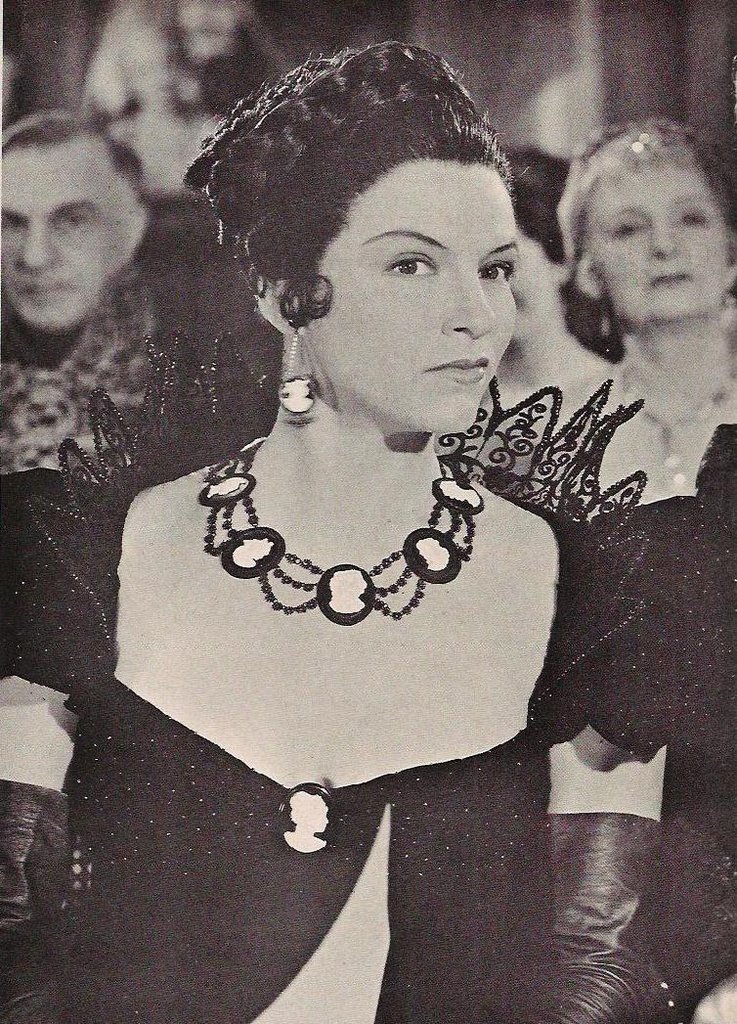
Oscar awarded Gale Sondergaard...
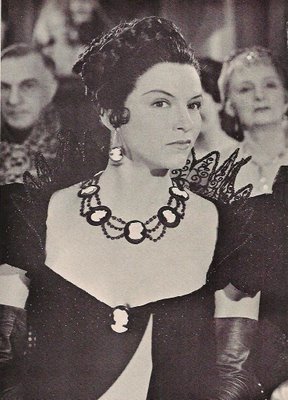
But the SMACKDOWN gives it to:


Bonita Granville!
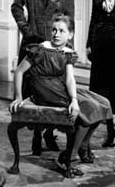
By nearly full consensus.
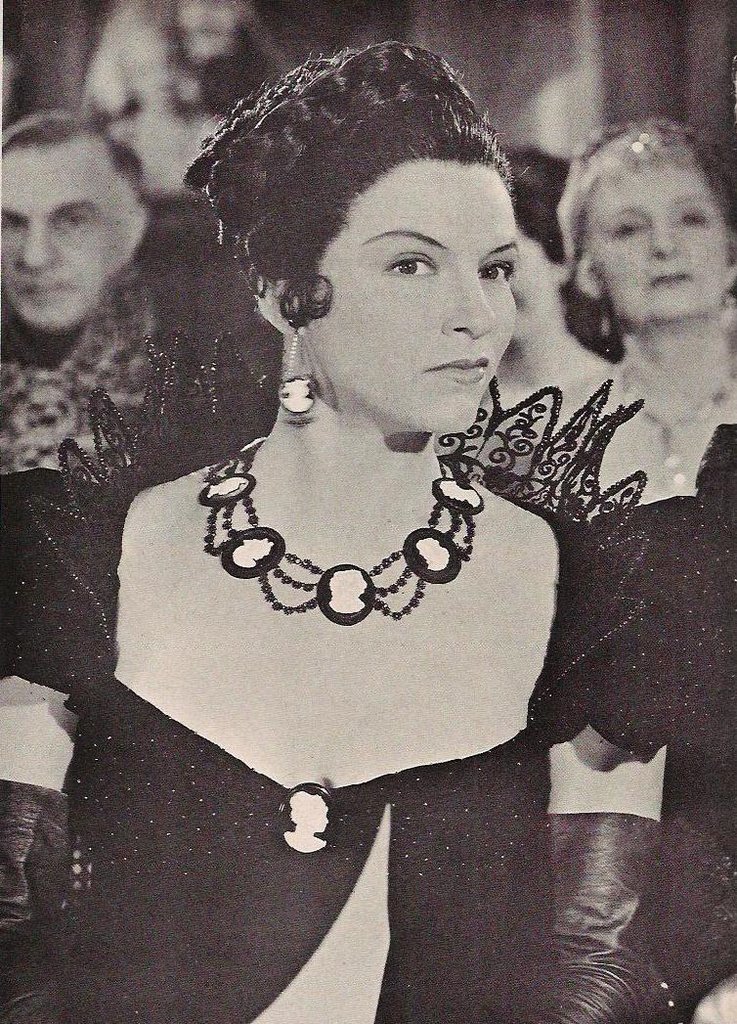
And now some "Final Thoughts" from our intrepid SMACKDOWNERS:

Ken Sez: A writer once characterized Ethel Barrymore's screen persona as "dispensing wisdom with a trowel." On that score, Hussy's Beulah Bondi could take her right to the mat. Plus there's that gleam of superiority in her eye that's meant to pass for a twinkle. Sondergaard's onscreen trademark was the everpresent suggestion of bats in her belfry, Those bats had barely set up housekeeping in 1936. With Anthony Adverse she merely left her visiting card. Granville, playing at an exaggerated pitch in These Three is often phony, but not entirely unsuccessful. Of course, she's utterly eclipsed by the amazing Marcia Mae Jones. Dodsworth's Ouspenskaya is grim, impalacable and heavily accented. In other words, it's business as usual. But that business was new to viewers in '36. Hence, possibly, the nomination. And then there's Brady - downright alarming in Godfrey. Considering the level of frenzy in her performance, she might as well have been waving a tomahawk and attacking a covered wagon. In short, not a red letter year for nominees, with Granville's hit and miss turn emerging (more or less by default) as the best of an undistinguished lot.
Nick Sez: In general, I'm more excited about these actresses than about these specific performances. Bondi's always a treat. Brady's zaniness and Granville's pint-sized maleficence are even more interesting in the context of their ample ranges. (Bonita, for example, was a famous Nancy Drew.) Ouspenskaya is such a weird and exotic legend, and speaking of weird and exotic, who doesn't feel kindly toward Sondergaard for supplying Wyler's The Letter with such an indelibly campy avenger? My other favorite thing about this vintage is how well it reflects the original intent of the category. Most of these women have little screentime, compressed into discrete compartments of their films, but they all add important and flavorful accents—of greater and lesser quality, sure, and with no outright triumph among them, but they are crucial to their movies, and nobody showboats. Had Oscar held to these principles, we'd be seeing a lot fewer Zellweger-in-Cold Mountain nods these days and a lot more Rosemary Harris-in-Tom & Viv types. We'd be learning a lot more new names and enjoying many more pleasant surprises.
Tim Sez: This first year for the gong saw a perfectly decent set of nominations, but what’s slightly disappointing is that 1936 was an even better year for the supporting actress art-form than you’d know from this list. As I’ve already hinted on my blog, I’d swap Ouspenskaya for the luminous Mary Astor in the same film, and I’d have Jean Dixon alongside Brady for her tired and wise scene-stealing as Godfrey’s seen-it-all maid, Molly. Others might make a case for Marcia Mae Jones, who crumples splendidly under scrutiny as These Three’s terrorised little Rosalie, or for Alma Kruger in the part Fay Bainter was nominated for in ’61. Still, voters didn’t go far wrong in singling out Granville, Bondi and Sondergaard as the best things in their various movies. The category may not have got off to the running start it might have, but it found its feet alright – and Granville’s a stunner and a keeper.
Stinkylulu Sez: In the aggregate, 1936's field of nominations is perhaps more fascinating than the performances themselves. What stands out most, though, is that most of the category's "stock" nominations are here. Indeed, it's almost as though the Class of 1936 paved the way for generations of Supporting Actress nominations (and wins) to follow. Ouspenskaya's the one-scene wonder with the gourmet theatrical pedigree (say thankyou, Dame Judi and Ms. Beatrice). Sondergaard's the standout performance in a bloated costume epic (all hail Dame Peggy and La Maureen). Brady's the beloved trouper turning in a just surprising enough performance to get the academy's ballot all excited (talkin' 'bout you Helen, Lee and Ingrid). Bondi's the über-quirk of a character -- at first comic, in time serious -- who somehow turns out to chart the heart the film (take a bow Whoopi, Geena, Mira and Dianne). And then there's Granville: the kid actor whose age makes the clarity, maturity and competence of performance seem all the more accomplished (Lu's looking at you Tatum, Patty & Anna!). All we're really missing is the "dark ingenue" and we'd have a full menu of Oscar's favorite dishes of Supporting Actressness.

So, lovely reader, tell the Smackdowners what YOU think! Even if you haven't seen a single performance, what do these first nominees suggest about the category of Best Supporting Actress? Join the dialogue in comments.

Gale Sondergaard in Anthony Adverse (1936) - Supporting Actress Sundays

Normally, in charting a month of Supporting Actress Sundays, StinkyLulu tries to devote the first slot of attention to the performance that took the trophy home that year. This month, as with so many apects of attending to 1936 during September, things didn't really go thataway. So, in these last minutes of September, StinkyLulu's just now getting 'round to opining on...


...Gale Sondergaard in Anthony Adverse (1936).

19 minutes and 19 seconds on-screen
13 scenes (only 1 of which is longer than 2 minutes)
14% of film's total screen time

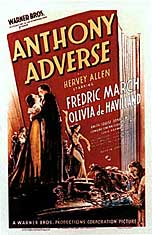
Anthony Adverse is one of those big pics that seem to straddle two vastly different stylistic eras in film-making. Ostensibly set throughout Europe during the French Revolutionary era (as well as amidst the colonial circum-Atlantic slave trade), the film itself is part 1930s glittery escapism and part -- or, rather, mostly -- 1920s silent über-epic (albeit with full sound). All the elements of the most opulent silents are in play -- the enormous high-ceilinged sets; the extended facial close-shots; the brash make-up; each actor an expert in vamping, pining and mugging. Indeed, Anthony Adverse's assemblage of facially expressive performances buoy the complex narrative (which relies heavily on intertitles rather than dialogue for essential exposition) to such an extent that one could likely screen the film without the dialogue track and follow along fairly easily. (Especially if Erich Wolfgang Korngold's Oscar-winning music remained to score every single emotional color in meticulous symphonic detail.)

Among the actors, Gale Sondergaard -- as a hustling, mercenary maid ironically named Faith -- emerges as the obvious standout perhaps precisely because her clear vocal presence announces her character's essential significance long before the grand, complicated narrative does. To be sure, most viewers will remember Sondergaard's Faith for her visual traits (her beautiful, shifty/googly eyes; her not-to-be-trusted grin) but it's her voice that makes her pop from this prettypretty picture. The powerful sound of Sondergaard's Faith is alternately frightening and soothing and this serves the character well: as the film's intricate intrigues manifest, Sondegaard's Faith emerges as perhaps the most instrumental character in the story and Sondegaard's memorable voice helps to make that make sense. Sondergaard's vocal effectiveness also serves up the one or two genuinely amusing lines in the piece. When her husband expresses mild sadness ("He was the best servant I ever had.") after their carriage driver failed to force Anthony Adverse off a cliff and instead fell to his own death, Sondergaard's Faith quips: "The carriage was rather handy too." Likewise, when Olivia de Haviland's Angela takes to the stage as the prima donna, Sondergaard's Faith giddily snarks to no one in particular: "When she was a child, she washed my laundry."

All told, it's an odd win amongst this admittedly befuddling field. Yes, Sondergaard's performance is among the best things about this occasionally inscrutable picture (see goatdog's excellent commentary for details). And, yup, Sondergaard gives good face, punches dialogue and generally looks great in the clothes (though the first Swiss Miss number was absurdly twee). But beyond that? Um. (pause) Um. (longer pause) Um, yeah; it's a curious kick-off to this category...and it'll be especially interesting to see what the Smackdowner's will have to say about Oscar's first Best Supporting Actress, Gale Sondergaard. (Who -- believe it or not -- was initially cast as the Wicked Witch in 1939's Oz. Imagine.)

But speaking of the 1936 Smackdown...
It'll be up shortly.
Check back soon.

9.29.2006

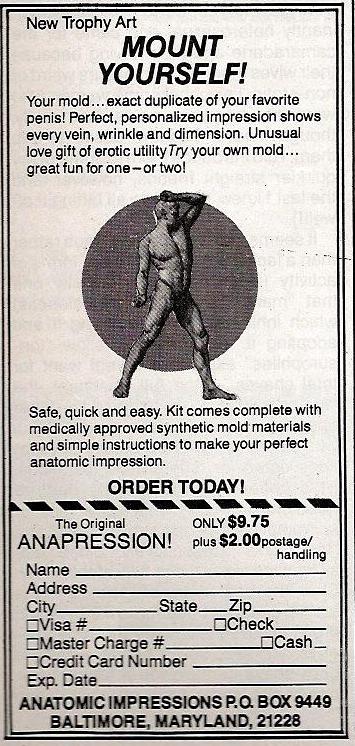
"Mount Yourself" (Homo Heritage Fridays)


from Blueboy: The International Magazine About Men, September 1980, page 9.
For details, click the image; then click again to magnify

9.26.2006

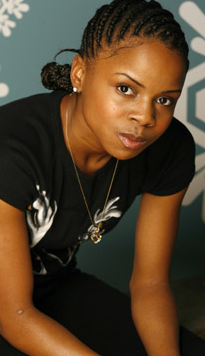
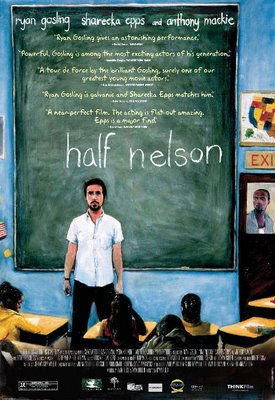
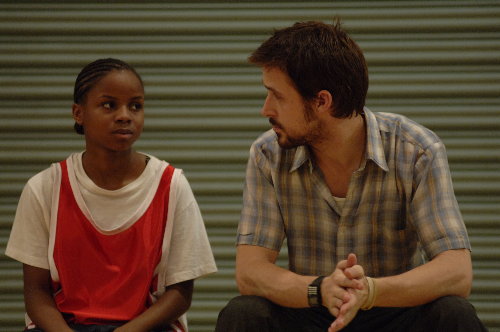
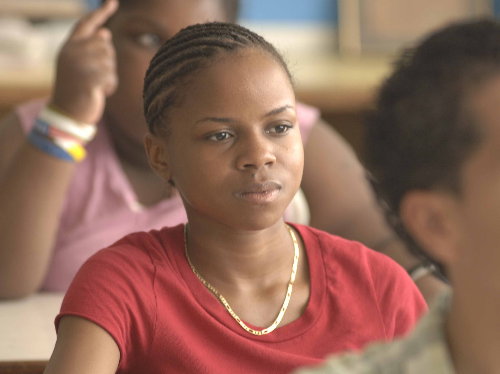
Shareeka Epps in Half Nelson - Supporting Actress Watch


Well.


The Stinkys just yesterday caught what will certainly be one of the most compelling performances of the year:


...Shareeka Epps in Half Nelson (2006).

Epps plays Drey, a successful enough eighth-grader who's already tired out by the world around her. At thirteen, Drey's nearly on her own: disregarded by an absentee father, left-behind by an incarcerated older brother, adored by a mother who cares deeply about Drey even as she's way too overworked and overtired to care for her. Drey goes to school (most of the time), plays on the basketball team, and falls asleep in front of the tv. And, then, one night when her father neglects to pick her up after a basketball game, Drey comes into possession of something that promises to change the way she looks at life, something that threatens to grow her up real fast: a secret. The secret is what you've likely already heard about the film (if you've heard anything) -- Drey's history teacher/basketball coach (Ryan Gosling) is a crackhead. Drey discovers him based out in a stall in the girl's lockerroom and, once she knows, and once he knows she knows, Drey's world begins to change. And the relationship that develops between these extraordinary actors (Epps & Gosling) is heart-stomping in the brutality of its honesty.

Epps is that rare actor who can just -- say -- narrow her eyes and very nearly stop your heart. (The writing team had Epps in mind for the role after casting her in their 2004 short film, "Gowanus, Brooklyn": [J]ust picturing her was really great. Knowing how much she could communicate without talking, I think, was helpful...") And, indeed, it's in her eyes, a gaze alternately weary and wary (and very occasionally joyfully wide) that Epps conveys the full depth of Drey's experience holding her teacher's secret. The film tracks Epps' Drey as she experiments with the power this gives her, with the ways she's newly important in her teacher's life. In a roundabout way, this emboldens her to cultivate a relationship with neighborhood bigshot, Frank (Brother to Brother's Anthony Mackie in a revelatory turn). Epps' Drey moves (literally) between these two men -- the drug dealer and the drug addict. Both men treasure Drey's potential; each man values Drey's respect. Drey proves an adept and intelligent student of what each man wants her to be, and this tutorial reveals to Drey just how limited her options -- as a barely noticed black girl in Brooklyn --actually are. (It's a chronological crossroads recently mined toward totally different ends in 2003's Thirteen, and -- to their credit -- Half Nelson's filmmakers appreciate the gravity of this difference.)

Amazingly, Epps was 15-16 years old when the film was shot, nearly two years having passed between the making of the short and beginning production on the feature. Yet, Epps' performance retains the essential in-between-ness of Drey's age. Epps' Drey is -- by turns -- a hardened teen, an awkward adolescent, a wise woman. (And sometimes there and back again, all in a single take, as in Lulu's favorite scene in which Epps' Drey asks Gosling's character an honest question about the substance that crowds her life: "What's it feel like?" Her question is rebuked with an infantilizing non-reply, and Epps' expression transforms from inquisitive sincerity to weary disdain, open to guarded, in a profoundly true millisecond.) Alhough Epps' performance coordinates the film's heart, & while Epps routinely outshines the luminous Ryan Gosling (whose character's gravitational spiral provides the narrative structure of the film), Epps' role -- like Drey herself -- is a supporting one, a satellite in orbit of the larger bodies around her. Epps' Drey hovers at the edges even when she's at center. Watching Epps -- the actress -- maintain the clarity and maturity to allow Drey -- the character -- just begin figuring out who she is... Well, Shareeka Epps' performance stands as one of the more exciting actressing events in recent (& even not-so-recent) memory.

Itsa wowza. Don't miss it.

9.25.2006

Happy Monday ala Rich/FourFour!

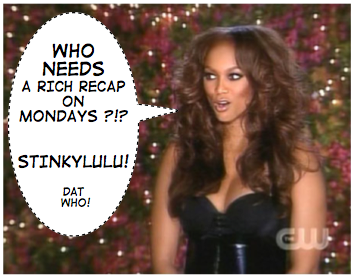
At first, when Rich (of the brilliant FourFour & Vh1's Celebreality Blog) pushed his recaps from Friday to Monday, StinkyLulu was all "Well... That's tired. Who needs a recap of last week's epi when this week's epi is like 2 days away?" A rhetorical question -- at least, 'twas until this morning...when Lulu got the answer.

Click image for link. Be sure to check out the "Spazzy Tyra" video mix.

Now that ANTM is back, so's Rich's perfect form. His Project Runway recaps are delicious, but ANTM is where Rich bitches best. Pure devastating decadent genius... A reason to get giddy about Monday...

9.24.2006

Beulah Bondi in The Gorgeous Hussy - Supporting Actress Sundays

A brief programming note: The especially attentive among you, lovely readers, will surely note that today is the last Sunday in September, the day on which the Supporting Actress Smackdown is regularly scheduled. But -- due to a confluence of circumstances (international travel, recurrent bouts of academentia, the vicissitudes of the New York Public Library, U.S. postal delays) -- the Smackdowners have elected to push off the 1936 Smackdown until next Sunday, October 1. So: mark your calendars: same time, same place, next week -- join Nathaniel, Nick, Tim, StinkyLulu and our newest Smackdowner, Canadian Ken for the 1936 Supporting Actress Smackdown!!!

Each nominee for 1936's Best Supporting Actress boasts an expansive career, with each woman taking to the stage very young and trouping along until (it seems) mere moments before their deaths. But even amidst this impressive cohort, there is one who might well take the trophy for utter endurance...
17 minutes and 25 seconds on-screen
7 scenes
17% of film's total screen time

Bondi -- who would become one of the most recognizable character actresses in Hollywood's golden age -- started in 1890s theatre and finished out in 1970s television. Though twice nominated for Oscar, Bondi finally snagged the only acting trophy of her extensive career (an Emmy for her guest performance on The Waltons in the 1976-77 season) when she was nearly ninety years old, a full forty years after her Golden Hussy nomination. Never a leading lady, Bondi is said to have offered this nugget of wisdom about actressing at the edges:
"Give me a good supporting role, and that's all I ask. The life of a star with few exceptions is brief. It's like a merry-go-round- only suddenly the music stops playing. Supporting players...go on forever."

In The Gorgeous Hussy -- a sweeping historical romance adorned with large dollops of comedy -- Bondi plays Rachel Jackson, the corn-cob smoking, hillbilly divorcee married to Andrew Jackson, the seventh president of the United States. Bondi's Rachel is the beloved "aunt" to Joan Crawford's Peg Eaton, the "gorgeous hussy" at the center of one of the several sex scandals attending the Jackson administration. Mostly set in the last years of the early Republic -- a period in United States history almost inappropriately well-suited for romantic comedy -- novelist Samuel Hopkins Adams and MGM exploit the era's regency fashions, duels, emerging virtue of republican wifery and crazy power of gossip to craft a curiously comic historical romance. (Even the character of Andrew Jackson, by most counts a deservedly notorious and brutal blunderer, is played for laughs by that master of subtlety, Lionel Barrymore, in a style that StinkyLulu can only describe as a cross between Yosemite Sam and Dana Carvey's Grouchy Old Man.)

In the midst of this curious commentary on gossip, politics and the pursuit of true love, Bondi's Rachel stands as a pure heart. Part wise woman, part fairy godmother, part crusty crone -- Bondi's Rachel emerges as precisely the sort of "backwoods belle" the actress would periodically portray throughout her career. Whether she's yelping homespun aphorisms ("Marriage ain't a party dress; you gotta wear it morning, noon and night!") or longing for her pipe while on her death, um, chair, Bondi's Rachel emerges as the narrative's moral litmus test: those who do right by her = good; those who don't = badbadbad. Indeed, it's little surprise that Bondi's role occasioned Oscar's nomination. Rachel's story provides the loose framework of the story, both emotionally and morally, and both principal characters (Crawford's Peg and Barrymore's Jackson) reference Bondi's Rachel as their inspiration for nearly every important action. Yet, Bondi's work -- while perfectly fine -- does little to convey anything in particular about either the person of Rachel Jackson, one of the most enigmatic and controversial presidential wives in the history of the United States, or the emotional ravages of gossip. And while it is impressive that Bondi held her own against the scenery-chewing hogs Crawford and Barrymore, it remains the role that resonates here, not Bondi's perfunctorily efficient performance.

9.22.2006

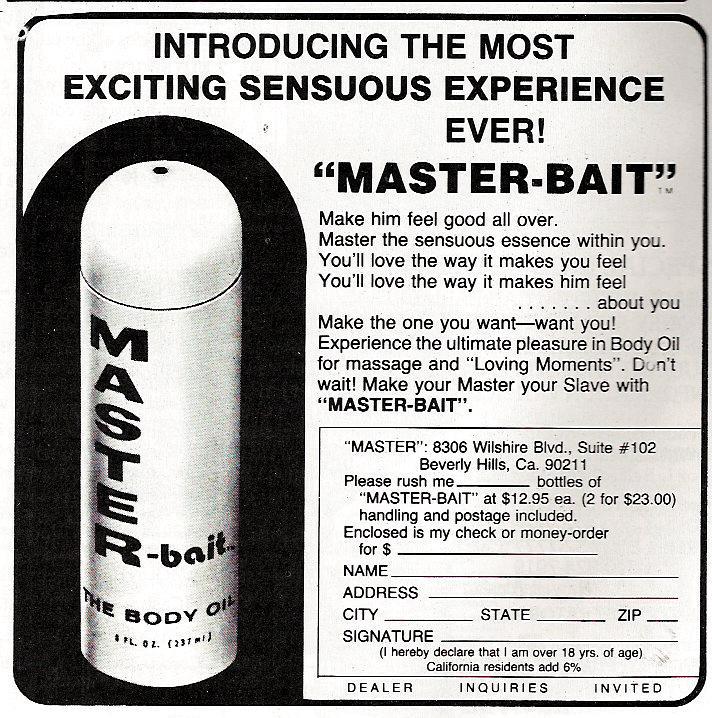
"Master-Bait" (Homo Heritage Fridays)


from Blueboy: The International Magazine About Men, December 1981, page 31.
For details, click the image; then click again to magnify.

9.20.2006

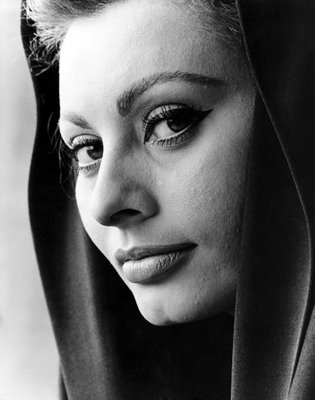
Celebrating the Sophia Sisterhood!


Happy Birthday!
click individual image to meet each member of the Sophia sorority

Commune with the glory of Sophia all day on TCM.

9.19.2006

Costumes by Ver-Sayce.

Lulu's been a bit blue today. (Teaching woes.)
But then...

Happy happy joy joy.
Not since Carrie...

9.18.2006

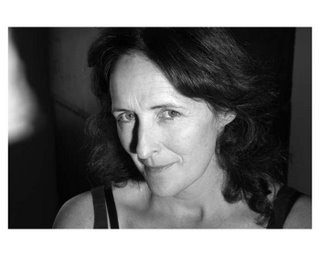
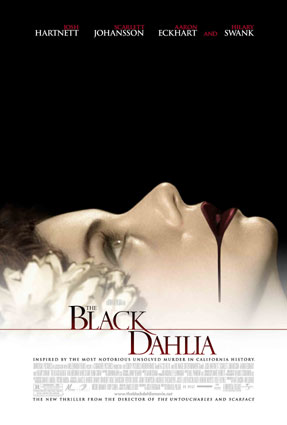
Fiona Shaw in THE BLACK DAHLIA (Supporting Actress Watch)

It's been some time since StinkyLulu's screened a new movie that offered any especially exciting actressing at the edges. (Of course, the fact that Lulu's been an über-slacker in terms of moviegoing doesn't help matters much.) And now that Nathaniel's got a new batch of Supporting Actress predictions up, not to mention a big discussion roiling, StinkyLulu'd started feeling a little left out of the vamping for this year's Supporting Actressness. But lo. Behold. In what is certainly the most blatantly incoherent gourmet flahooley of 2006, the Stinkys got an unexpected goose from a thrilling, hilarious and garish performance...


Among the most glaring inconsistencies -- of which there are many -- in Brian DePalma’s generally incoherent The Black Dahlia is the casting. And it’s not that some actors are extraordinarily good, while others are exceptionally bad. It's not even that it stars not one but two of StinkyLulu's least loved critical darlings (recast the Dahlia with Jennifer Connelly and it'd be a perfect trifecta of overratedness). No – it’s more a style thing. About half the cast tend toward cinematic naturalism while the other half lapse toward high theatrics. A matter of pitch as much as it is a matter of scale, the styles just don’t blend. The clash jars most in the discordance between Johanssen and Eckhart: she’s all smoking 40s glamourgal; he’s all rumply Gap everydude. Notably, Josh Hartnett's casting as the film's centerpiece character is nearly perfect: he’s a blank slate, a self-camouflaging chameleon, a cipher who adjusts to the needs of his scene partner. Unfortunately, in Dahlia, Hartnett has about 8000 scene partners, so the whole thing gets a tad confused after a while.

But then there’s Fiona Shaw. Shaw plays Ramona Linscott, the California society matron and mother to Hilary Swank's Madeleine (with whom Hartnett's character has an odd dalliance). It's finally in the scenes amongst the Linscott family that the film really dips into the grand guignol grotesquerie of the story. Daddy Linscott's a robber baron who literally built his fortune on rotting lumber. Maddy Linscott's a bisexual nymphomaniac with a taste for trash. Little sister Linscott does pornographic line drawings. And Momma Linscott -- basically, Shaw's Ramona is an utter loon, psychically ravaged by her family's misdeeds and heavily medicated besides. Shaw's Ramona is nearly bursting at the seams of social propriety in her first scene, her contorted twist of a smile snarling to a desperate grimace by the scene's end. And, then, in her surprise of a second scene, Shaw's Ramona becomes completely unmoored. Loopy, over-the-top and completely deranged – she's like a cabaret singer with a machine gun. And yet, Fiona Shaw’s Ramona Linscott emerges as the single character (around that dinner table or in the entire film) who seemed to be experiencing a plausible emotional reality. Simply put, Shaw performance is beyond brilliant. (Plus, she offers two of the kuh-raziest arias screen-acting has seen in some time. Kuh-razy like Dean Stockwell in Blue Velvet kuh-razy.)

And, to be clear, StinkyLulu's not suggesting that Fiona should clear her 2007 schedule for all those late-winter awards shows. Not hardly. Shaw's Ramona Linscott's waaaaaaay to crazy for award show voters these days... But, golly, if t'ain't some of the most exhilarating Supporting Actress work that Lulu's seen in some time, an easy contender for StinkyLulu's short list of Favorite Actressing at the Edges-2006.