 Oopsie doodle. StinkyLulu didn't expect to be so late with this entry but -- hey -- that's what happens when one ventures to the upper reaches of the Land of Enchantment: some conference hotels don't have internet access. (Imagine. So retro.) Speaking of retro...
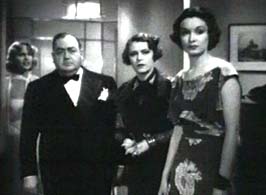
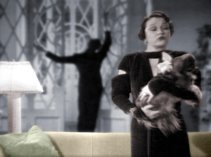
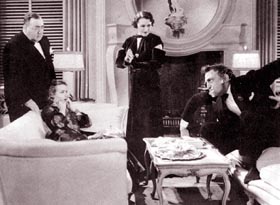
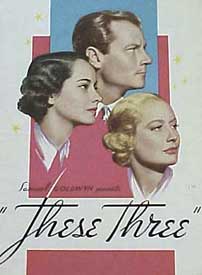
'Twasn't that long ago that StinkyLulu and the Smackdowners contemplated another version of Lillian Hellman's The Children's Hour... Remember, lovely reader, way back in the golden days of July? When Fay Bainter proved quite a contender in 1961's Smackdown? Well, it's Hellman time again. Only this time, it's director William Wyler's 1936 go at the story (albeit sans sapphistry) and from which Oscar selected the first of many (how many is it? 8?) little girls to be nominated in this category...
approximately 27 minutes "on" screen
13 scenes (including 5 scenes under 1 minute)
31% of film's total screen time
13 scenes (including 5 scenes under 1 minute)
31% of film's total screen time
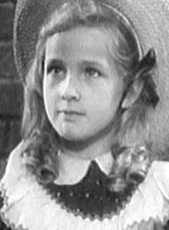
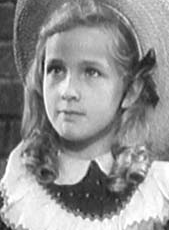
Granville -- who plays Mary Tilford, the awful little girl whose lies and innuendo nearly ruin the lives of These Three -- was a kid star of the old school. The daughter of actor parents, little Bonita had been acting for more than a decade by the time she (at age 12 or so) took on the part of Mary. Bonita Granville went on to act for most of her life, but it's for her performance here -- as well as her stint as the title character in a cinematic serialization of Nancy Drew -- that Granville is most remembered (though, surely, more people have seen her brief but memorable turn as Betty Davis' shallow niece in 1942's Now, Voyager).
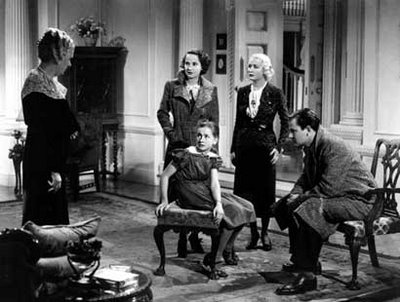
A BRIEF ASIDE: It certainly doesn't help that, in many of her scenes, Granville's up against Marcia Mae Jones as everyone's favorite dim-witted kiddie klepto Rosalie. Quite simply, Jones' performance as Rosalie is one of the more electrifying kid performances Lulu's ever screened. With a wide-eyed pie-face just made for '30s cinematography, little Marcia Mae just wipes the floor with anyone, young or old, unfortunate enough to share the screen with her. The girl goes from shy to dumb to adamant to terrorized to hysterical -- all in the space of about 3 minutes, with intelligent clarity and thrilling precision. By far the best work in the film, Marcia Mae Jones' performance is reason enough to arrange a screening. And kid actresses should take note, what with Veronica Cartwright's excellent work in the 1961 version, Jones' scene-stealing should be a reminder that Rosalie is perhaps the coolest part in this enduring piece.
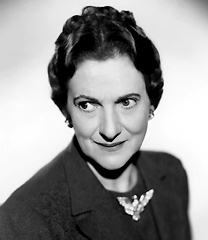
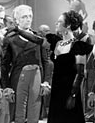
But there is one great moment in Bonita Granville's Mary that deserves especial note, a moment that subtly recalibrates the whole architecture of her entire performance: the penultimate beat of Mary's final scene. All her dissembling has been revealed and her grandmother, Mrs. Tilford, seems ready to keel over. Tilford's housekeeper, Agatha -- played by that snugglebunny Margaret Hamilton -- is charged with locking little Mary in her room. Mary tries to escape, but Agatha proves too swift, wrenches the child back to her and whallops her with a mighty slap. It's a shocking moment, made all the creepier by the glow that fills Granville's eyes as she regards Hamilton. Is it shock that someone would punish her? Relief that someone's finally taken her in hand? Or some creepier, other thing? (StinkyLulu votes for option 3.) This fleeting moment is the only glimpse that Granville provides of Mary without her mask and it's utterly enthralling. And it's proof positive that Bonita Granville was quite the little actress, entirely deserving of Oscar's nomination.