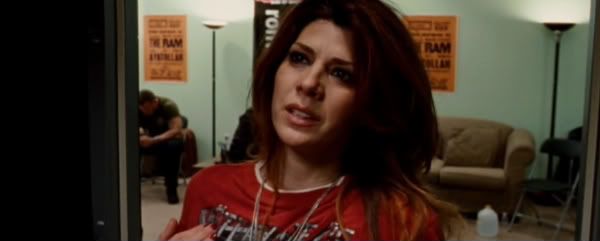
 I've been uncertain about how to broach the conversation about this week's nominated performance. Is there a more notorious nomination/win in the history of the category? One that's the subject of its own urban legend? And is there another supporting actress who (a) became a punchline as a result of her first nomination/win who (b) has also gone on, in the years since, to emerge as one of the most acclaimed stalwarts of the category? If there is a comparable nomination, please remind me in comments. In the meantime, indulge me as I try to figure out how to talk about...

...Marisa Tomei in My Cousin Vinny (1992)
approximately 36 minutes and 30 seconds
32 scenes
roughly 30% of film's total running time
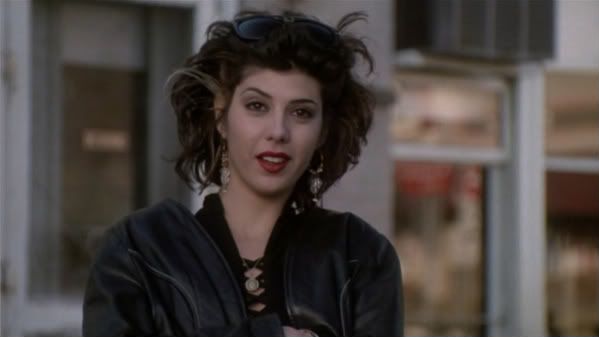 For reasons that are never made especially clear, Tomei's Lisa has "tagged along" as Pesci's Vinny arrives to the backwoods of Alabama to defend a cousin from a ridiculous murder charge.
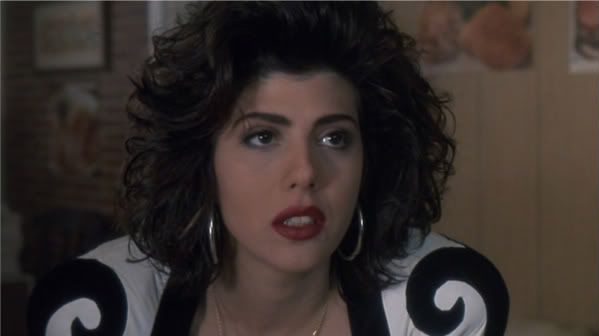 As best as I can tell, My Cousin Vinny is a culture-clash law procedural (novice big city lawyer flounders in a Southern small town) packaged as a comic vehicle for Joe Pesci (whose memorably Oscar-winning turn in 1990's GoodFellas briefly established the character actor as an "above the title" star). However, as skilled Pesci might be in crafting memorably larger-than-life screen characterizations, his comic timing isn't especially keen and he becomes the "straight man" in his own comic vehicle. (Just think of John Turturro or Alec Baldwin in the lead role of Vinny and this cross-cultural comedy of legal manners changes shape almost immediately.)
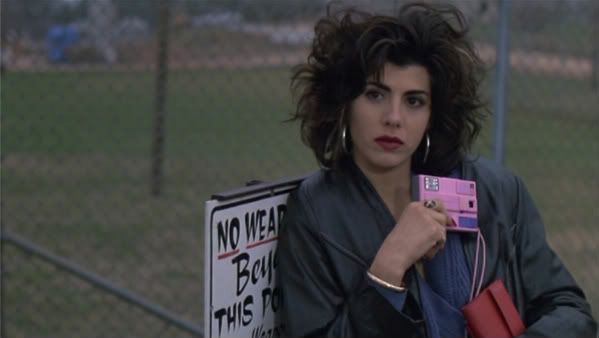 Indeed, the comedic heavy-lifting in My Cousin Vinny comes mostly from Pesci's two main foils: the formidable Ed Gwynne (somehow layering sublety into the broad cliche required of his imperious small-town judge character) and the astonishing Marisa Tomei as the incongruous Lisa.
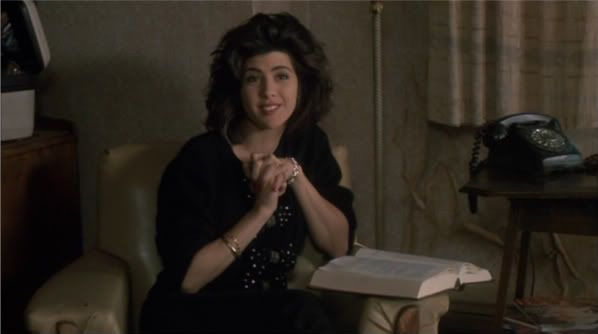 The character of Lisa is not really a character at all. Rather, she's actually an all-purpose plot device, adorned with insane outfits and breathtaking dialogue riffs.
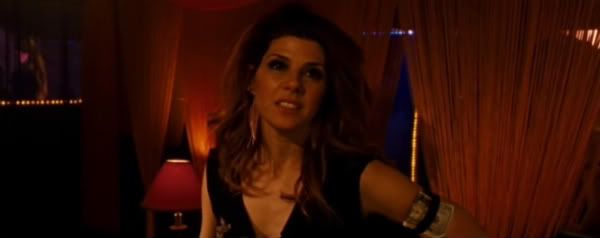
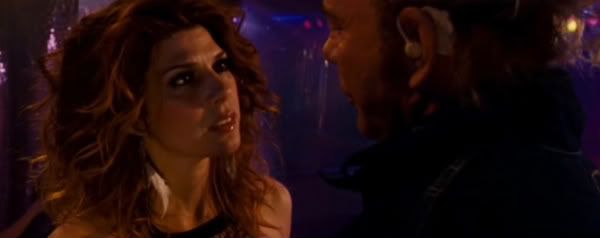
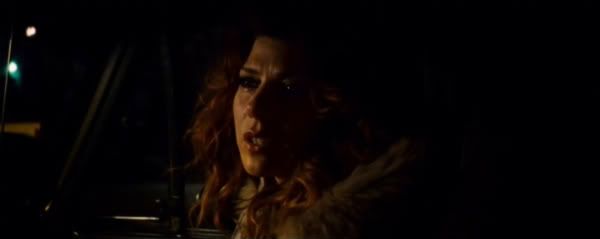
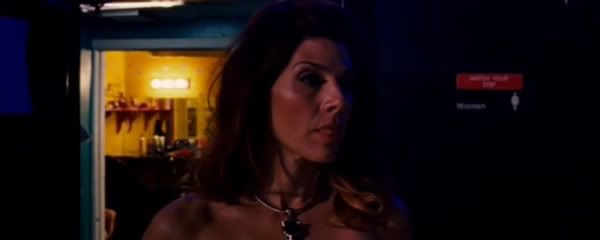
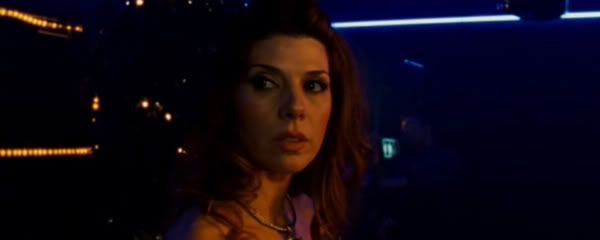
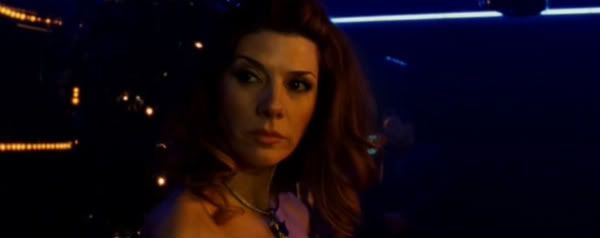
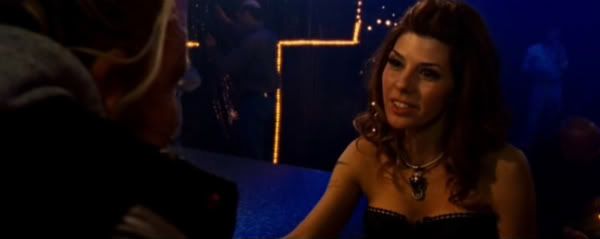
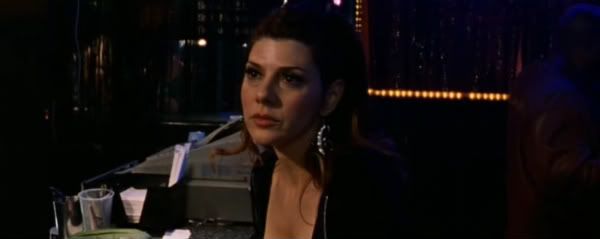
 (An aside: when I was grabbing screencaps of this performance, it seemed Lisa/Tomei held little emotional interest for director Jonathan Little. Most of her close-ups and reaction shots occur at the character's least dynamic moments, resulting in a lot of vacuous shots where Tomei's Lisa is just shooting an off-screen Vinny a "look." Even when she's speaking, Little seems oddly disinterested in Lisa, except as goofy eye-candy and/or as plot expediter.)
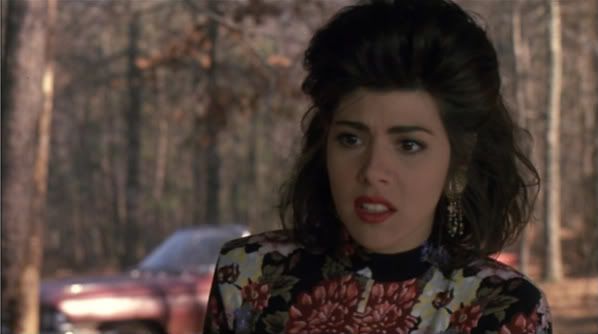 Overall, there's a haphazardness to the construction of the character of Lisa, both on the part of the actress and the film. We never understand why Tomei's Lisa is so in love with Pesci's Vinny, as the two share no discernible chemistry. We don't know why she took this trip with him. The pool hustling, the mechanical expertise, the killer bod, the perfect makeup -- all the pieces of Lisa's backstory remain as meaningful as items listed in a personal ad; they are never revealed to be especially personal details for either the film or the actress. (That said, Tomei handles the intricate "car talk" with an elevating wit and emotional clarity.)
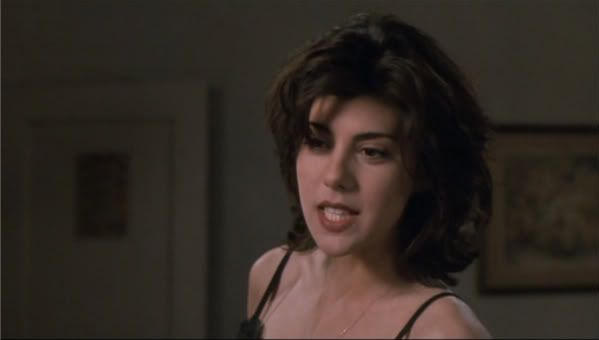 Which leads me to my crackpot My Cousin Vinny theory: the character of Lisa was scripted as "the girl" -- the fantasy helpmeet necessary for most screen heroes (comic or action) in the late 1980s and early 1990s. "The girl" of this era in filmmaking must be likably competent, even unusually so, enough that we'd believe her capable of providing that crucial bit of help to the hero as he saves the day. Yet we're not really supposed to care about her, except to be relieved that she's there as the hero's ready helper. (Think of Kelly Preston and Chloe Webb in 1988's Twins as the emblematic example of this mode of female character construction.) However, something happens with Marisa Tomei's casting in this role. Tomei's performance tips the balance of convention and, by the end, her pretty helpful girlfriend has become the tacit hero/ine of the film.
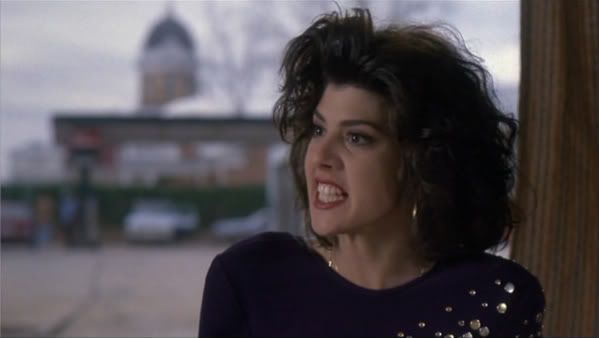 To be sure, Tomei's far better than she needs to be in the film. Tomei's Lisa emerges as the brightest character in the film -- in every way conceivable -- and her performance is at the center of every memorable thing about this film.
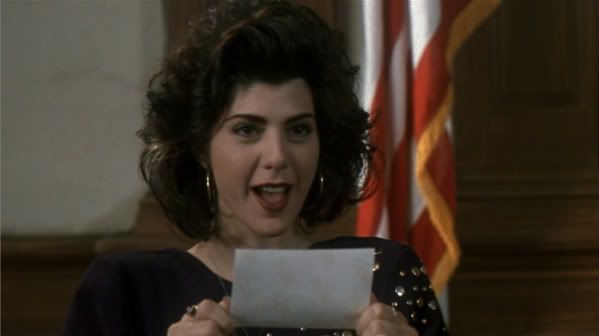 Tomei is absolutely vivid, precise, amusing and -- incongruously enough -- believable in this nearly implausible role.
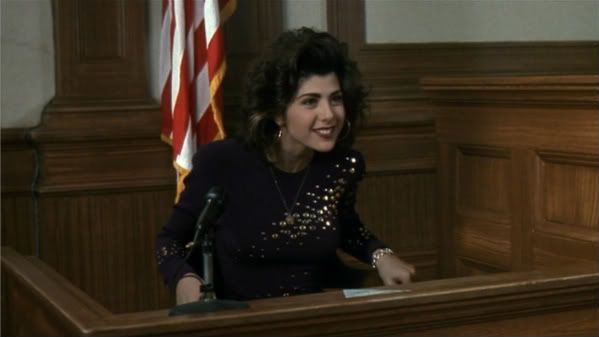 Perhaps more importantly, Marisa Tomei's performance as Mona Lisa Vito seems to embody a particular ideal of supporting actressness. The actress is sexy; the character is sweet. The actress is fierce; the character is deferential. The actress could be a leading lady; the character exists to pursue the male hero's wants and needs. The actress is exciting and full of surprises; the story's emphatically his journey, not hers. And what do I make of all this? I'm still surprised the performance was nominated, but I'm less surprised that it won.
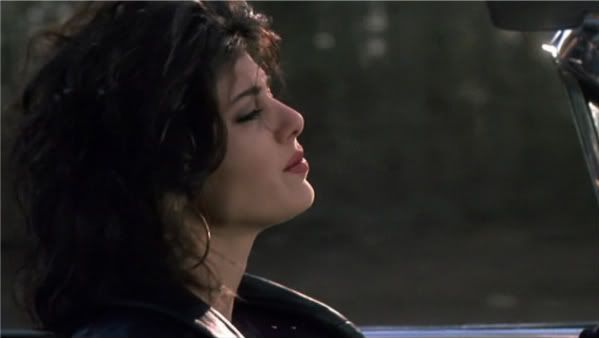 But what of Marisa Tomei's work in the role? On its own, Tomei's work elevates a negligible supporting role to become a defining feature of the film's appeal and its success. Tomei is charismatic, compelling, and delightfully funny -- a breakthrough performance by a delightfully talented actress. Through sheer force of skill, will and talent, Tomei broke through the confinements imposed by late 1980s conventions of female character construction in comedy to create one of the most memorable characterizations in the category.
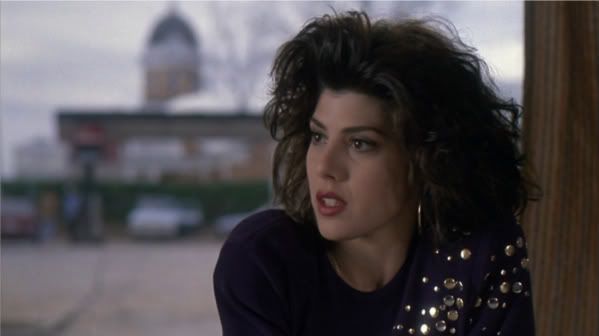 So -- to channel Tomei's Lisa -- what's your PROBlem? Nominations for Best Supporting Actress have been awarded for much much less than what Marisa Tomei accomplishes in My Cousin Vinny.