2.22.2009

Amy Adams in Doubt (2008) - Supporting Actress Sunday

One of the dilemmas faced by actresses at the edges is the not infrequent ease with which deft, complicated work in direct service of the larger work can be overlooked as "obvious" or "unremarkable" -- the performance considered a non-performance, in part, precisely because the supporting player had played their part so well. Only when the piece is remade or revived does it become clear how essential -- and essentially difficult -- that particular role is to get right. To my mind, performances like these are the stealth superstars of the category, easy to dismiss in favor of showier gratifications yet surprisingly difficult to forget in our casual remembrances of the larger work. (I worry, sometimes, that these are the performances that also suffer most in the transfer to our smaller screens.) Such is this week's featured performance -- the final nominated performance for 2008 -- by an actress who's always doing a lot more than it first appears. Of course, I'm talking about...

...Amy Adams in Doubt (2008)
approximately 48 minutes and 25 seconds
22 scenes
roughly 45% of film's total running time
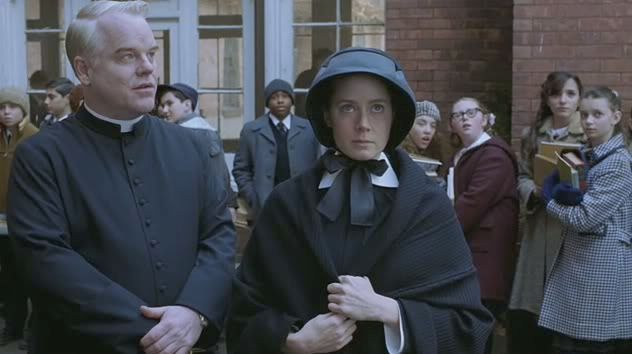
Amy Adams plays Sister James, an openhearted neophyte nun who discerns something unusual in the relationship between a priest (Philip Seymour Hoffman) and one of her students.
When she informs her Mother Superior (Meryl Streep) of her uncertainties, Adams's Sister James quickly finds herself at the center of a titanic war of clerical ego. At the same time, Adams's Sister James experiences new tests to the clarity of her faith.
The role of Sister James is perhaps the trickiest in this chamber piece.
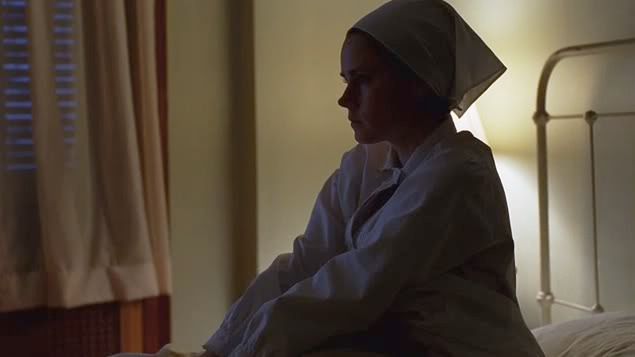
The role obliges simplicity without stupidity, purity without pretension. In order for the narrative to work, there must be no insinuation that Sister James forwards her allegations in service of any personal motives.
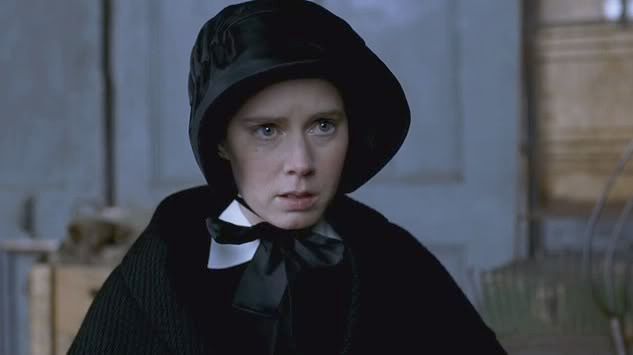
At the same time, Sister James -- as the audience's putative surrogate -- must maintain a constancy of character even as she changes her mind, in some way, in nearly every scene. She animates the central emotional tension within the piece and, without the character's clarifying presence, the other three horses in this four horse team might really run amuck.
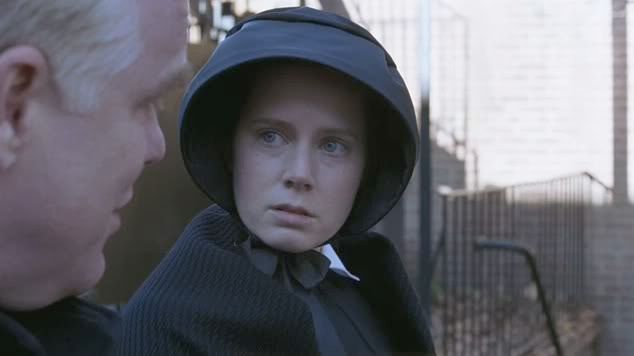
In short, the character of Sister James must embody both the sincerest doubt and also the sincerest faith. And, I would submit, the character of Sister James is probably the hardest character in this piece to get precisely right.
And, in my view, Amy Adams does just that -- she gets this role right.
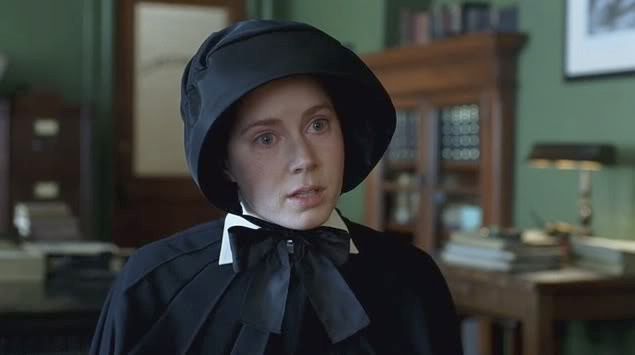
Adams's gift for conveying sweetness melds with her knack for revealing her character's easily overlooked depths and, in so doing, the actress accomplishes a near perfect performance in Doubt's trickiest role.
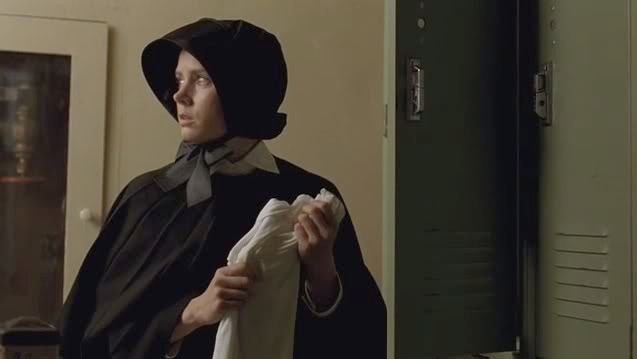
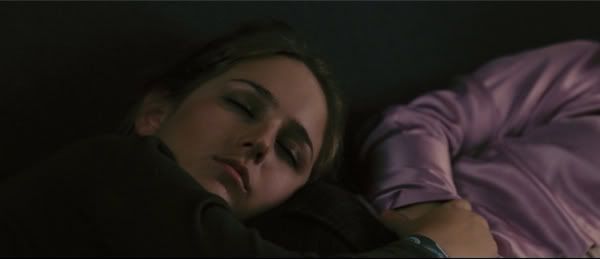
What I find most impressive about Amy Adams's performance, however, is how keenly the actress tunes into something that is at first quite elusive about the character. If Sister James is not merely a plot device -- merely in service to the required action of the story -- then who is she? It seems to me, and this may just be me, that Sister James's plot functions -- her biggest scenes are often in service to the arcs of the other characters -- signal that she embodies the clarifying constant shared by all of the characters in the piece: the instinct of service, or the desire to do the right thing. When I think of Amy Adams in the role, I'm haunted most by three images (for which, alas, I do not yet have screencaps): first, the moment when Adams's Sister James takes the hand of Alice Drummond's Sister Veronica in the early morning; next, when Adams's Sister James takes a tearful Jimmy Hurley (deftly portrayed by Lloyd Clay Brown) into her arms after harshly reprimanding him in class; and finally, when Adams's Sister James lays her cheek on the lap of Meryl Streep's Sister Aloysius in the final tableau of the film. In each of these three moments, there's a fleeting moment of hesitation, a millisecond of pause in which Adams's Sister George seems to decide to place the needs of this other character ahead of her own. The other characters may be facing more dramatic choices -- to stand in service of tradition, of the church's future, of the safety of a beloved son -- but it seems to me that Amy Adams astutely understands the quiet drama inside Sister James, discerning and conveying the constant conflict between self and service that seems to define a religious vocation.
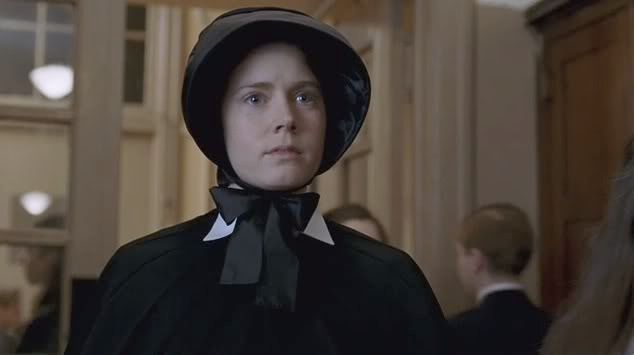
All of which is to say that I consider Amy Adams's performance in Doubt to be one of the most astute and insightful performances I've paid attention to this year.
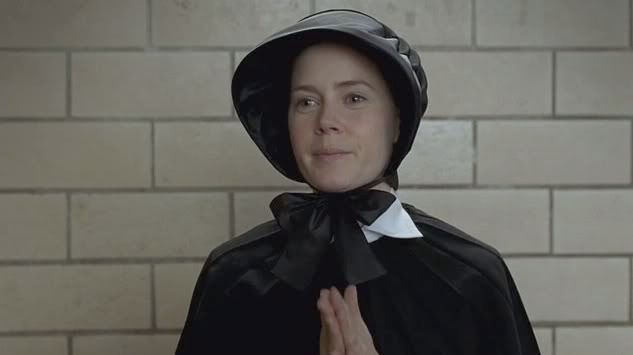
I may not have "loved" it quite as much as this or that other performance. But I nonetheless think it's one of the most accomplished supporting performances of this or any year.

2.21.2009

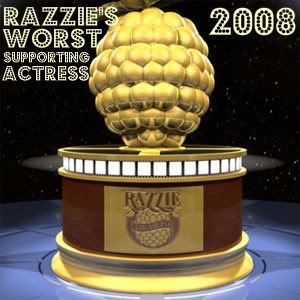
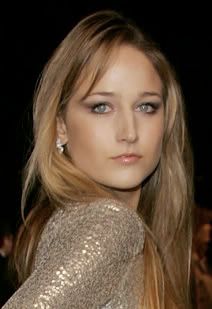
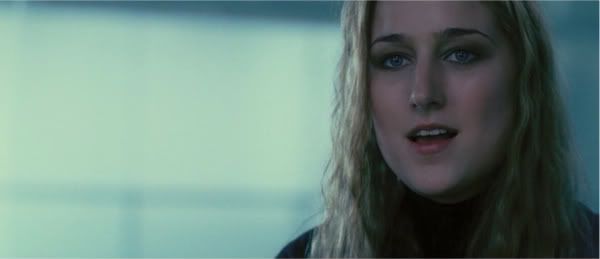
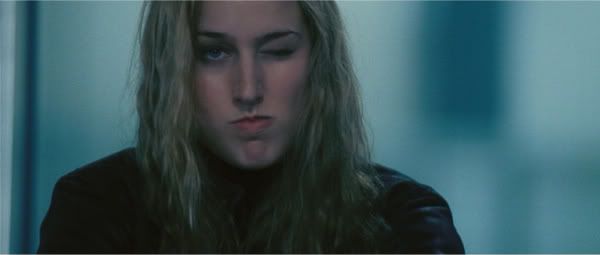
Leelee Sobieski in 88 Minutes (2008) - Razzie's Worst Supporting Actress Nominee for 2008

Tonight, somewhere in Hollywood, The 2008 Golden Raspberry Awards will be announced to "honor" the worst of 2008's cinematic accomplishments. The Razzies are, in many ways, the anti-Oscars -- an idiosyncratic, quarter-century tradition wherein a loose alliance of snarky fanboys offer a singular "raspberry" to some of the year's most conspicuous missteaps and appalling overreaches. In 2007, as part of my ongoing project attending to the most notable "actressing at the edges," I started a new "tradition" by asking my lovely readers to select one Razzie-nominated "Worst Supporting Actress" performance to get StinkyLulu's signature Supporting Actress treatment. And you voted. And I profiled. And, now a year later, it came time to do it all again. Once again, you voted and I screened and, now, without further ado, it's time to consider the supporting actress stylings of your choice...

...Leelee Sobieski in 88 Minutes (2008).
approximately 12 minutes and 16 seconds
10 scenes

roughly 11% of film's total running time
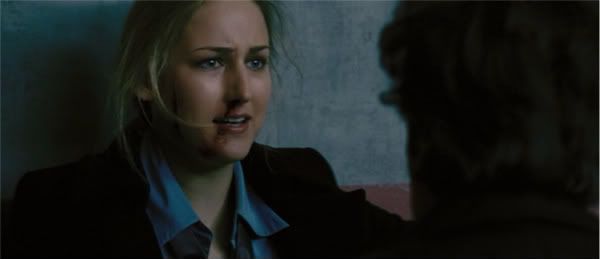
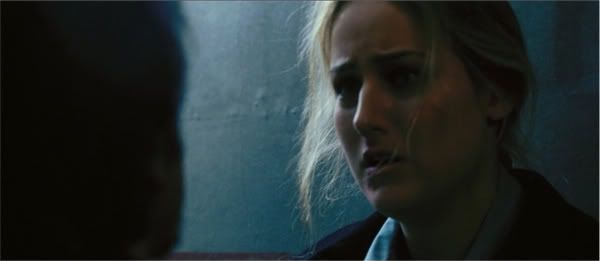
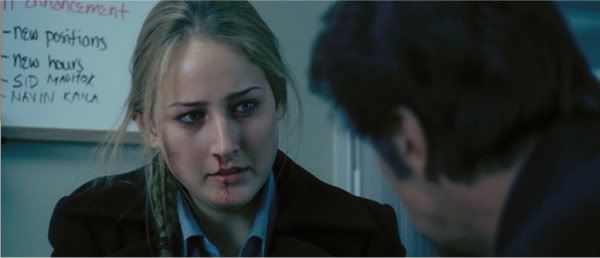
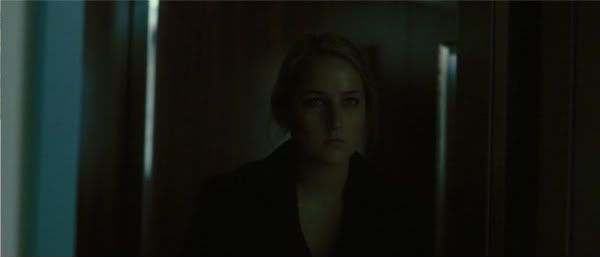
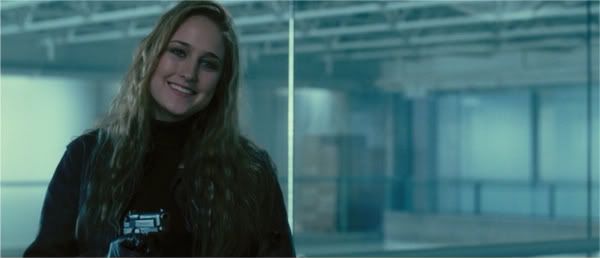
Leelee Sobieski plays Lauren Douglas, one of the handful of talented students enrolled in an elite forensic psychology course with the notorious Dr. Jack Gramm (a bewigged Al Pacino, who spends much of the movie dining on the scenery and then taking little naps with his eyes open).
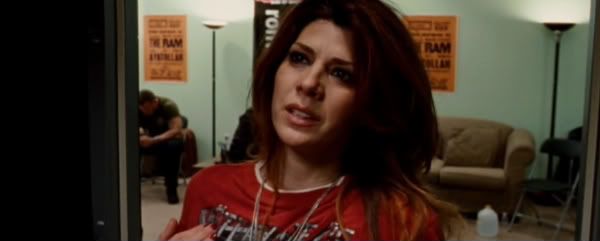
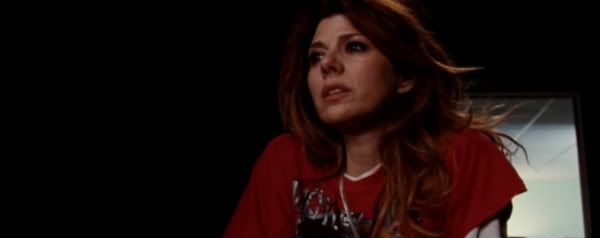
The basic scenario of this ostensibly post-noir puzzler is, of course, super simple and absurdly complicated -- or what I've come to call "simplicated." In short, some years back, Pacino's Gramm provided the expert testimony necessary to get a serial killer sentenced to death. (Notably, the serial killer is played by none other than Neal McDonough, a co-star of last year's featured Razzie supporting actress as well.) Now, however, with the killer's execution looming, a series of gruesome murders -- each adhering meticulously to the convicted criminal's distinctive alleged profile -- begins to emerge. Each of these new deaths targets a young woman in Gramm's circle and each discovery further implicates Gramm as the actual perpetrator. At the same time, Gramm is receiving cryptic cell-phone messages informing him that he has only 88 minutes to live. Like I said, totally simplicated.
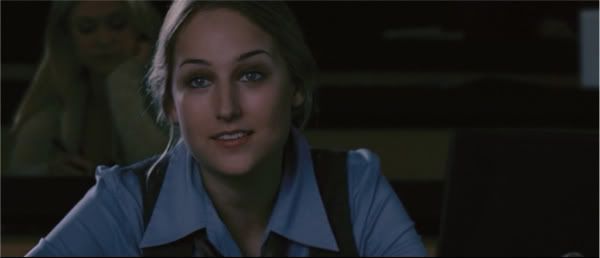
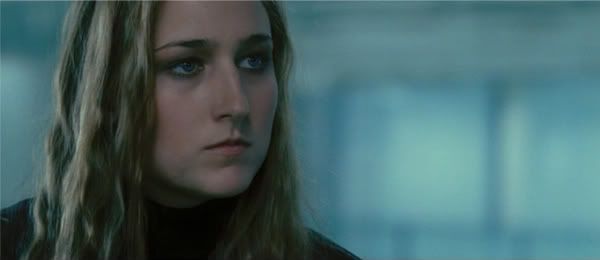
Sobieski's Lauren is one of Gramm's most attentive and articulate students...
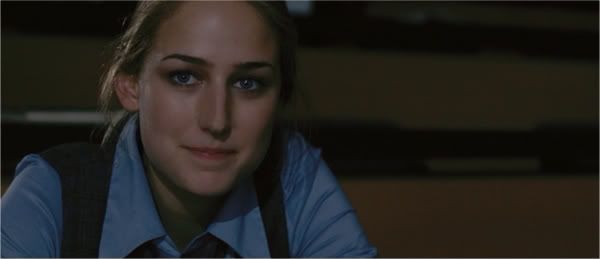
And, as a young woman in Gramm's circle, she's vulnerable as a potential target for this new killer who seems to be on something of a spree.
(SPOILER WARNING: There's no way to talk about this performance without "spoiling" most of the essential twists in the narrative. So if you really want to experience it all for yourself, begone with you. For all the rest of y'all, read on -- the film's actually a touch more interesting when some of the secret twists are known. That being said, the twists aren't especially subtle and I had it pretty much figured out shortly after the scene in the parking structure.)
After a few near misses, some of which have landed actual hits on the young women in his life, Pacino's Gramm begins to doubt everyone and everything around him, all except for his trusty assistant Shelley (Amy Brenneman, gamely playing a character who's I guess the 2007 version of Mercedes McCambridge -- supposedly a lesbian but hopelessly devoted to her womanizing, patronizing boss nonetheless). At just about this point in the narrative, every secondary character's latent ominousness is amplified. At every moment, we are left to ask: Should Pacino's Gramm try to protect this/that damsel? Or is Pacino's Gramm actually the one in need of protection?
The potentially dangerous damsels in this post-noir consist of a diverse lot -- mostly swooning colleagues/proteges, including Sobieski, Brenneman, Deborah Kara Unger, Alicia Witt, and Benjamin McKenzie (who's very cute in the role of swooning damsel). Among these possibly dangerous damsels, only Alicia Witt is able to acquit herself of the material, somehow evincing a witty, empathetic and mildly plausible performance from the increasingly incoherent convolutions of the script. (Based on this performance alone, I'm reconvinced that Alicia Witt really does deserve a better career.)
If you haven't already guessed, I'll finally spoil it now: Sobieski's Lauren is the actually dangerous damsel of the piece -- the true post-noir femme fatale of 88 Minutes. Sobieski's Lauren is, as it turns out, also the appeals attorney for the serial killer facing execution and she's the one setting up the massive "frame job" being run on Pacino's Gramm. (I find that, as I write this, it's difficultnot to refer to Pacino as Grammpa; the spectacle of Pacino -- who's pushing 70 -- pushing himself on all these 20-something babelets is just unpleasant, kinda like The Girls Next Door Go To College. It's, just, well, ew.)
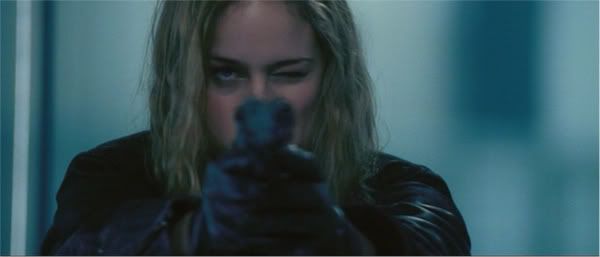
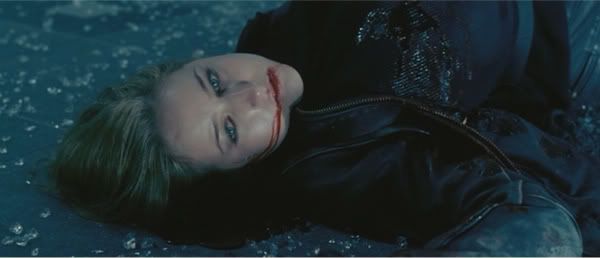
Supposedly brilliant, objectively beautiful, capable of bedding both men and women as necessary to further her diabolocal scheme, Sobieski's Lauren is both puppet and mastermind. (Turns out she's doing all this to spring her beloved serial killer fron the joint.) All this, of course, is spelled out in the requisite reveal sequence, when Pacino's Gramm arrives just in time for Sobieski's Lauren to "frame" him for two last murders.
And it's in this final sequence that Sobieski truly earns her 2008 Razzie nomination.
Sobieski's appeal as a screen performer has long drawn from the beauty of her preternatural stoicism, a kind of serene implacability that -- especially as a teen actress -- seemed suggestive of intriguing depths of intelligence and of feeling.
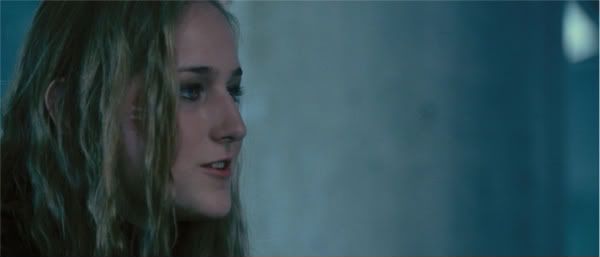
Here, though, in the role of a somewhat love-crazed evil genius, that same stoic serenity reads more as shallowness. Now in her later 20s, Sobieski here still seems like a precocious teen actor, albeit one who's well beyond her depth. The role is drenched with possibility -- it's a love-crazed evil genius for cripes sake -- and yet Sobieski's matter-of-fact approach boils everything so that it's uniformly glib. Indeed, Sobieski's more convincingly passionate when parrotting lecture hall homilies in the first scene than she is when detailing the furious particulars of her revenge plot (which, by the by, included the ritualized sadistic murders of several women she had befriended and/or slept with). The character's a monster; the performance is bland.
What's more, Sobieski's business-"lite" demeanor diminishes the character in ways that are almost mocking. And while there is a good deal to mock in this film, Sobieski's choice to tacitly disavow this woman's awful, misguided complexities places her outside the character in unproductive ways. As a result, Sobieskie's decision to not play the scene seriously transforms what might have been a spectacular aria of criminal passion (and a potential camp classic) into a wan, whining bit of immature posturing. (I mean, really: Alicia Witt gives a more compelling performance in this scene -- while bound, gagged and facing away from the camera -- than does Sobieski, who has the camera's full attention as well as a multi-page climactic monologue.) Most actresses laboring at the edges would "kill" for the opportunity to show their stuff in a role like this but Sobieski tosses it off like she does her long braid, like it's no big deal.
In this final scene, Leelee Sobieski does something I didn't think possible -- she steals the "jaw-droppingly wierd acting choices" mantle from Pacino. His choices look almost sensible next to hers (and he mostly looks like a dog who falls asleep between barks). I didn't expect Sobieski's work in this role to be so deserving of a Razzie nomination but, should you happen to notice her name among tonight's list of "winners," know that Sobieski's is an honor fully earned.

2.19.2009

The (Un)Official Trailer: SMACKDOWN '08

Thanks, once again, to the generous tenacity of Smackdowner Alex in Movieland, we can savor this extended trailer as we whet our collective appetites for this Sunday's Supporting Actress Smackdown for 2008. (Not to mention that other event on Sunday.)


Be sure to click over to Alex's original post
and comment with your thanks for this most delightful tease!

2.17.2009

You're Invited: SMACKDOWN '08

StinkyLulu's 3rd Annual Academy Award Pre-Show Event,
featuring an excellent panel of Smackdowners, including:

Rants of a Diva, Criticlasm, Jakey, Low Resolution,
Victim of the Time, The Rural Juror, & Alex in Movieland...

2.16.2009

Marisa Tomei in The Wrestler (2008) - Supporting Actress Sunday

As I noted in my post for The LAMB Devours the Oscars series, this week's featured Supporting Actress nominee has, over the last handful of years, experienced something of a transformation -- from being the category's biggest punchline to standing as one of its most stalwart contenders. And with this year's nomination, this performer enters the elite sorority of actresses at the edges who have earned three or more nominations as Best Supporting Actress. Also, I'm thinking she also has the possibly unique distinction of having earned her first nomination while in her 20s, her second while in her 30s, and her third while in her 40s. (Most of her sisters in the 3+ sorority earned their noms in fairly quick succession, or with greater gaps between.) Best of all, this woman shows no sign of slowing down. Of course, I'm talking about...

...Marisa Tomei in The Wrestler (2008)
approximately 23 minutes and 31 seconds
19 scenes
roughly 21% of film's total running time
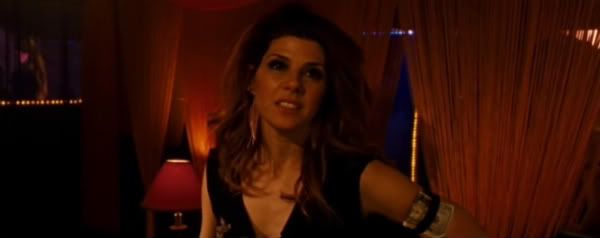
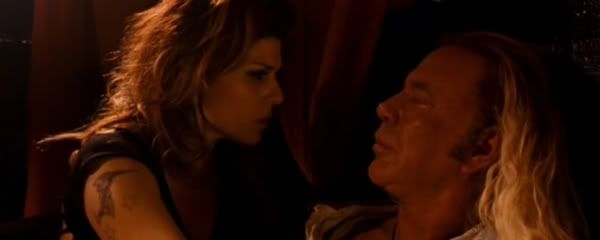
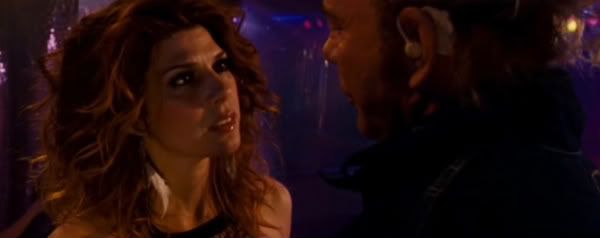
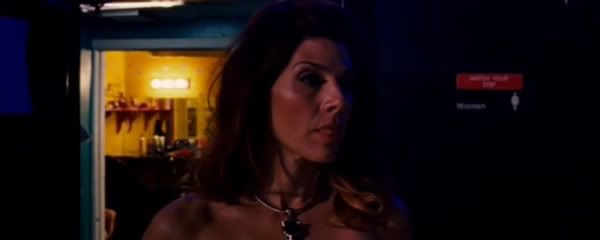
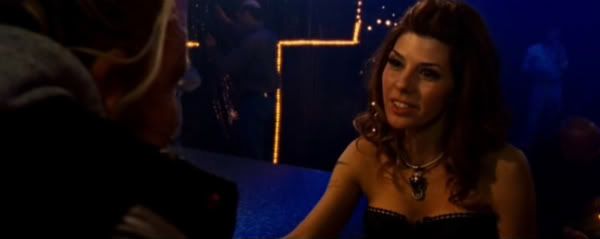
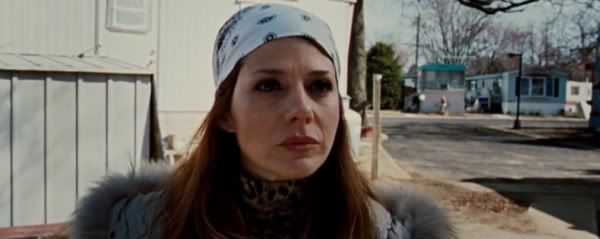
Marisa Tomei plays Cassidy, a 40-ish -- but still smokin' -- stripper who discovers a surprising connection with Randy "The Ram" Robinson, a 50-ish -- but still slammin' -- professional wrestler (Mickey Rourke in what will almost certainly become an iconic performance).
When we first meet Tomei's Cassidy, she's having a tough time wrangling the snark of a callow bachelor party. Rourke's Randy blasts in, without being summoned, ostensibly to defend her honor and in so doing drives away Cassidy's customers and thus claiming her lapdance time for himself.
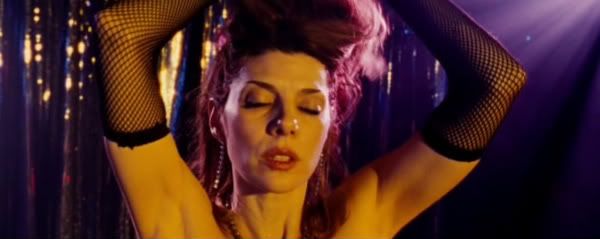
As she dances for Randy, Tomei displays Cassidy's skill as a performer. As she toplessly bumps and grinds away, Tomei's Cassidy listens to Rourke's Randy spin his war stories, asking questions and offering sympathies at precisely the correct moments. By the end, when Cassidy collects her $60, we see that she has done her job very well: using the alibi of sexual display, Tomei's Cassidy deftly does what's necessary to make her clients feel better about themselves. And it's clear that Cassidy takes some measure of professional pride in a job well done.
And like any personal service provider, Tomei's Cassidy also maintains a measure of concern about the well-being of her clients. When he arrives to the stripjoint not long after suffering a near-fatal heart incident, Rourke's Randy savvily exploits Cassidy's professional empathy to get some attention outside the perameters of the client-customer relationship.
On instinct, depending on her human rather than professional judgment, Tomei's Cassidy agrees to briefly meet Rourke's Randy outside the club (albeit only for the length of a cigarette and only in the parking lot). In this moment, Tomei's Cassidy offers exactly what she might in a lapdance -- empathetic attention and a concern ony for his needs -- but without the ratifying alibi of sexual display. Yet Tomei's Cassidy knows she's crossed an essential, if invisible, boundary and scoots back to the relative safety of the strip club.
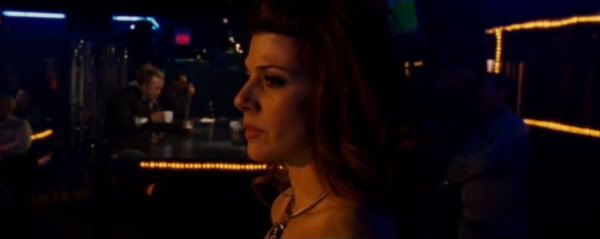
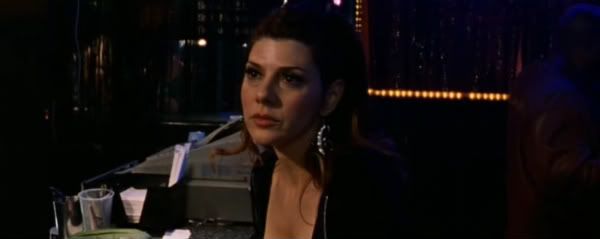
The next time we see Tomei's Cassidy -- in what is perhaps my favorite sequence of Tomei's performance, if not the film as a whole -- she's having a rough night hustling private dances.
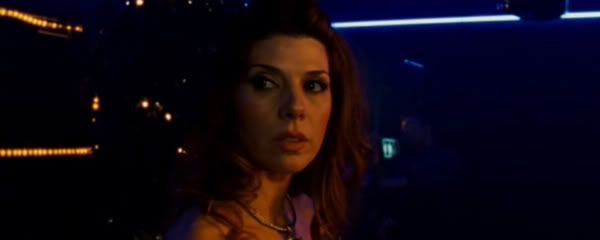
In a quick series of mostly wordless scenes, we see Tomei's Cassidy at her most vulnerable...
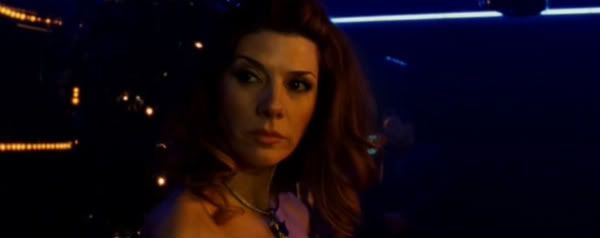
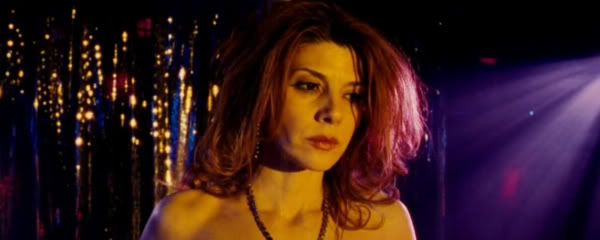
And at her most mercenary.
In what proves to be a crucial decision for the character, Tomei's Cassidy chooses to pay attention to Rourke's Randy (instead of a potentially more lucrative customer) because it will make her feel better about herself.
With this decision, Tomei's Cassidy breaks one of the core "rules" of sex work: she chooses a client on the basis of how the transaction might meet her emotional -- rather than financial -- need. Little wonder, then, that another line is soon crossed, as Tomei's Cassidy agrees to meet Rourke's Randy outside of the club, ostensibly to help him select a birthday gift for his estranged daughter.
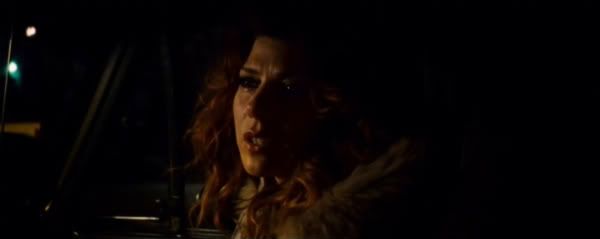
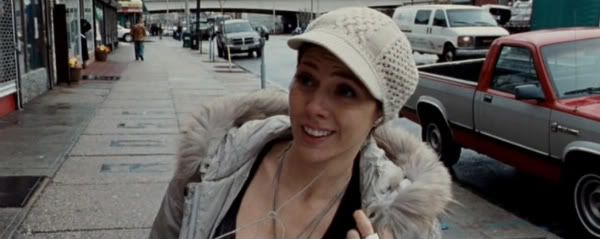
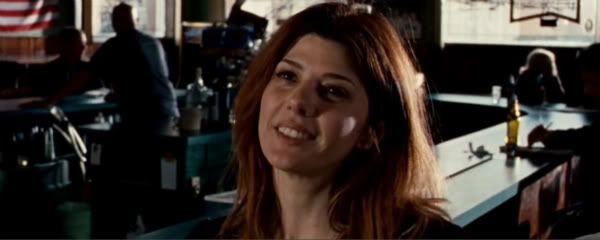
Thus, Tomei introduces Rourke's Randy -- and us -- to Pam, the "real-world" counterpart to Cassidy. With elegant clarity, Tomei charts both the continuities and distinctions between Cassidy and Pam in the subsequent scenes between her and Randy. We see that, while "Cassidy" is sexy, Pam is pretty. While "Cassidy" lives inside the club, Pam has a complex world of aspirations and obligations outside that building. But Rourke's Randy likes them both.
I realize now that it is in this rhythmically repetitive sequence of scenes (the two get close, Tomei runs away) that Tomei's performance amplifies what I consider to be the most compelling emotional thread within The Wrestler. The film draws upon a gloriously simple conceit: a man and a woman, each a skilled professional performer making a life and a living at the lowest rung of the performance food chain, arrive almost simultaneously to the same crossroads. Neither their bodies nor their spirits can withstand the demands of their profession much longer yet the terror of the unknown looms. In one another, they see a glimmer of recognition, the sort that promises to end their self-imposed isolation and offers hope for a life beyond this, the only thing they have known. It's an enthralling scenario, one with the makings of a great cinematic romance. Yet The Wrestler is a tragedy, in the Shakespearean sense almost, and Tomei's performance -- in what is, in some essential ways, a double-role -- cues, early on, the ultimate impossibility of a truly sustaining relationship between these two characters.
The decision to quit stripping has been a long-time coming, yet her encounter with Randy accelerates things in ways that Tomei's character doesn't anticipate. Rourke's Randy has a difficult time respecting the edifice Tomei's character has carefully built to separate her self (Pam) and her work (Cassidy), largely because Randy experiences no such separation between his professional persona and his actual identity.
While Tomei's character wants to be rid of "Cassidy" so that she can get on with her life, Rourke's character sees no life worth living without Randy "The Ram" Robinson. Thus is the tragic rub within this film. Tomei's Pam wants out of stripping before it destroys her, while Rourke's Randy seems willing to let wrestling be the end of him.
In many ways, Tomei's character arc is defined by the slow, inevitable collapse of the scaffolding separating Cassidy and Pam. And one of the brilliant gestures within The Wrestler is that we get to see the final implosion. What's more, Tomei gets to perform the character's most emotionally naked moment while she's nearly entirely nude, on stage at the strip club. Director Aronofsky and Tomei's accomplishment in this scene is, in a word, bold.
She's naked and we're watching her inner conflict. Not every actress could make that happen and, with meticulous clarity, Tomei does.
And as Tomei's character races from the strip club to the arena, hoping to stop Rourke's Randy from -- literally -- killing himself in the ring, our hopes rise with hers. If anyone can stop Randy, Pam can. But Rourke's character, like an addict who has decided to use again, is beyond even her reach. As she watches from backstage, Tomei generously adds a gracenote to her already masterfully crafted performance. Tomei's character surveys the scene -- the lights, the crowd, the adrenaline -- and we see her quickly realize that the integrity of her caring attention can do little to cut through Randy's need for this kind of fix. And as she leaves the arena, it's a quiet triumph for the character, a tiny spark of hope within the devastating glare of Randy's self-destruction.
Tomei's is a meticulous, mature and unflinching performance and The Wrestler's the better for the clarifying, emotional reality of her presence.